
Long Summer Days of Work, Food and Belonging in Appalachia
Some of my clearest memories of Appalachian summers begin in the garden.
Harvest didn’t begin with baskets of vegetables sitting neatly on a porch. Somebody had to go out and pick everything first, and morning was better, before the heat settled heavily over the day.
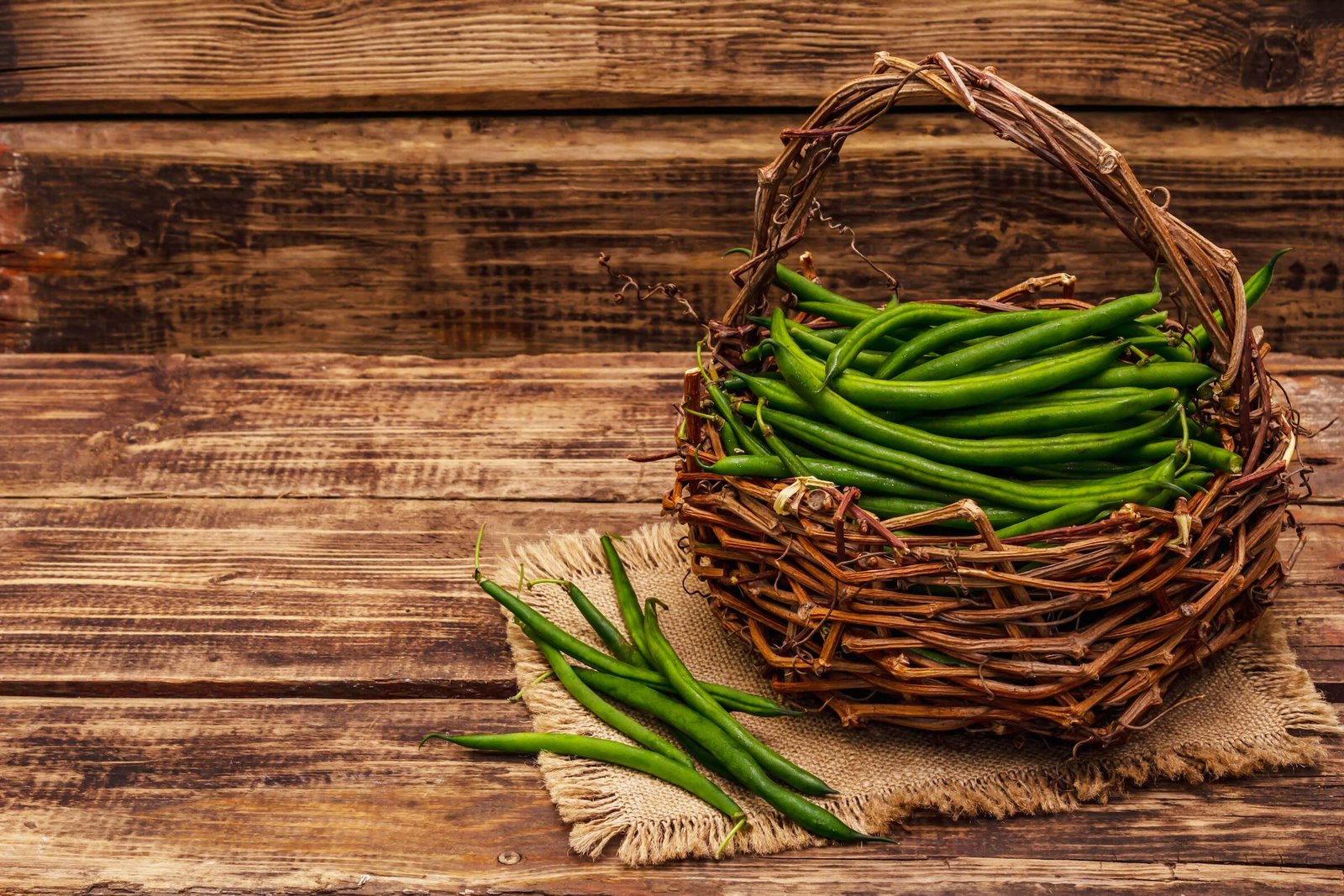
We went into the garden with buckets and baskets and started looking for what was ready. Beans hid underneath leaves and among the vines, so you had to reach into the plants and find them. Your hands got dirty. Your clothes got dirty. There might still be moisture on the plants from the morning, and little by little the empty containers began filling.
Children weren’t spectators. We picked right alongside everyone else.
I happened to like this arrangement because beans were one of my favorite foods. Fresh beans could be eaten while you were working, which meant a certain percentage of the harvest underwent what I considered necessary quality control before it ever reached the house.
I’m not sure the adults considered that part of my contribution.
There was always more than one thing coming in from the garden. Beans might have been the day’s big job, but tomatoes were ripening, cucumbers needed picking, onions were ready, and something else always seemed to be demanding attention. A garden doesn’t consult your plans before deciding that half of it is ready at the same time.
Once everything came back toward the house, the work changed.
THE PORCH BECAME THE WORKTABLE
This is where my memories become less about the garden itself and more about the people around it.
Beans came to the porch in buckets and baskets. People found places to sit, and hands stayed busy. Beans were snapped. Strings were pulled from those that needed stringing. Some would eventually be canned. Others would be dried. Pinto beans were part of the work too.
The work itself could be repetitive, but the experience wasn’t. Someone had news. Someone had a story. Somebody remembered something that happened years before, and another person remembered it differently. People laughed, visited, kept an eye on children, wandered in and out, and helped with whatever needed doing.
Nobody announced that we were participating in a meaningful intergenerational community activity.
We had beans to do.
That was enough.
SHUCK BEANS, LEATHER BRITCHES AND THE LANGUAGE OF BEANS
Beans have their own vocabulary in Appalachia, and that vocabulary isn’t necessarily the same from one family or community to another.
In my family, we called them shuck beans. I also heard people use the term leather britches, and elsewhere readers may encounter shucky beans. The names can vary, but they belong to a long Appalachian tradition of preserving green beans by drying them.
These weren’t simply dried versions of the same beans we ate fresh. Drying changed them. When eventually rehydrated and cooked, shuck beans had their own flavor and texture, different from fresh or canned beans. That difference was part of the reason preserving beans in more than one way made sense. One summer crop could become several different foods.
Even “stringing beans” can mean more than one thing depending on the conversation. Traditional string beans often have a fibrous string that needs to be removed before cooking or preserving. Green beans could also literally be strung onto thread for drying.
Nobody needed to standardize the vocabulary for us. Families called foods what they had always called them, and sometimes you discovered that people a few communities away had another name entirely.
That’s part of the richness of Appalachian foodways. There isn’t always one Appalachian word, recipe, bean or method. Traditions traveled through families and communities, changing a little along the way.
CHILDREN HAD A PLACE IN THE WORK
Looking back, one thing I appreciate is that work and childhood weren’t treated as opposites.
We picked. We snapped. We strung. We shucked. We fetched things when somebody needed them. We listened to conversations that weren’t necessarily directed toward us and absorbed more than the adults probably realized.
Then we got bored.
Or hungry.
Or hot.
And because we were children, sooner or later we disappeared to do something else.
There wasn’t anything unusual about moving between work and play. We weren’t excluded from household work because we were children, but neither do I remember harvest as some grim childhood obligation. We participated because everybody participated.
There was satisfaction in it, too. When food appeared on the table later, some part of you knew that you had helped bring it there. You had picked those beans. You had snapped them. You knew which hillside the berries came from and which tomatoes had been carried out of the garden that morning.
You belonged to what was happening because you had a place in it.
GO GET SOME BERRIES
If children became hungry or restless around the middle of the day, the adults had a remarkably effective solution.
Go gather some berries.
Off we went.
We knew where to go. Nobody needed to provide a lesson on identifying the berry patch or explain that wild food could be found beyond the garden. We had been there before. We knew what we were looking for.
Of course, telling a group of children to gather berries and expecting every berry to arrive home is optimistic.
We ate while we picked.
By the time we returned, our fingers were stained. Our mouths and faces were stained. There was a fair chance our clothes were stained. Our stomachs were considerably fuller, and the buckets contained whatever portion of the harvest had survived us.
The berries that did make it home could become preserves, jam, jelly, pies or something else for the family to eat. Even our break from the beans had somehow remained connected to food.
I don’t remember anyone explaining the significance of that to us.
Nobody said, “Today we’re going to teach you how to forage.”
They said, “Go get some berries.”
And we knew where to go.
WHEN THE DAY GOT TOO HOT
Sometimes the afternoon heat became too much and there was another place for children to disappear.
The creek.
We might go down and splash, swim and cool ourselves for a while. Again, nobody scheduled this. There wasn’t a designated recreational period in the day’s harvest itinerary.
It was hot. We were kids. The creek was there.
So we went.
There was a rhythm to those days that I understand differently now than I did then. The garden decided when something was ready. The temperature helped decide when children needed a break. Hunger could send us toward the berry patch. Ripening fruit could suddenly become more important than whatever everyone thought they would be doing next.
The day wasn’t entirely ruled by a clock. Things happened when they needed to happen.
Eventually we came back from the creek.
And, remarkably, the beans had not snapped themselves while we were gone.
THERE WERE ALWAYS MORE BEANS
There could still be baskets waiting when we returned, and sometimes the work continued into another day.
That seems worth remembering now, when so much of life is measured by how quickly something gets completed. Nobody had failed because every bean wasn’t finished by a predetermined hour. There was work to do, and the work took however long it took.
Tomorrow existed.
The next day people could sit down again, pick up where they had stopped and keep going. Meanwhile, other parts of the harvest continued demanding attention.
Food was being canned. Beans were drying. Cucumbers and other vegetables could become pickles. Fruit became preserves. Tomatoes and other produce were put away for later.
Little by little, food that had been growing outside only days before began changing into something that could feed people long after summer was gone.
But before winter came, there was supper.
THE HARVEST SUPPER
The first day or two of a big harvest often brought one of the meals I remember best.
There might be fresh beans from the garden, meat, boiled potatoes, cucumbers, onions and tomatoes. Other vegetables appeared according to whatever was ready. Much of what was on the table had been growing nearby shortly before we ate it.
Sometimes we ate outside in the yard as evening approached. By then, the worst heat was beginning to loosen its grip. Adults could finally sit down and eat, while children who had somehow recovered from all the day’s alleged exhaustion ran around with cousins and neighborhood kids.
Nobody called it farm-to-table dining.
It was supper.
That’s an important distinction because I don’t remember anyone treating the food as unusual or particularly picturesque. Cucumbers, onions and tomatoes weren’t arranged to create a rustic experience. The beans weren’t there to demonstrate a return to traditional living.
They were there because we had picked beans.
We ate what we had, and what we had was good.
The days after that first larger meal could be much simpler. There might be leftovers or sandwiches, plates of fresh vegetables, tomatoes, cucumbers, onions, fruit or whatever was easy to eat while the preservation work continued.
There was something almost funny about being surrounded by so much food while nobody particularly wanted to stop working with food long enough to make an elaborate meal.
Summer had arrived all at once, and everybody was trying to put some of it away.
WHAT WE LEARNED WITHOUT LESSONS
As a child, I didn’t think of any of this as education.
Yet we were learning constantly.
We learned how to tell when food was ready and where certain things grew. We learned how beans came off the plant and what happened to them afterward. We learned that weather mattered, that some foods could wait and others couldn’t, and that abundance brought work with it.
We learned that the same food could taste completely different depending on what was done with it. Fresh beans weren’t canned beans, and canned beans weren’t shuck beans. Summer food could become winter food, but it changed along the way.
We also learned who knew how to do things.
Knowledge moved around those gatherings almost invisibly. Somebody showed you how to snap a bean properly. You watched how another person handled something. You listened while adults talked. You tried it yourself. Eventually, something that had once required instruction became something you simply knew how to do.
Children weren’t sitting through lessons on Appalachian foodways.
We were living inside them.
And this wasn’t some distant pioneer past.
We had cars. We watched television. People bought groceries. We wore the same ordinary clothes other Americans wore. Modern life and older practices weren’t mutually exclusive.
You could watch television in the evening and still spend part of the day snapping beans with your family.
That was simply life.
WANT TO PRESERVE BEANS THE TRADITIONAL WAY?
For people interested in Appalachian food traditions today, beans are a wonderful place to begin because one harvest can demonstrate several different preservation methods.
Traditional Appalachian dried green beans, commonly called leather britches, shuck beans or shucky beans depending on the family or community, offer an especially interesting connection to the past. Drying removed enough moisture from the beans to extend their usefulness beyond the fresh harvest, while also creating a distinctive food rather than merely imitating the flavor and texture of fresh beans.
West Virginia University Extension documents the Appalachian leather-britches tradition and describes green beans being washed, trimmed and threaded with a needle onto a long thread before being hung to dry thoroughly. Once dry, they can be stored until they’re ready to be cooked.
For anyone interested in trying traditional food preservation, however, there is an important distinction between preserving a tradition and blindly reproducing every old household method. Food-safety knowledge has changed. Historical practices tell us how families lived and preserved food, but current Extension guidance provides tested recommendations for doing it safely today.
WVU Extension’s resources on heritage beans and home food preservation are excellent places to begin. Readers outside West Virginia can also contact their own university Cooperative Extension service for guidance appropriate to their area.
Learning the traditional methods isn’t only about preparing food for storage. It can help explain why families chose particular varieties, why certain foods developed distinctive flavors, and why the same crop might be eaten fresh, canned or dried.
And if you have an older relative who remembers putting up beans, ask them what they called them.
Shuck beans?
Shucky beans?
Leather britches?
Something else entirely?
The answer itself is worth preserving.
MORE THAN NECESSITY
Gardens mattered because they fed people. Putting food away mattered because summer didn’t last forever. There is no reason to pretend necessity wasn’t part of the story.
But necessity and misery are not the same thing.
Neither do I want to polish these memories until everybody is smiling blissfully over a basket of beans. People got tired. Children got bored. It was hot. Some jobs were tedious. I’m sure people occasionally got on one another’s nerves because that’s what happens when human beings spend enough time together.
All of that existed beside laughter, abundance, cousins, neighbors, food, stories, creeks, berries and the satisfaction of seeing the results of your work.
Survival and joy weren’t mutually exclusive.
Perhaps that’s part of what can be difficult to communicate about these memories now. Looking backward, people sometimes want to sort the past neatly into hardship or nostalgia. Lived experience rarely cooperates with those categories.
Something can be necessary and enjoyable. Work can be tiring and still create belonging. A child can contribute and still have a childhood. A family can buy groceries and still put up a garden.
Tradition doesn’t require people to be trapped in the past.
Sometimes it’s simply what people continue doing because it works, because they know how, because they like the food, and because somebody taught them.
WHAT WE MAY REALLY BE MISSING
Today, people can spend hours online watching other people garden, forage, bake bread, make preserves, can vegetables, cook from scratch and build lives around the seasons.
I understand the attraction.
Maybe some of what people are searching for isn’t really the jar of home-canned beans or the loaf of homemade bread. Maybe it’s the feeling surrounding those things.
They see hands doing useful work. They see food with an origin they can understand. They see people moving according to seasons rather than notifications. They see families or friends accomplishing something together.
Perhaps what looks like nostalgia for an older way of living is sometimes a longing for participation.
But watching connection and experiencing connection aren’t the same thing.
A screen can show you a family snapping beans together. It cannot give you a place in their circle.
Participation was what made the difference.
I didn’t belong because somebody explained belonging to me. I belonged because there was a bucket beside me and somebody expected me to help fill it. Later there was a basket of beans and a place to sit. There were berries on a hillside I knew how to find and a creek I knew how to reach.
I had something to contribute.
So did everybody else.
PRESERVING MORE THAN FOOD
Nobody sitting around those beans thought we were preserving Appalachian culture.
We thought we were preserving food.
But both were happening.
The beans survived because somebody knew what to do with them. The knowledge survived because children participated. Family stories survived because people had hours to talk while their hands were occupied. Relationships were strengthened because neighbors and relatives kept showing up.
Culture didn’t always announce itself as culture.
Sometimes it looked like dirty hands.
Sometimes it sounded like people talking over one another on a porch.
Sometimes it was a child eating half the berries she was supposed to bring home.
And sometimes it was simply a basket of beans that everybody knew needed to be finished sooner or later.
When I think about those summers now, I remember the work, but I don’t remember it separately from the people. The two belong together.
I can still picture evening settling over the yard after a long day. The heat finally beginning to break. Empty plates. Adults sitting around a little longer. Children still finding enough energy to play.
There might still be beans waiting somewhere for tomorrow.
Inside, jars were beginning to accumulate. Beans were drying. What had been growing in the summer sun was slowly being transformed into food that would remain after the garden stopped producing.
Outside, summer was still happening.
Inside, little by little, we were putting it away for winter.
We just didn’t know we were preserving the memory of summer, too.
Preserve Your Harvest Safely
Interested in trying traditional food preservation at home? West Virginia University Extension provides science-based guidance for home canning, freezing, drying and other preservation methods, including current food-safety recommendations.