Category: People & Communities

Meet the people and communities whose lives, traditions, creativity, and connections to place shape Appalachia today

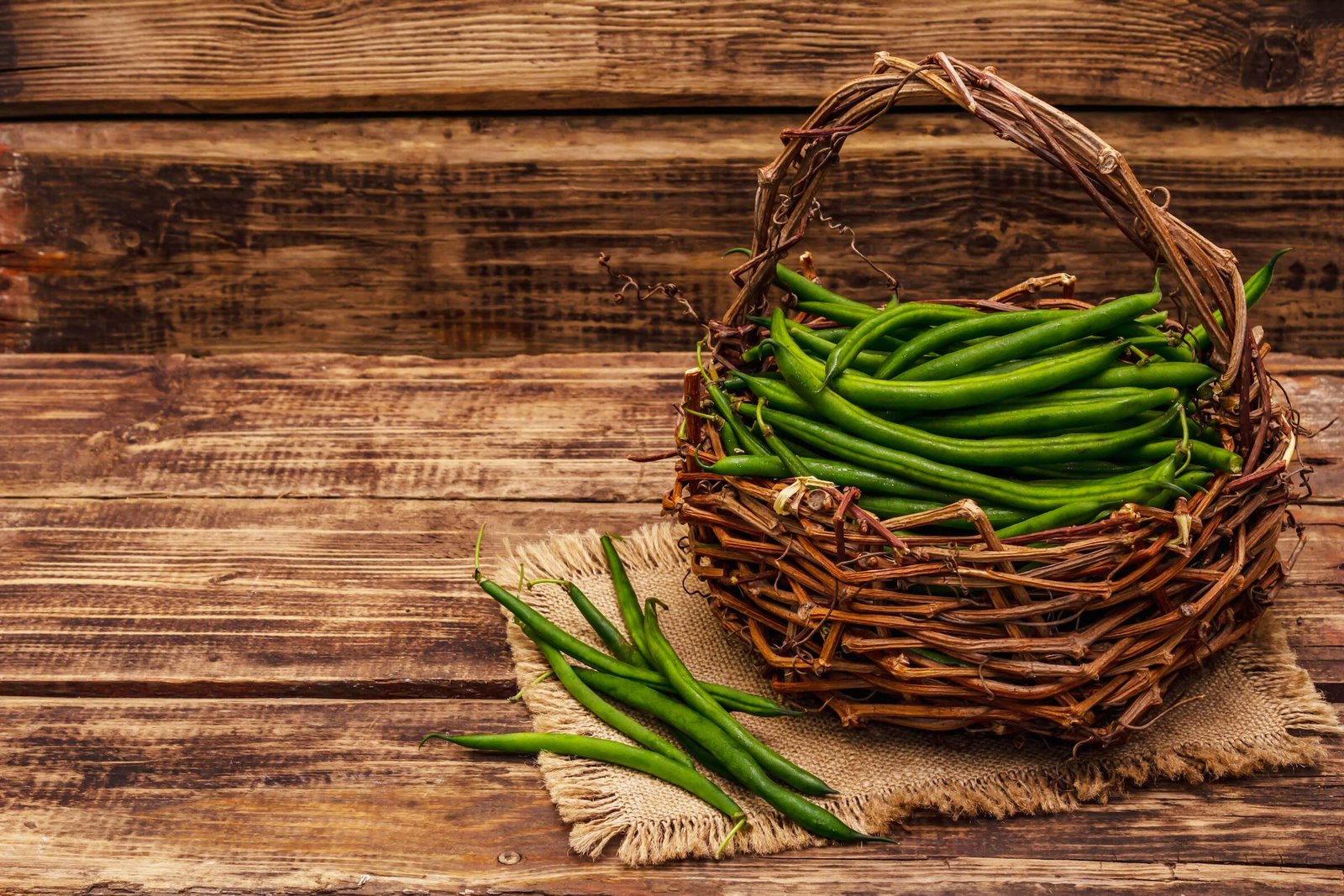
  • When the Beans Came In

    When the Beans Came In

    Long Summer Days of Work, Food and Belonging in Appalachia

    Some of my clearest memories of Appalachian summers begin in the garden.

    Harvest didn’t begin with baskets of vegetables sitting neatly on a porch. Somebody had to go out and pick everything first, and morning was better, before the heat settled heavily over the day.

    We went into the garden with buckets and baskets and started looking for what was ready. Beans hid underneath leaves and among the vines, so you had to reach into the plants and find them. Your hands got dirty. Your clothes got dirty. There might still be moisture on the plants from the morning, and little by little the empty containers began filling.

    Children weren’t spectators. We picked right alongside everyone else.

    I happened to like this arrangement because beans were one of my favorite foods. Fresh beans could be eaten while you were working, which meant a certain percentage of the harvest underwent what I considered necessary quality control before it ever reached the house.

    I’m not sure the adults considered that part of my contribution.

    There was always more than one thing coming in from the garden. Beans might have been the day’s big job, but tomatoes were ripening, cucumbers needed picking, onions were ready, and something else always seemed to be demanding attention. A garden doesn’t consult your plans before deciding that half of it is ready at the same time.

    Once everything came back toward the house, the work changed.

    THE PORCH BECAME THE WORKTABLE

    This is where my memories become less about the garden itself and more about the people around it.

    Beans came to the porch in buckets and baskets. People found places to sit, and hands stayed busy. Beans were snapped. Strings were pulled from those that needed stringing. Some would eventually be canned. Others would be dried. Pinto beans were part of the work too.

    The work itself could be repetitive, but the experience wasn’t. Someone had news. Someone had a story. Somebody remembered something that happened years before, and another person remembered it differently. People laughed, visited, kept an eye on children, wandered in and out, and helped with whatever needed doing.

    Nobody announced that we were participating in a meaningful intergenerational community activity.

    We had beans to do.

    That was enough.

    SHUCK BEANS, LEATHER BRITCHES AND THE LANGUAGE OF BEANS

    Beans have their own vocabulary in Appalachia, and that vocabulary isn’t necessarily the same from one family or community to another.

    In my family, we called them shuck beans. I also heard people use the term leather britches, and elsewhere readers may encounter shucky beans. The names can vary, but they belong to a long Appalachian tradition of preserving green beans by drying them.

    These weren’t simply dried versions of the same beans we ate fresh. Drying changed them. When eventually rehydrated and cooked, shuck beans had their own flavor and texture, different from fresh or canned beans. That difference was part of the reason preserving beans in more than one way made sense. One summer crop could become several different foods.

    Even “stringing beans” can mean more than one thing depending on the conversation. Traditional string beans often have a fibrous string that needs to be removed before cooking or preserving. Green beans could also literally be strung onto thread for drying.

    Nobody needed to standardize the vocabulary for us. Families called foods what they had always called them, and sometimes you discovered that people a few communities away had another name entirely.

    That’s part of the richness of Appalachian foodways. There isn’t always one Appalachian word, recipe, bean or method. Traditions traveled through families and communities, changing a little along the way.

    CHILDREN HAD A PLACE IN THE WORK

    Looking back, one thing I appreciate is that work and childhood weren’t treated as opposites.

    We picked. We snapped. We strung. We shucked. We fetched things when somebody needed them. We listened to conversations that weren’t necessarily directed toward us and absorbed more than the adults probably realized.

    Then we got bored.

    Or hungry.

    Or hot.

    And because we were children, sooner or later we disappeared to do something else.

    There wasn’t anything unusual about moving between work and play. We weren’t excluded from household work because we were children, but neither do I remember harvest as some grim childhood obligation. We participated because everybody participated.

    There was satisfaction in it, too. When food appeared on the table later, some part of you knew that you had helped bring it there. You had picked those beans. You had snapped them. You knew which hillside the berries came from and which tomatoes had been carried out of the garden that morning.

    You belonged to what was happening because you had a place in it.

    GO GET SOME BERRIES

    If children became hungry or restless around the middle of the day, the adults had a remarkably effective solution.

    Go gather some berries.

    Off we went.

    We knew where to go. Nobody needed to provide a lesson on identifying the berry patch or explain that wild food could be found beyond the garden. We had been there before. We knew what we were looking for.

    Of course, telling a group of children to gather berries and expecting every berry to arrive home is optimistic.

    We ate while we picked.

    By the time we returned, our fingers were stained. Our mouths and faces were stained. There was a fair chance our clothes were stained. Our stomachs were considerably fuller, and the buckets contained whatever portion of the harvest had survived us.

    The berries that did make it home could become preserves, jam, jelly, pies or something else for the family to eat. Even our break from the beans had somehow remained connected to food.

    I don’t remember anyone explaining the significance of that to us.

    Nobody said, “Today we’re going to teach you how to forage.”

    They said, “Go get some berries.”

    And we knew where to go.

    WHEN THE DAY GOT TOO HOT

    Sometimes the afternoon heat became too much and there was another place for children to disappear.

    The creek.

    We might go down and splash, swim and cool ourselves for a while. Again, nobody scheduled this. There wasn’t a designated recreational period in the day’s harvest itinerary.

    It was hot. We were kids. The creek was there.

    So we went.

    There was a rhythm to those days that I understand differently now than I did then. The garden decided when something was ready. The temperature helped decide when children needed a break. Hunger could send us toward the berry patch. Ripening fruit could suddenly become more important than whatever everyone thought they would be doing next.

    The day wasn’t entirely ruled by a clock. Things happened when they needed to happen.

    Eventually we came back from the creek.

    And, remarkably, the beans had not snapped themselves while we were gone.

    THERE WERE ALWAYS MORE BEANS

    There could still be baskets waiting when we returned, and sometimes the work continued into another day.

    That seems worth remembering now, when so much of life is measured by how quickly something gets completed. Nobody had failed because every bean wasn’t finished by a predetermined hour. There was work to do, and the work took however long it took.

    Tomorrow existed.

    The next day people could sit down again, pick up where they had stopped and keep going. Meanwhile, other parts of the harvest continued demanding attention.

    Food was being canned. Beans were drying. Cucumbers and other vegetables could become pickles. Fruit became preserves. Tomatoes and other produce were put away for later.

    Little by little, food that had been growing outside only days before began changing into something that could feed people long after summer was gone.

    But before winter came, there was supper.

    THE HARVEST SUPPER

    The first day or two of a big harvest often brought one of the meals I remember best.

    There might be fresh beans from the garden, meat, boiled potatoes, cucumbers, onions and tomatoes. Other vegetables appeared according to whatever was ready. Much of what was on the table had been growing nearby shortly before we ate it.

    Sometimes we ate outside in the yard as evening approached. By then, the worst heat was beginning to loosen its grip. Adults could finally sit down and eat, while children who had somehow recovered from all the day’s alleged exhaustion ran around with cousins and neighborhood kids.

    Nobody called it farm-to-table dining.

    It was supper.

    That’s an important distinction because I don’t remember anyone treating the food as unusual or particularly picturesque. Cucumbers, onions and tomatoes weren’t arranged to create a rustic experience. The beans weren’t there to demonstrate a return to traditional living.

    They were there because we had picked beans.

    We ate what we had, and what we had was good.

    The days after that first larger meal could be much simpler. There might be leftovers or sandwiches, plates of fresh vegetables, tomatoes, cucumbers, onions, fruit or whatever was easy to eat while the preservation work continued.

    There was something almost funny about being surrounded by so much food while nobody particularly wanted to stop working with food long enough to make an elaborate meal.

    Summer had arrived all at once, and everybody was trying to put some of it away.

    WHAT WE LEARNED WITHOUT LESSONS

    As a child, I didn’t think of any of this as education.

    Yet we were learning constantly.

    We learned how to tell when food was ready and where certain things grew. We learned how beans came off the plant and what happened to them afterward. We learned that weather mattered, that some foods could wait and others couldn’t, and that abundance brought work with it.

    We learned that the same food could taste completely different depending on what was done with it. Fresh beans weren’t canned beans, and canned beans weren’t shuck beans. Summer food could become winter food, but it changed along the way.

    We also learned who knew how to do things.

    Knowledge moved around those gatherings almost invisibly. Somebody showed you how to snap a bean properly. You watched how another person handled something. You listened while adults talked. You tried it yourself. Eventually, something that had once required instruction became something you simply knew how to do.

    Children weren’t sitting through lessons on Appalachian foodways.

    We were living inside them.

    And this wasn’t some distant pioneer past.

    We had cars. We watched television. People bought groceries. We wore the same ordinary clothes other Americans wore. Modern life and older practices weren’t mutually exclusive.

    You could watch television in the evening and still spend part of the day snapping beans with your family.

    That was simply life.

    WANT TO PRESERVE BEANS THE TRADITIONAL WAY?

    For people interested in Appalachian food traditions today, beans are a wonderful place to begin because one harvest can demonstrate several different preservation methods.

    Traditional Appalachian dried green beans, commonly called leather britches, shuck beans or shucky beans depending on the family or community, offer an especially interesting connection to the past. Drying removed enough moisture from the beans to extend their usefulness beyond the fresh harvest, while also creating a distinctive food rather than merely imitating the flavor and texture of fresh beans.

    West Virginia University Extension documents the Appalachian leather-britches tradition and describes green beans being washed, trimmed and threaded with a needle onto a long thread before being hung to dry thoroughly. Once dry, they can be stored until they’re ready to be cooked.

    For anyone interested in trying traditional food preservation, however, there is an important distinction between preserving a tradition and blindly reproducing every old household method. Food-safety knowledge has changed. Historical practices tell us how families lived and preserved food, but current Extension guidance provides tested recommendations for doing it safely today.

    WVU Extension’s resources on heritage beans and home food preservation are excellent places to begin. Readers outside West Virginia can also contact their own university Cooperative Extension service for guidance appropriate to their area.

    Learning the traditional methods isn’t only about preparing food for storage. It can help explain why families chose particular varieties, why certain foods developed distinctive flavors, and why the same crop might be eaten fresh, canned or dried.

    And if you have an older relative who remembers putting up beans, ask them what they called them.

    Shuck beans?

    Shucky beans?

    Leather britches?

    Something else entirely?

    The answer itself is worth preserving.

    MORE THAN NECESSITY

    Gardens mattered because they fed people. Putting food away mattered because summer didn’t last forever. There is no reason to pretend necessity wasn’t part of the story.

    But necessity and misery are not the same thing.

    Neither do I want to polish these memories until everybody is smiling blissfully over a basket of beans. People got tired. Children got bored. It was hot. Some jobs were tedious. I’m sure people occasionally got on one another’s nerves because that’s what happens when human beings spend enough time together.

    All of that existed beside laughter, abundance, cousins, neighbors, food, stories, creeks, berries and the satisfaction of seeing the results of your work.

    Survival and joy weren’t mutually exclusive.

    Perhaps that’s part of what can be difficult to communicate about these memories now. Looking backward, people sometimes want to sort the past neatly into hardship or nostalgia. Lived experience rarely cooperates with those categories.

    Something can be necessary and enjoyable. Work can be tiring and still create belonging. A child can contribute and still have a childhood. A family can buy groceries and still put up a garden.

    Tradition doesn’t require people to be trapped in the past.

    Sometimes it’s simply what people continue doing because it works, because they know how, because they like the food, and because somebody taught them.

    WHAT WE MAY REALLY BE MISSING

    Today, people can spend hours online watching other people garden, forage, bake bread, make preserves, can vegetables, cook from scratch and build lives around the seasons.

    I understand the attraction.

    Maybe some of what people are searching for isn’t really the jar of home-canned beans or the loaf of homemade bread. Maybe it’s the feeling surrounding those things.

    They see hands doing useful work. They see food with an origin they can understand. They see people moving according to seasons rather than notifications. They see families or friends accomplishing something together.

    Perhaps what looks like nostalgia for an older way of living is sometimes a longing for participation.

    But watching connection and experiencing connection aren’t the same thing.

    A screen can show you a family snapping beans together. It cannot give you a place in their circle.

    Participation was what made the difference.

    I didn’t belong because somebody explained belonging to me. I belonged because there was a bucket beside me and somebody expected me to help fill it. Later there was a basket of beans and a place to sit. There were berries on a hillside I knew how to find and a creek I knew how to reach.

    I had something to contribute.

    So did everybody else.

    PRESERVING MORE THAN FOOD

    Nobody sitting around those beans thought we were preserving Appalachian culture.

    We thought we were preserving food.

    But both were happening.

    The beans survived because somebody knew what to do with them. The knowledge survived because children participated. Family stories survived because people had hours to talk while their hands were occupied. Relationships were strengthened because neighbors and relatives kept showing up.

    Culture didn’t always announce itself as culture.

    Sometimes it looked like dirty hands.

    Sometimes it sounded like people talking over one another on a porch.

    Sometimes it was a child eating half the berries she was supposed to bring home.

    And sometimes it was simply a basket of beans that everybody knew needed to be finished sooner or later.

    When I think about those summers now, I remember the work, but I don’t remember it separately from the people. The two belong together.

    I can still picture evening settling over the yard after a long day. The heat finally beginning to break. Empty plates. Adults sitting around a little longer. Children still finding enough energy to play.

    There might still be beans waiting somewhere for tomorrow.

    Inside, jars were beginning to accumulate. Beans were drying. What had been growing in the summer sun was slowly being transformed into food that would remain after the garden stopped producing.

    Outside, summer was still happening.

    Inside, little by little, we were putting it away for winter.

    We just didn’t know we were preserving the memory of summer, too.

    Preserve Your Harvest Safely

    Interested in trying traditional food preservation at home? West Virginia University Extension provides science-based guidance for home canning, freezing, drying and other preservation methods, including current food-safety recommendations.

    Visit WVU Extension’s Home Food Preservation Resources →

  • Moving to Rural Appalachia: What to Know Before You Make the Move

    Moving to Rural Appalachia: What to Know Before You Make the Move

    There is a particular idea of Appalachia that tends to capture people from a distance: mountains rising beyond a front porch, small towns where people still know their neighbors, creeks winding through hollows, old farms tucked against hillsides, and a pace of life that can seem increasingly difficult to find elsewhere.

    For some people, that picture eventually leads to a serious question: What would it actually be like to move to rural Appalachia?

    The answer is more complicated, and far more interesting, than simply finding an inexpensive house in the mountains. Rural Appalachia can offer extraordinary natural beauty, strong communities, deep cultural traditions, and a different relationship with place. It can also mean long drives for healthcare, limited employment in some communities, unreliable internet service, difficult terrain, aging infrastructure, and learning how to live somewhere where relationships often matter more than newcomers expect.

    Most importantly, there is no single rural Appalachian experience. A community in northern Pennsylvania is not eastern Kentucky. Western North Carolina is not West Virginia. Northeast Tennessee is not northern Alabama. Even neighboring counties can have dramatically different economies, housing markets, geography, histories, and cultures.

    If you’re considering making rural Appalachia your home, the first step isn’t finding a property. It’s understanding the place you’re thinking about joining.

    Appalachia Is a Region, Not a Lifestyle

    One of the easiest mistakes to make when considering a move is treating Appalachia as though it were one enormous rural community. The Appalachian region stretches across hundreds of counties and encompasses communities with remarkably different histories, economies, landscapes, and ways of life.

    There are coal communities and farming communities, former industrial towns and growing tourism destinations, college towns, mountain communities, river valleys, and places that have remained remarkably isolated despite being only a few hours from major cities. Even the word rural deserves some attention because not every Appalachian county is rural, and not every place that feels rural on a map functions the same way.

    A house fifteen miles outside a thriving regional town can provide a very different experience from one forty-five minutes from the nearest grocery store. Before asking whether you want to live in rural Appalachia, it may be more useful to ask: Where in rural Appalachia would actually fit the life you need to live?

    Don’t Choose a Community Based on the House

    A beautiful property can make it easy to fall in love too quickly. Maybe it’s an old farmhouse with several acres, a cabin surrounded by woods, or simply a house that would cost substantially more where you live now. The property, however, is only one part of the decision.

    Before buying or renting, find out what everyday life from that address actually requires. How far is the nearest grocery store, hospital, pharmacy, school, or workplace? What happens when it snows? Is the road maintained by the county, state, an association, or nobody at all? Is the property on public water or a well? Does it have municipal sewer or a septic system? Does your cell phone work there, and can you actually get reliable internet at that particular address?

    Those questions aren’t meant to discourage anyone from rural living. They’re part of understanding what rural living actually entails. A twenty-minute drive through the mountains can feel very different from twenty minutes on a suburban highway, and distance alone doesn’t tell you the whole story.

    Affordable Doesn’t Always Mean Inexpensive

    Housing affordability is one of the reasons people become interested in parts of Appalachia, but broad claims about “cheap Appalachian housing” can be misleading. Housing markets vary enormously throughout the region. Some communities still have relatively low home prices compared with national averages, while others have experienced significant increases because of tourism, second-home ownership, retirement migration, remote workers, or proximity to growing metropolitan areas.

    The purchase price isn’t the only cost. Older rural homes may need substantial electrical, plumbing, roofing, foundation, heating, or septic work. Mountain properties can introduce drainage and access issues, long driveways require maintenance, and wells and septic systems become the homeowner’s responsibility. Heating costs can also vary considerably depending on the house and location.

    Land can bring surprises of its own. A beautiful acreage may contain steep terrain that isn’t practically usable. Mineral rights may have been separated from surface rights generations ago in some areas, while flooding, landslides, abandoned mine lands, easements, and access rights can matter depending on the location.

    If you’re considering property near a creek, river, or low-lying area, the FEMA Flood Map Service Center is a useful starting point for researching mapped flood hazards. Local knowledge matters too. Ask about previous flooding, road closures, drainage problems, and events that may not be obvious during a showing.

    FEMA Flood Map Service Center

    A bargain isn’t a bargain if you discover after closing that making the property safe and functional will require tens of thousands of dollars in unexpected work. Research the property as carefully as you research the price.

    Broadband Can Determine Whether Rural Living Works for You

    For someone who works remotely, internet access isn’t a convenience. It’s infrastructure. Broadband access has improved throughout Appalachia, but availability remains uneven, particularly in rural communities.

    Don’t rely exclusively on a real estate listing that says “high-speed internet available.” Check the actual address using the FCC National Broadband Map, then talk to neighbors and contact the providers serving the area. A service being listed as available does not necessarily tell you what everyday performance will be like at that particular property.

    FCC National Broadband Map

    The same applies to cellular coverage. Mountains have an inconvenient habit of getting between phones and towers, and coverage can change remarkably quickly with terrain. A property can be perfect in every other respect and still be impractical if your livelihood depends on connectivity that isn’t actually there.

    Healthcare May Be Farther Away Than You Expect

    Healthcare access deserves serious consideration, particularly for people who regularly need specialized care, older adults, and families with young children. A community may have a clinic or small hospital nearby while specialized care requires traveling to a larger regional center.

    That doesn’t necessarily make the community unsuitable. Rural Appalachians have navigated these distances for generations, but a person choosing to move there should understand those distances before they become urgent.

    Look beyond the nearest hospital. Find out where you would need to travel for specialists such as cardiology, orthopedics, pediatrics, cancer care, mental-health services, or other care your household may need. Medicare Care Compare can be a useful starting point for locating hospitals and healthcare providers around a prospective community.

    Medicare Care Compare

    If you need regular specialized treatment, calculate the real trip rather than simply looking at mileage. Mountain roads have their own definition of “nearby.”

    Employment Is Highly Local

    Another mistake is assuming there is one Appalachian job market. Employment opportunities can change dramatically from county to county. Healthcare and education may be major employers in one community, manufacturing may dominate another, and tourism and hospitality may support another. Some areas have growing small-business and remote-work communities, while others continue to struggle with the loss of industries that once supported generations of families.

    If you aren’t bringing a remote job or retirement income with you, investigate employment before relocating. Look at the actual employers in the area, the wages they offer, and how those wages compare with local housing costs. Find out how far residents typically commute and whether the available work matches your skills and needs.

    The U.S. Bureau of Labor Statistics provides employment and wage information that can help you understand regional economies, but don’t stop with statistics. Local economic-development organizations, chambers of commerce, newspapers, employers, and people who actually live in the community can provide context that a spreadsheet cannot.

    U.S. Bureau of Labor Statistics Employment Data

    A low cost of living isn’t particularly helpful if local wages are proportionally lower or the work you need simply isn’t available.

    Community Isn’t an Amenity

    This may be one of the most important things for newcomers to understand. People sometimes describe Appalachian communities as “friendly” or “close-knit” as though community were another feature listed beside mountain views and hiking trails. Community is more complicated than that.

    In many rural places, relationships have been built across generations. Families have helped one another through deaths, births, illnesses, floods, fires, crop failures, unemployment, weddings, church dinners, school events, and countless ordinary days. You don’t purchase membership in that network when you purchase property. You become part of a community by participating in it.

    That can mean buying from local businesses, learning people’s names, attending community events, helping when somebody needs help, and listening more than talking at first. It can also mean understanding that the person repairing your truck may be someone’s cousin, deacon, former teacher, volunteer firefighter, and Little League coach.

    Perhaps most importantly, it means resisting the urge to immediately explain how everything could be done better based on wherever you came from. Rural communities aren’t waiting to be discovered or improved by newcomers. People already live there, and the community had a history long before the moving truck arrived.

    Learn the Place Before Trying to Change It

    Every Appalachian community has history underneath what you see today. An abandoned building may once have employed half the town. A road may carry a family name because that family has lived there for two hundred years. A creek may have flooded repeatedly within living memory, while a church that looks insignificant from the highway may hold generations of local history. An empty hillside may once have contained houses, a mine, a school, or an entire community.

    Understanding those things changes how you see a place. Spend time there before moving if you can, and don’t limit your visits to festival weekends or peak tourist seasons. Go in February. Visit when it’s raining. Drive the roads after dark. Shop at the grocery store, eat where local people eat, read the local newspaper, and visit the library.

    Most importantly, talk to people without treating them like research subjects. Give yourself an opportunity to see what the community feels like when nobody is performing Appalachia for visitors.

    Don’t Move to Appalachia Looking for a Fantasy

    There are beautiful things about living in rural Appalachia, but there are also ordinary things. People go to work. Kids complain about school. Roads need repairs. Businesses close and new ones open. Neighbors disagree. Families struggle, communities celebrate, people leave, and people come home.

    The mountains don’t magically produce a simpler life. Sometimes rural life is considerably more complicated. What it can offer is a different relationship with distance, community, landscape, and time.

    Whether that is right for you depends much less on an idealized vision of mountain living and much more on whether you’re willing to understand the realities of the particular place you’re considering.

    Research Your Move

    Moving to rural Appalachia deserves more research than comparing home prices and looking at photographs of properties online. Once you’ve narrowed your search to a particular community, spend some time investigating what everyday life there actually requires. The following resources provide useful starting points, but they work best when combined with local knowledge.

    Internet and Cell Service: The FCC National Broadband Map allows you to research reported broadband availability at individual locations and explore mobile coverage. Always confirm service directly with providers and, when possible, with people living nearby.

    FCC National Broadband Map

    Flood Hazards: The FEMA Flood Map Service Center provides official flood-hazard maps. In mountain communities, also ask residents about previous flooding, drainage problems, washed-out roads, and creek behavior during heavy rain.

    FEMA Flood Map Service Center

    Healthcare: Medicare Care Compare can help identify hospitals and healthcare providers near a prospective community. Remember to investigate specialized care separately if someone in your household regularly needs it.

    Medicare Care Compare

    Employment and Wages: The U.S. Bureau of Labor Statistics provides employment and wage information that can help you begin evaluating a regional economy. Local economic-development agencies, chambers of commerce, newspapers, and major employers can provide additional community-level information.

    U.S. Bureau of Labor Statistics

    Community and Housing Data: U.S. Census Bureau QuickFacts provides population, housing, income, education, and other information for many communities.

    U.S. Census Bureau QuickFacts

    Regional Appalachian Data: The Appalachian Regional Commission’s Research and Data Center provides county-level and regional economic and demographic research for the federally designated ARC region. ARC is particularly useful for researching economic conditions, population, housing, employment, broadband, and other regional trends.

    Appalachian Regional Commission Research and Data

    No database can tell you everything you need to know about a place. Use these resources as starting points, then talk to the people who actually live there. Local libraries, newspapers, community organizations, county offices, businesses, and residents can often provide the context that statistics cannot.

    Come With Curiosity

    If you’re seriously thinking about moving to rural Appalachia, don’t begin by asking where you can buy the cheapest house. Research several communities, visit them more than once, understand their economies, learn their histories, and investigate healthcare, employment, broadband, schools, utilities, roads, taxes, and housing.

    Then ask a different question:

    Where could I belong?

    Spend some time simply listening. Appalachia doesn’t need newcomers to arrive with a predetermined idea of what the region is supposed to be. Come curious enough to discover what a particular place actually is.

    You may find that the mountains are exactly where you want to build your life. If you do, the most important thing you bring with you won’t fit inside the moving truck. It will be your willingness to become part of the place rather than simply live in it.


    Frequently Asked Questions About Moving to Rural Appalachia

    Is it cheaper to live in rural Appalachia?

    It can be, but there is no single Appalachian housing market or cost of living. Home prices, property taxes, utilities, insurance, transportation costs, and wages can vary substantially between states, counties, and even neighboring communities. Some areas experiencing tourism, second-home development, retirement migration, or population growth may be considerably more expensive than prospective residents expect.

    Can I work remotely from rural Appalachia?

    In many communities, yes, but reliable broadband and cellular service should be confirmed for the specific property before you move. Coverage can vary significantly over short distances in mountainous terrain, so check reported service using the FCC National Broadband Map, contact providers directly, and ask nearby residents about their actual experience.

    What should I check before buying rural property in Appalachia?

    Look beyond the house itself. Investigate road access and maintenance, wells or public water, septic systems, internet and cellular service, flooding and drainage, property boundaries, easements, mineral rights where applicable, heating systems, terrain, and the distance to groceries, healthcare, schools, and employment. A qualified local home inspector and appropriate local professionals can help identify issues specific to the property and area.

    What should newcomers know about moving to an Appalachian community?

    Arrive willing to listen and learn. Appalachian communities have their own histories, relationships, and ways of doing things, and those can vary considerably from one place to another. Participate in the community, support local businesses, learn about the area’s history, and give relationships time to develop. Moving somewhere gives you an address; becoming part of a community takes longer.

    Explore Before You Move

    Considering a particular part of Appalachia? Explore The Appalachian Magazine’s Destination Resources to discover the communities, landscapes, history, culture, and places that make each part of the Appalachian region distinct.

    Explore Appalachian Destination Resources →

  • The Legacy of My Melungeon Heritage: Following My Family Through America’s Backcountry

    The Legacy of My Melungeon Heritage: Following My Family Through America’s Backcountry

    Resilience, identity, and generations of interconnected Appalachian families

    I already knew we were mixed. That was never the revelation.

    What I didn’t know was all of the family names, how many of those families were connected to one another, or exactly how deep their roots reached into America’s past.

    The farther I followed my father’s family backward, the more familiar names began appearing. Mullins. Gibson. Collins. Sizemore. Justice. Thacker. Stallard. Akers. Ratliff. Webb. Addington. Blackburn. And still more.

    Some are names researchers have associated directly with historic Melungeon communities. Others entered my family through generations of marriages among families living across the same Virginia, Tennessee, Kentucky, and Carolina backcountry.

    I didn’t find one distant Melungeon ancestor hiding in an otherwise unrelated family tree. I kept finding families, and then I found more of them. The farther back I went, the more I began to understand that this wasn’t simply one interesting branch of my father’s ancestry. These were the people who made up much of the tree.

    A Word Written Down in 1813

    There is one reason the word Melungeon holds a particularly important place in my understanding of my heritage. It involves my fifth great-grandmother, Susan, or Susanna, Stallard.

    On September 26, 1813, the members of Stony Creek Baptist Church in Scott County, Virginia, gathered for a church meeting. During the meeting, Sister Kitchen brought a complaint against Susanna Stallard.

    The surviving church minutes record the accusation:

    “Susanna Stallard for saying she harbored them Melungins.”

    It is a tiny fragment of an ordinary disagreement between two women. More than two hundred years later, it is extraordinary.

    The 1813 Stony Creek minutes contain one of the earliest surviving written appearances of the word that would eventually be spelled Melungeon, and my fifth great-grandmother is standing right there in the middle of it.

    That does not prove Susanna herself was Melungeon, nor do I need it to. Its importance to me is different.

    The word existed in her world. The people sitting in that church apparently understood who was being discussed. Nobody stopped the meeting to define a “Melungin.” The clerk simply wrote it down.

    For me, that makes Melungeon more than a term encountered in a genealogy book generations later. The word is embedded in my family’s historical landscape.

    They Were Already Here

    One of the strangest things about tracing my father’s ancestry was discovering just how long these families had been in America. By the middle of the eighteenth century, most of the ancestral lines I have traced were already here.

    But when we hear the words colonial ancestors, our imaginations often go somewhere that doesn’t resemble the world I found in my genealogy. I wasn’t looking primarily at wealthy planters, prominent merchants, or people living at the center of colonial society.

    Again and again, I found people farther out. They were backcountry people living along rivers and creeks, moving into newly settled territory, establishing farms and communities, joining small churches, marrying people from neighboring families, and continuing farther into the mountains.

    Long before modern state borders made these places seem separate, families moved through Virginia and the Carolinas and eventually into the mountain country of Tennessee, Kentucky, and what became West Virginia.

    That movement is important to the larger Melungeon story as well. Historical and genealogical research has traced families later associated with Melungeon communities from Virginia and North Carolina into northeastern Tennessee and southwestern Virginia. Newman’s Ridge and Blackwater Valley in what became Hancock County, Tennessee, eventually became the best-known Melungeon communities, but those communities were part of a much larger network of families and migrations.

    My own family tree moves through that same broader backcountry world.

    The Families Behind the Name

    There is a temptation when discussing Melungeon genealogy to produce a list of surnames: Collins, Gibson, Mullins, Goins, Bunch, Bowlin, Denham. Those are among the surnames identified with some of the earliest documented Melungeon families.

    But surnames alone cannot tell this story. Not every Mullins was Melungeon. Neither was every Gibson, Collins, or person carrying another surname later associated with Melungeon families. The geography matters. The records matter. Above all, the relationships matter.

    That’s what became so striking when I began looking at my own genealogy. The names didn’t simply appear independently. They connected.

    Families married into other families. Their children married into still others. Generations later, branches crossed again. A surname that seemed unrelated at first could lead back into another family I had already encountered several generations earlier.

    Eventually, the genealogy stopped looking like a collection of separate family names.

    It began looking like a community.

    My Mullins Family

    The Mullins line is one of the clearest examples.

    My family traces through James Booker Mullins and his wife, Mary Polly Newsome, and through descendants who lived in the mountain country around Grassy Creek, Russell and Buchanan counties in Virginia, and the surrounding Virginia-Kentucky borderlands.

    Later generations include John Wesley Mullins and Mariah Reed, George Washington Mullins and Martha Lurinda Fuller, and still more Mullins descendants. These aren’t simply names from a list of people historically associated with Appalachia. They are branches leading toward people my family actually knew.

    Then there is Lena.

    Lena Mullins is not merely a name several generations removed from me on a genealogy chart. She belongs to family memory, and when I think about Lena, I remember butter mints.

    That tiny detail may seem insignificant beside church records, racial classifications, migration patterns, and centuries of genealogy. To me, it isn’t. It is exactly the point.

    Genealogy gives us names. History gives us context. Memory gives those people back their humanity.

    Somewhere between James Booker Mullins in the early American backcountry and a woman I remember with butter mints, history became family.

    Gibson, Collins, and Stony Creek

    The connections continue elsewhere in my tree.

    My Gibson ancestry also intersects with the world surrounding Stony Creek, and Collins relatives enter the extended family through marriage. That matters because Collins and Gibson families appear prominently in research concerning the early Melungeon population.

    The surviving Stony Creek church records contain members of those families years before Susanna Stallard’s dispute was recorded in 1813.

    This is one reason I resist the old image of Melungeons as some mysterious people hidden away from everyone else in the mountains. The records show something much more ordinary and much more interesting.

    These people belonged to churches. They married, moved, bought and worked land, argued, raised children, appeared in courtrooms, and worshipped alongside their neighbors. Some eventually moved farther into Tennessee.

    They weren’t characters waiting for nineteenth-century writers to discover them. They were living their lives.

    A Family Tree That Keeps Folding Back Into Itself

    As my research expanded, I began recognizing another pattern. The same interconnected families kept returning.

    My father’s parents both carried ancestry connected to this larger population. Following either side backward doesn’t lead neatly away from it. Instead, branches intersect with other branches.

    Mullins connects to Fuller and Reed. Other branches bring in Justice, Thacker, and Blackburn. Sizemore, Gearheart, Halbert, Addington, Stallard, Akers, Ratliff, Webb, Perry, and others appear as the generations expand.

    Some surnames have direct historical associations with documented Melungeon communities. Others became connected to my particular family through marriage. That distinction is important.

    I don’t believe a surname should ever be used as proof that someone was Melungeon. But when generations of documented families occupy the same geographical world, repeatedly intermarry, and connect back into historically identified families, the relationships themselves become part of the story.

    The more generations I uncovered, the more those relationships appeared.

    Mixed Was Never the Secret

    This is perhaps the biggest difference between my experience and the popular modern story of discovering Melungeon ancestry.

    I didn’t need a DNA test to shock me with the revelation that my family was mixed. I already knew.

    What I didn’t understand was the depth. I didn’t know all their names. I didn’t know how many branches connected. I didn’t know how early many of them were living in America.

    And I didn’t understand how much history could disappear while the people themselves remained.

    That last part may be the most important.

    When Identity Had Consequences

    Today, genealogy can feel almost recreational. We build trees, search databases, compare photographs, order DNA tests, and watch percentages appear on screens.

    Our ancestors did not live in that world.

    For them, racial identity could affect where someone was permitted to live, whether someone could vote, whom someone could legally marry, how neighbors treated a family, and what opportunities were available to their children.

    Free people of color occupied an especially complicated place in Virginia and other Southern states. They were free, but freedom did not mean equality. Laws and social customs placed restrictions upon them, and racial classifications could carry consequences that followed families across generations.

    Melungeon families encountered their own forms of discrimination. The word itself was often not something people proudly called themselves. It could be an insult, something whispered, something assigned by somebody else, or something a family might prefer their children eventually forget.

    That changes how I understand some of the people I knew.

    My Grandmother Polly

    My grandmother Polly could become genuinely angry if someone suggested that she looked Native American.

    When I was younger, that reaction was difficult to understand. Why would that make someone angry?

    Genealogy has made me reconsider the question.

    Today, people can proudly explore complicated ancestry from the relative safety of historical distance. Previous generations did not necessarily have that luxury. There were good reasons people learned to control what was said about a family’s ancestry, reasons identities became simplified, and reasons stories changed.

    There were also reasons children sometimes weren’t told things.

    Perhaps the most durable inheritance from discrimination isn’t always the label itself. Sometimes it is the instinct to avoid the label.

    The explanation can disappear while the reaction remains.

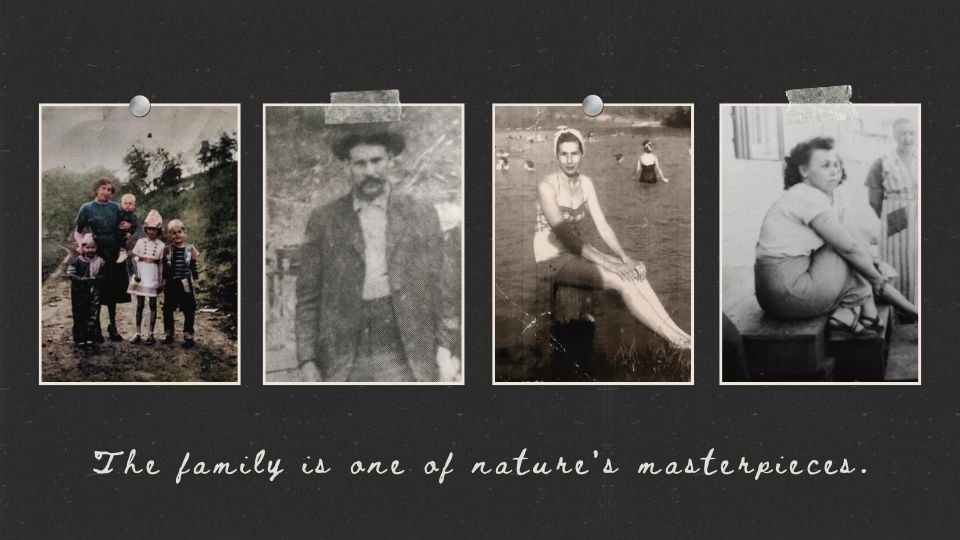
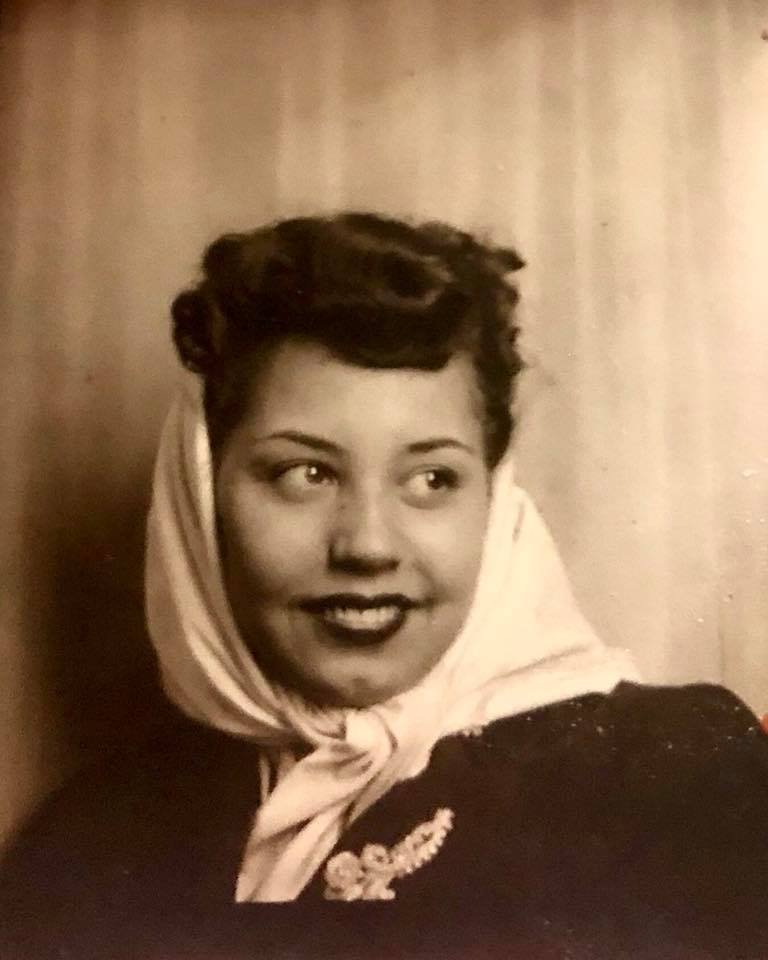
    A personal collage of photographs from several generations of the author's Appalachian family, including her grandmother Polly. The images accompany a reflection on genealogy, memory, Melungeon heritage, and the people whose individual lives are often reduced to names and dates on a family tree.

    More Than Three Races

    Melungeons have frequently been described with the old phrase “tri-racial isolate,” usually referring to European, African, and Native American ancestry. That terminology is useful for understanding older scholarship, but human ancestry is rarely as tidy as the label suggests.

    The people who eventually became associated with Melungeon communities were the products of complicated populations living in early America. European ancestry was part of that history. African ancestry was part of it. Native American ancestry appears in some lines.

    Individual families have their own histories, and not every ancestral component belongs equally to every Melungeon descendant. That complexity is important.

    There was never one Melungeon ancestor from whom everybody descended. There was never one moment when three neatly separated populations came together and created a new people.

    There were families, and families kept marrying families.

    The Mystery We Created

    For generations, writers seemed unable to resist making Melungeons mysterious.

    Were they Portuguese? Turkish? Lost colonists? Shipwreck survivors? Descendants of some forgotten expedition?

    The theories became part of the Melungeon story, but increasingly, I find the ordinary explanation far more compelling.

    These were people already living in early America whose ancestry and social identities did not fit comfortably inside the racial categories later Americans tried to impose upon them. Their descendants moved and intermarried. Some assimilated into surrounding white communities. Others continued to be identified as Melungeon or by other racial classifications. Eventually, some descendants stopped hearing the word altogether.

    Nothing about that makes their history less remarkable.

    Quite the opposite.

    Following Them Into America’s Past

    The farther I follow my family backward, the less distant early American history feels.

    The eighteenth century stops being something populated entirely by famous men whose portraits hang in museums. It becomes Susan Stallard standing before a small Baptist congregation while someone records a dispute in a church book.

    It becomes Gibson and Collins families moving through Virginia and toward Tennessee. It becomes Mullins families in the Carolina, Virginia, and Kentucky backcountry. It becomes people whose names survive because they married, bought land, appeared in court, joined churches, had children, or irritated their neighbors badly enough that somebody wrote it down.

    They were not standing outside American history. They were helping populate it, and they were doing so from places that don’t always occupy much space in the traditional telling of America’s beginnings.

    What DNA Cannot Tell Me

    DNA has transformed genealogy, and it can be an extraordinary tool. But there are questions DNA cannot answer.

    It cannot tell me what Susanna Stallard meant when she used the word recorded as Melungins. It cannot tell me what someone whispered about another family or why Polly became angry. It cannot tell me what was intentionally forgotten.

    And it certainly cannot tell me that Lena had butter mints.

    Those things require something more: records, context, family stories, memory, and the willingness to admit when we simply don’t know.

    That last part matters to me. There are contradictions in old genealogies. Dates don’t always agree. Birthplaces change from one family tree to another. People with identical names are easily confused. Family stories can preserve truth, but they can also change over generations.

    I don’t need to fill every blank.

    The history that can be documented is remarkable enough.

    Reclaiming Melungeon

    There is something almost circular about my relationship with the word.

    In 1813, it appears in a surviving record involving my fifth great-grandmother because two women were having a disagreement: “…them Melungins.”

    Whatever else was said that day has disappeared. The word remained.

    Then generations passed. Families moved through Virginia, Tennessee, Kentucky, and beyond. They married and their children married. Identities shifted. Some histories were remembered. Others weren’t.

    Eventually, two descendants carrying many of these interconnected Appalachian lines became my father’s parents.

    Generations after Susanna Stallard stood before that congregation, one of her descendants began following those families backward.

    Me.

    What I Found

    I did not discover that I was Melungeon.

    I discovered what that heritage contained.

    I found names I hadn’t known, places I hadn’t known, and connections between families I hadn’t recognized. I discovered that people I had initially thought belonged to separate branches were part of a much older web of families.

    Every time I thought I had reached the edges of it, another marriage, another surname, another county, or another record opened another path.

    The roots kept going. They still do.

    Perhaps that is why genealogy has changed what the word Melungeon means to me. It isn’t primarily a racial category. It isn’t a romantic mystery. It isn’t a list of approved surnames, and it isn’t a percentage in my DNA.

    It is a way of describing part of the historical world my family came through.

    Closing Thoughts: The People Behind the Tree

    Family trees can become enormous. Eventually the screen fills with boxes, names, and dates. One generation opens into two, then four, then eight, until hundreds of people disappear into a diagram.

    But those boxes were once lives.

    Susan wasn’t waiting around in 1813 to become somebody’s fifth great-grandmother. Polly didn’t know one of her descendants would someday reconsider her reaction to questions about ancestry. Lena certainly didn’t know that something as simple as her butter mints would survive in someone else’s memory.

    They were living in their own present.

    That may be what I value most about finding them.

    I already knew my family was mixed. What I didn’t know was how deep in America’s past their story went. I didn’t know how many roads would lead through the backcountry, how many familiar surnames I would encounter, or how often branches that seemed separate would eventually find one another again.

    I began with a family tree.

    What I found was a community.

    Behind that community were not mysterious people hiding somewhere in the Appalachian Mountains. They were simply people. Complicated people. Stubborn people. People who loved and fought, moved and stayed, remembered and forgot. People who survived long enough to become somebody else’s ancestors, mine among them.

    Their story isn’t valuable because every question about them can be answered. It is valuable because they were here.

    And after generations in which parts of that history were misunderstood, hidden, simplified, or forgotten, I have the privilege of learning their names again.

  • Made in the Mountains: Where to Experience Appalachian Art & Craft

    Made in the Mountains: Where to Experience Appalachian Art & Craft

    There is a difference between seeing something handmade and understanding what it took to make it.

    A river cane basket begins long before the weaving. Wood must be chosen before it can be carved. Clay passes through hands before it reaches the kiln. A loom does not weave by itself, and knowing how to turn fiber into cloth is knowledge learned through practice, repetition, mistakes, and often another person willing to teach.

    Across Appalachia, those skills have traveled through generations.

    Some were born from necessity. People made what they needed because buying it was difficult, expensive, or simply impossible. Other traditions carried cultural meaning that went far beyond usefulness. Over time, old methods met new materials, individual artists pushed traditional forms in different directions, and craft became both livelihood and artistic expression.

    That story is still unfolding.

    Appalachian art does not belong only in museums or history books. It is being carved, woven, thrown, fired, forged, painted, stitched, taught, exhibited, and sold right now.

    To understand it, you have to go where the work is still happening.

    Qualla Arts and Crafts Mutual, Cherokee, North Carolina

    Art, identity, and a cooperative built by Cherokee makers

    There is no better place to begin than with the people whose artistic traditions in these mountains long predate the word Appalachia itself.

    In 1946, Cherokee craftspeople and community leaders established Qualla Arts and Crafts Mutual to preserve and promote Cherokee arts while creating economic opportunities for Cherokee artists. Importantly, the organization was placed under the direction of the artisans it represented, and it remains overseen by an artisan board today.

    Walk through Qualla Arts and you encounter basketry made from river cane, white oak, and honeysuckle; pottery; beadwork; fingerweaving; jewelry; quilts; and wood and stone carving. The cooperative carries thousands of handcrafted pieces made by member-artists who are enrolled members of the Eastern Band of Cherokee Indians.

    But the importance of Qualla cannot be measured simply by how much is displayed there.

    A basket has an artist.

    The material has a source.

    The pattern has knowledge behind it.

    Consider river cane basketry. Before weaving begins, cane has to be found and gathered, split into narrow strips, prepared, and sometimes colored using natural dyes. Only then does the actual weaving begin. That knowledge has been carried between generations of Cherokee basket makers for centuries.

    And it continues to move forward. Qualla artist Marlena Bradley, for example, learned basket making by watching her parents and grandmothers as a child. She now teaches those skills to younger people herself.

    That is living tradition in its clearest form.

    Experience it: Visit the cooperative and gallery at 645 Tsali Boulevard in Cherokee. Hours vary seasonally, so check before traveling.

    Qualla Arts and Crafts Mutual

    The Folk Art Center, Asheville, North Carolina

    Where more than a century of Southern Appalachian craft meets the present

    Drive the Blue Ridge Parkway through Asheville and you can pull into a place where the history of the Southern Appalachian craft movement sits beside work being made today.

    The Folk Art Center is home to the Southern Highland Craft Guild and contains exhibition galleries, a craft shop, library, auditorium, and National Park Service information desk.

    Its permanent collection provides a remarkable look backward.

    Approximately 250 pieces represent Appalachian craft from the nineteenth and twentieth centuries, including woodcarving, furniture, textiles, basketry, pottery, and dolls. The collection also contains work associated with places that helped sustain craft traditions and connect makers to markets, including Berea College, John C. Campbell Folk School, and Penland School.

    But this isn’t merely a collection of things people used to make.

    The Southern Highland Craft Guild represents contemporary makers working across the Appalachian mountain regions of nine states. The Folk Art Center also hosts exhibitions, educational events, and live demonstrations.

    From March through December, visitors can watch free daily craft demonstrations.

    That may be one of the most valuable parts of visiting.

    A finished object tells you what someone made.

    Watching a craftsperson work begins to tell you how much they had to know to make it.

    Experience it: The Folk Art Center is at Milepost 382 on the Blue Ridge Parkway in Asheville.

    Folk Art Center and Southern Highland Craft Guild

    John C. Campbell Folk School, Brasstown, North Carolina

    Where you don’t just look at craft, you learn to make something

    Some traditions survive because people preserve the finished objects.

    Others survive because somebody teaches the next pair of hands.

    That idea is at the heart of John C. Campbell Folk School.

    The school opened in Brasstown in 1925, influenced by the Danish folk-school model. Its founders envisioned education that was collaborative, practical, noncompetitive, and deeply connected to rural community life. From the beginning, hands-on learning was central to the school’s philosophy.

    A century later, that principle remains.

    The Folk School now offers hundreds of weeklong and weekend classes each year covering traditional and contemporary craft, art, music, dance, cooking, gardening, nature studies, photography, writing, and more. There are no grades and no competition.

    The list of subjects alone gives some sense of the breadth of making still practiced there: blacksmithing, basketry, broom making, chair seats, clay, dyeing, instrument making, quilting, spinning, weaving, woodcarving, woodworking, and dozens more.

    The Brasstown Carvers offer a particularly revealing example of how craft, community, and economics can intersect.

    The carving program developed during the early twentieth century and helped local farming families supplement their incomes. Finished carvings were brought back to the school, where makers gathered, exchanged ideas, and continued learning from one another. The tradition continues today.

    That is an important part of Appalachian craft history that can easily get lost beneath romantic descriptions of handmade objects.

    Craft could be beautiful.

    It could also help pay for a house.

    Experience it: Visitors can explore programs, events, performances, classes, and the Craft Shop. Anyone wanting a deeper experience can actually enroll and learn.

    John C. Campbell Folk School

    Arrowmont School of Arts and Crafts, Gatlinburg, Tennessee

    Behind the tourist strip, a century of making continues

    Gatlinburg is one of Appalachia’s busiest tourism towns.

    Walk away from the Parkway, however, and another part of its history emerges.

    Arrowmont School of Arts and Crafts sits on a wooded campus just beyond the shops and attractions of downtown. Its roots reach to 1912, when the Pi Beta Phi Settlement School was founded in what was then a much more isolated mountain community. Arts and crafts eventually became increasingly central to the school’s work, and summer craft workshops began in 1945.

    Today Arrowmont is an internationally recognized arts education center offering more than 200 creative experiences annually. Its programs include workshops, exhibitions, artist residencies, community programs, and initiatives connected specifically to Appalachian craft.

    Its galleries are free and open to the public, and its workshops range from opportunities for beginners to intensive study for experienced artists.

    Arrowmont also illustrates something important about Appalachian art.

    Tradition does not have to mean repetition.

    Preserving basketry, weaving, woodworking, or other established practices does not require artists to make precisely what someone made a hundred years ago. Contemporary artists can understand the traditions that came before them while experimenting with materials, forms, and ideas of their own.

    Living traditions change because living people change them.

    Experience it: Explore an exhibition, visit the campus, or take a workshop. Public hours can vary around workshop schedules, so check current visitor information before going.

    Arrowmont School of Arts and Crafts

    Grovewood Village, Asheville, North Carolina

    Where the workshop walls remember

    At Grovewood Village, the buildings themselves are part of the craft story.

    The historic Asheville property once housed the weaving and woodworking operations of Biltmore Industries, an influential Arts and Crafts enterprise associated with Edith Vanderbilt and craft educators Eleanor Vance and Charlotte Yale. By the late 1920s, Biltmore Industries had become a substantial handweaving operation.

    Eventually the looms fell silent.

    But the making did not disappear.

    In 1992, Grovewood Gallery and working artist studios opened on the historic property. Today the village includes a gallery, working artist studios, the Biltmore Industries Homespun Museum, and other attractions.

    There is something fitting about contemporary artists creating pottery, glass, jewelry, furniture, and sculpture in buildings once occupied by earlier craftspeople.

    The materials have changed.

    The artists have changed.

    The economic world surrounding them has certainly changed.

    The impulse to make something with skill and intention remains.

    Grovewood lets you encounter several layers of that story in one place: historic production, contemporary studio practice, finished work in the gallery, and the physical spaces where people continue to make things.

    Experience it: Grovewood Village and Grovewood Gallery are open to visitors. The artist studios have designated public tour dates, while visits at other times may require an appointment.

    Grovewood Village

    The Bascom, Highlands, North Carolina

    Appalachian art has never stopped evolving

    Traditional craft is essential to Appalachia’s artistic story.

    It is not the entire story.

    The Bascom in Highlands provides an excellent reminder that today’s mountain communities also support painters, sculptors, ceramic artists, educators, experimental makers, and artists whose work may have little resemblance to what visitors expect when they hear the words “Appalachian craft.”

    The Bascom began as a small exhibition space in the Hudson Library and today occupies a six-acre former horse farm near downtown Highlands. Its campus includes galleries, classrooms, a ceramics studio, sculpture and nature trail, and an 87-foot covered bridge at the entrance.

    Its exhibitions feature local and regional artists alongside national and international work, while classes and workshops give people opportunities to create rather than simply observe. Gallery admission is free.

    That combination matters.

    Appalachian art should never become a costume the region is expected to wear forever.

    The mountains can hold an old basket pattern and a contemporary sculpture at the same time.

    One does not invalidate the other.

    Together, they show a creative culture that has a past without being trapped in it.

    Experience it: Visit the galleries, walk the sculpture trail, explore the ceramics studio, or look for a class or workshop.

    The Bascom: A Center for the Visual Arts

    Follow the Blue Ridge Craft Trails

    Sometimes the best gallery is an artist’s own community

    There is another way to experience Appalachian art.

    Instead of choosing one institution, follow the makers.

    Western North Carolina alone is home to thousands of craftspeople working across a remarkable range of traditions and contemporary forms. The Blue Ridge National Heritage Area’s craft resources connect visitors with studios, galleries, arts organizations, schools, cultural centers, festivals, and individual makers throughout the region.

    This changes the experience.

    You aren’t simply walking into a large institution and seeing Appalachia interpreted in one place. You may find yourself driving into a small town, walking into a pottery studio, discovering a weaver, meeting a woodworker, or finding a gallery run by the community around it.

    The Blue Ridge National Heritage Area also provides itinerary tools that allow travelers to combine destinations and build driving routes.

    For someone genuinely interested in Appalachian art, this may be one of the best ways to explore it.

    Because eventually the trail leads back to the person who made the thing.

    Explore the Blue Ridge Craft Trails

    More Than Something Handmade

    It is easy to romanticize Appalachian craft.

    An old quilt looks beautiful folded across a bed. A hand-thrown pot looks good on a shelf. A woven basket can seem wonderfully simple beside everything mass-produced around us.

    But simplicity can be deceptive.

    Behind handmade things are decisions.

    Which tree.

    Which clay.

    Which fiber.

    How wet.

    How hot.

    How tight.

    Which tool.

    Which pattern.

    When to stop.

    And before many of those decisions came someone else who knew the answer.

    That is what makes places like Qualla Arts and Crafts Mutual, John C. Campbell Folk School, Arrowmont, the Folk Art Center, Grovewood Village, The Bascom, and the studios scattered along regional craft trails important.

    They do more than preserve objects.

    They create places where knowledge can remain useful.

    Where artists can earn money from their work.

    Where someone can learn.

    Where an old technique can become something new.

    Where a visitor can stop seeing “Appalachian craft” as a category of rustic things and begin seeing individual artists, communities, cultures, skills, and choices.

    The future of Appalachian art will not look exactly like its past.

    It shouldn’t.

    The important thing is that there are still hands willing to make it, people willing to teach it, communities willing to support it, and another generation willing to learn.

    That is how a tradition stays alive.

  • Made by Hand: Where Appalachian Craft Is Still Alive

    Made by Hand: Where Appalachian Craft Is Still Alive

    From clay and cane to quilts, wood, iron, and woven cloth, Appalachian craft carries generations of knowledge. Across the mountains, that knowledge is still being practiced, taught, changed, and passed along.

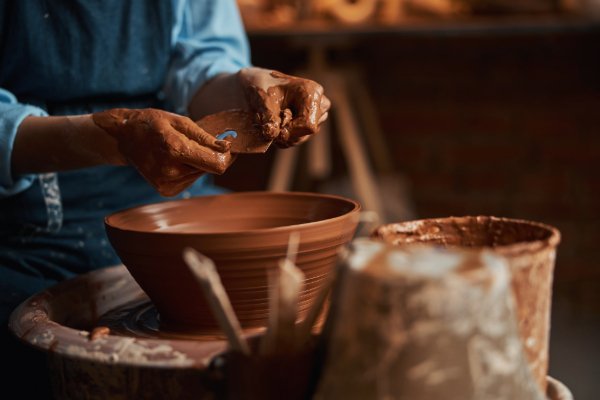
    There is something about watching a pair of hands work clay that makes the finished bowl seem almost secondary.

    The clay rises beneath the potter’s fingers, collapses a little, is pulled back into shape, and slowly becomes something recognizable. The process is messy. The hands are covered in earth and water. There is no button to press and no guarantee that the piece taking shape on the wheel will survive drying and firing. What looks effortless in practiced hands is the result of knowing the material well enough to understand what it will and will not do.

    The same thing happens in a blacksmith’s shop when iron begins to move beneath a hammer, at a loom when loose threads slowly become cloth, or in the hands of a basket maker coaxing strips of cane or wood into a shape strong enough to last.

    Throughout Appalachia, those skills are sometimes described collectively as “traditional crafts.” The phrase is convenient, but it can make them sound like remnants of a vanished world.

    They aren’t.

    Some are ancient Indigenous traditions. Some arrived with people who settled in the mountains. Others developed and changed through generations of cultural exchange, necessity, experimentation, commerce, and community. Many eventually moved from farms and household workshops into schools, studios, cooperatives, galleries, and craft centers.

    Today, you can still find them there. More importantly, you can still find the people who know how to do them.

    Before Anyone Called It Craft

    For much of Appalachian history, making something by hand wasn’t necessarily a statement about tradition. Sometimes you simply needed the thing.

    A household needed chairs, storage vessels, baskets, blankets, clothing, tools, brooms, crocks, handles, and countless other objects required for everyday life. Depending on where a family lived, what money they had, what markets were accessible, and what materials were available, buying everything wasn’t always practical.

    Knowledge filled some of those gaps.

    Knowing which wood made a strong tool handle mattered. So did understanding how to preserve food in a crock, mend clothing, piece a quilt, shape metal, prepare fiber, or repair something rather than replace it.

    That doesn’t mean every Appalachian household was self-sufficient or that mountain people lived isolated from commerce. They didn’t. Appalachians traded, purchased manufactured goods, followed changing fashions, traveled, migrated, and adopted new technologies like everyone else.

    But handmade objects remained part of life, and the things people produced often carried an unmistakable human quality.

    A chair had to support someone’s weight, but its maker could still care about its proportions. A quilt needed to provide warmth, but the person piecing it could still make decisions about pattern and color. A storage crock had a job to do, but generations later we can still recognize the distinctive work of individual pottery traditions.

    Usefulness and beauty were never required to be opposites.

    What the Mountains Provided

    Many traditional crafts begin long before anyone sits down at a workbench.

    They begin with material.

    Appalachia’s forests provided timber for houses and barns, but also smaller pieces of everyday life: chairs, bowls, spoons, handles, toys, musical instruments, baskets and carved objects. A skilled woodworker learned that one tree was not interchangeable with another. Hickory, oak, walnut, poplar and other woods behaved differently beneath a knife, saw, lathe or drawknife.

    Clay offered another possibility. In communities with access to workable deposits, potters could transform earth into crocks, jugs, bowls and storage vessels. The process demanded far more judgment than the finished object reveals. Clay had to be prepared and shaped correctly, dried without cracking and fired successfully before the vessel could ever reach someone’s kitchen.

    Fiber required its own knowledge. Wool and flax had to be prepared before they could become thread, and thread had to be managed carefully before it could become woven cloth. Quilting developed another vocabulary of fabric, pattern, stitching and reuse.

    Then there were the materials that belonged to traditions much older than the culture we now call Appalachia.

    Cherokee Craft Was Here First

    Any discussion of Appalachian craft needs to make an important distinction: Cherokee basketry, pottery, carving and other artistic traditions are not simply branches of “mountain folk craft.”

    They are Cherokee traditions.

    The Cherokee people were making objects from the materials of the southern mountains long before European settlers arrived. Basketry in particular demonstrates how much knowledge can be contained in something that, to an unfamiliar eye, might simply look beautiful.

    At Qualla Arts and Crafts Mutual Co-Op in Cherokee, North Carolina, visitors can encounter work by Cherokee artists whose baskets, carvings, jewelry and other pieces continue techniques passed through generations. The cooperative itself was established in 1946 by Cherokee craftspeople and leaders who recognized that preserving and promoting Cherokee arts could strengthen cultural traditions while also supporting livelihoods.

    Rivercane and white oak basketry require intimate knowledge not only of weaving, but of gathering and preparing the material before weaving ever begins. Natural materials traditionally provided dyes as well. That knowledge resides not just in an old basket preserved behind glass, but in the person who knows where to find the material, how to prepare it and what to do with it.

    That is the difference between preserving an object and preserving a tradition.

    One saves the thing.

    The other keeps the knowledge alive.

    Quilts Carried More Than Warmth

    Of all the objects associated with Appalachian homes, few carry as much emotional weight as quilts.

    At their simplest, quilts solve a practical problem. Layers of fabric stitched together create warmth. Yet the quilts that survived often tell us considerably more.

    Fabric could be reused from clothing and sewing remnants, while other quilts were made from fabric chosen specifically for the project. Patterns traveled between households and communities, changing in the hands of different quilters. Piecing required planning and spatial judgment, while hand quilting demanded patience and thousands upon thousands of stitches.

    Quilting could also be communal. A frame provided a place where several people could work together, but the work shared space with conversation, family news and community life.

    Perhaps that helps explain why old quilts can feel so personal. A factory-made blanket may have kept someone just as warm, but a handmade quilt carries evidence of time.

    Someone sat there and made it.

    The Potter’s Fingerprints

    Pottery gives us an even more literal connection to the maker.

    A handmade vessel may carry subtle ridges from throwing, variations in glaze, impressions, tool marks, or small irregularities created during shaping and firing. None necessarily makes the piece inferior. They tell you it passed through someone’s hands.

    Historically, pottery served decidedly unromantic purposes. Jugs held liquids. Crocks stored food. Churns helped make butter. Bowls and pitchers belonged to kitchens rather than galleries.

    That practicality remains one of the most appealing things about contemporary Appalachian pottery. Walk into the right studio today and you can still buy a bowl meant to hold soup rather than sit untouched on a shelf.

    The difference is that now we are more likely to call the person who made it an artist.

    Wood, Iron and the Art of Making Something Last

    Some traditional skills developed around another ordinary reality: things break.

    A broken handle did not necessarily mean replacing the whole tool. A chair could be repaired. Metal could be reshaped. Hinges, hooks, chains, farm implements and household hardware could be made or mended by someone who understood iron.

    Blacksmithing required the ability to read heat almost as if it were another language. Woodworking required an equally intimate understanding of grain, moisture, strength and the peculiarities of different species.

    Those skills produced objects that might never have been regarded as art by the people using them.

    A well-made chair was still a chair.

    A good axe handle was successful because it survived work.

    And a broom was successful because it swept the floor.

    Traditional craft becomes distorted when we preserve only the spectacular objects and forget how much skilled work once surrounded ordinary life.

    Brooms, Baskets and Things Nobody Thought to Save

    Museums present an interesting problem when we try to understand everyday history: museums are filled primarily with things that survived.

    Most ordinary things didn’t.

    Brooms wore out. Wooden spoons split. Baskets broke. Clothing became patches, and patches eventually became scraps. Chairs were repaired until another repair was no longer possible. Tools were sharpened until there wasn’t enough useful metal left to sharpen.

    That means the historical record naturally favors the exceptional object over the ordinary one.

    Yet traditional craft lived largely in those ordinary things.

    This is one reason seeing craft practiced today can reveal something an artifact cannot. Watching someone split wood for a basket or draw hot metal from a forge restores the labor to the object. You begin to understand what had to be known before anything could be made.

    And Appalachia still offers plenty of places where you can do exactly that.

    Where Appalachian Craft Is Still Alive

    You don’t have to experience Appalachian craft exclusively through a museum case.

    Across the region, craftspeople still throw pottery, weave cloth, build instruments, carve wood, make baskets, forge iron and teach other people how to do the same. Some destinations emphasize historical preservation, others contemporary studio craft, and some blur the distinction completely.

    That’s precisely what makes visiting them interesting.

    Brasstown, North Carolina: Come Prepared to Get Your Hands Dirty

    If you want to move beyond looking at craft and actually try it, John C. Campbell Folk School is one of the most immersive places to begin.

    Set on 270 acres in the western North Carolina mountains, the Folk School offers more than 800 weeklong and weekend classes each year across more than 50 subjects. Pottery, blacksmithing, woodworking, basketry, weaving and other crafts share the campus with music, dance, cooking, gardening, photography, writing and additional subjects.

    You don’t necessarily have to enroll in a class to experience the place, either. Visitors can explore the campus, stop at the Craft Shop and History Center, and observe classes in the studios. A self-guided walking tour explores the school’s history, Appalachian traditions and Cherokee cultural influence.

    Go here if: you want to learn rather than simply look.

    John C. Campbell Folk School

    Cherokee, North Carolina: Encounter Cherokee Art on Cherokee Terms

    Qualla Arts and Crafts Mutual Co-Op offers a fundamentally different experience because the traditions represented here belong specifically to Cherokee people.

    Established in 1946, Qualla Arts represents Cherokee member-artists producing baskets, pottery, carvings, jewelry and other works. It is an especially important stop for anyone interested in understanding why Cherokee arts should not be reduced to generic “Appalachian crafts.”

    Look closely at the work. Ask who made it. Learn about the materials. A basket becomes considerably more meaningful once you understand the knowledge required before weaving even begins.

    Go here if: you want to encounter authentic Cherokee work while supporting Cherokee artists directly.

    Qualla Arts and Crafts Mutual

    Asheville, North Carolina: See Tradition Beside Contemporary Craft

    Along the Blue Ridge Parkway, Southern Highland Craft Guild, Folk Art Center provides one of the easiest introductions to the extraordinary range of Southern Appalachian craft.

    The Folk Art Center houses exhibitions alongside Allanstand Craft Shop, established in 1895 and described by the Southern Highland Craft Guild as the oldest craft shop in America. More than 400 Guild artists and craftspeople are represented through work ranging from pottery and textiles to glass, jewelry, furniture and other forms. From March through December, Guild artisans also give daily craft demonstrations, allowing visitors to see the process rather than only the finished product.

    That combination is particularly valuable. Historic work doesn’t have to sit in opposition to contemporary craft. Put them together and you can begin to see how techniques survive while artists continue changing what they make.

    Go here if: you’re traveling the Blue Ridge Parkway and want a broad introduction to Southern Appalachian craft.

    Southern Highland Craft Guild Folk Art Center

    Berea, Kentucky: A Town Built Around Making

    Berea deserves more than a quick stop because craft isn’t confined to a single building there.

    The city identifies itself as Kentucky’s Folk Arts & Crafts Capital, and its Artisan Village contains working studios, galleries and shops. Berea College adds another unusual dimension through a craft program that has been part of its work-learning tradition since 1893.

    Today, Berea College Student Craft includes broomcraft, ceramics, weaving and woodcraft. Around 100 students participate each year, learning not simply how to produce an object but how to work through design, materials, production and quality.

    That makes Berea particularly interesting because it disrupts the idea that Appalachian craft belongs primarily to older people preserving the past. Here, young adults are still learning how materials behave beneath their own hands.

    The Log House Craft Gallery is another natural stop while exploring Berea’s craft community.

    Go here if: you want enough studios, shops and craft experiences to build an entire day or weekend around making.

    Berea College Student Craft

    Hindman, Kentucky: Craft as Community Work

    Eastern Kentucky gives us another side of the story.

    At the Appalachian Artisan Center, ceramics, blacksmithing, fibers and luthiery are not being preserved simply because they are picturesque reminders of the past. They are tied to education, economic development and community life. The center also operates artist studios and a Dulcimer Museum honoring regional builders and players.

    Its luthiery program is especially fitting in Appalachia. Making a stringed instrument brings woodworking and music together, turning craft into something that will eventually leave the workshop and make a sound.

    The center also uses art as part of its Culture of Recovery program, connecting artisan-led work with people in substance-use recovery. It is a striking example of traditional skills taking on contemporary community roles rather than being frozen in the past.

    Visitors can tour the studios, and workshops are offered throughout the year.

    Go here if: you want to see how craft, community, economic opportunity and contemporary Appalachian life intersect.

    Appalachian Artisan Center

    Gatlinburg, Tennessee: Learn in the Heart of a Tourism Town

    Gatlinburg may be known for Smoky Mountain tourism, but right in the middle of town sits Arrowmont School of Arts and Crafts.

    Arrowmont offers weeklong, weekend and community workshops across numerous media, including fibers, textiles and other contemporary craft disciplines.

    That juxtaposition is worth noticing. Appalachian craft doesn’t survive only in remote hollows or reconstructed cabins. It also exists inside one of the region’s busiest tourist destinations, where students continue arriving specifically because they want to learn how to make something.

    Go here if: you want to turn a Smoky Mountains trip into a hands-on creative experience.

    Arrowmont School of Arts and Crafts

    Beckley, West Virginia: Discover What West Virginia Is Making

    For travelers crossing West Virginia, Tamarack Marketplace in Beckley offers another way into the region’s contemporary creative culture.

    Rather than concentrating on one historic tradition, Tamarack brings a broad range of West Virginia-made work together in one destination. That makes it useful for travelers who may not have time to seek out individual studios scattered across the state.

    Go here if: you want a broad introduction to West Virginia artists and makers in one stop.

    Follow the Craft, Not Just the Highway

    One of the pleasures of exploring Appalachian craft is that the best experience may not happen at one of the large institutions at all.

    The original version of this story pointed readers toward craft trails and artisan communities, and that idea is worth keeping.

    A regional craft trail can lead you into pottery studios, galleries, blacksmith shops and working artists’ spaces you might otherwise drive past. A roadside sign announcing pottery for sale may lead to a conversation with the person who actually dug, shaped, glazed or fired the piece you’re holding.

    Those smaller encounters matter.

    If you’re traveling through Appalachia, watch for studio-tour weekends, open houses, county craft trails, guild events, demonstrations, farmers markets and local galleries carrying identifiable regional artists. Ask whether the person behind the counter knows who made something. Better yet, buy from the maker when you can.

    The story becomes much more interesting once the object has a name attached to it.

    When Household Work Became Appalachian Heritage

    There is another chapter to this story that deserves attention because our modern idea of “Appalachian craft” did not emerge entirely on its own.

    By the late nineteenth and early twentieth centuries, educators, reformers, settlement schools and other organizations began recognizing that weaving, woodworking and other household skills could provide income to mountain families while appealing to buyers outside the region.

    Berea became an important part of that movement. Its craft program dates to 1893 and continues today.

    Other institutions and craft organizations followed their own paths, helping create markets in which handmade Appalachian objects were valued specifically because they were handmade and Appalachian.

    That created opportunity, but it also changed the meaning of the objects.

    A woven coverlet once made primarily for household use could now be sold because an outside buyer wanted something “traditional.” Craft increasingly became a source of income, cultural representation and eventually tourism.

    And with that came a complicated question that still follows Appalachian culture today:

    What happens when outsiders begin deciding what “authentic Appalachia” is supposed to look like?

    The answer, at least among makers, seems to have been remarkably practical.

    They kept making things.

    Tradition Has Never Meant Standing Still

    Walk through a contemporary Appalachian craft center and you’ll quickly discover that not everything looks old-fashioned.

    Good.

    A living tradition shouldn’t.

    Today’s potters experiment with glazes and forms their great-grandparents never saw. Woodworkers combine traditional joinery with contemporary design. Fiber artists use old techniques to make distinctly modern pieces. Blacksmiths create sculpture alongside hardware. Basket makers explore new forms while preserving extraordinarily old knowledge about materials and construction.

    The object changes because the maker is alive.

    That does not necessarily weaken tradition. Sometimes adaptation is exactly what allows knowledge to survive.

    A skill practiced only because people feel obligated to reproduce the past eventually risks becoming a demonstration.

    A skill someone loves enough to experiment with has a future.

    The Knowledge Is Still in the Hands

    Perhaps that is what makes traditional Appalachian craft so difficult to define.

    It isn’t one aesthetic.

    It isn’t one people.

    It isn’t one historical period.

    And it certainly isn’t one romantic story about isolated mountain families making everything they owned.

    It is Cherokee basket makers carrying knowledge much older than Appalachia as a cultural label. It is a student in Berea learning to weave. It is a blacksmith in eastern Kentucky teaching someone how to read the color of heated iron. It is a potter centering clay on a wheel in a studio where visitors can hear the wheel turning. It is a quilter choosing fabric, a woodworker reading grain, a luthier listening to an instrument that did not exist a few weeks earlier.

    Some of those people learned from family. Others learned from teachers. Some grew up surrounded by these traditions, while others deliberately sought them out.

    That doesn’t make the knowledge less real.

    Tradition has always required another person willing to learn.

    Made to Be Used, Made to Be Remembered

    It is tempting to romanticize handmade life, especially from a world where nearly anything can arrive at the front door in a cardboard box.

    But making what you needed was work.

    It took time to prepare fiber before weaving it. Wood had to be selected before it could become a chair. Clay had to survive drying and firing before it could hold anything. Iron had to be heated and hammered. Baskets required material to be gathered and prepared before the first weave was made.

    People weren’t necessarily doing these things because they wanted a simpler life.

    They were living the life they had.

    What deserves our admiration isn’t hardship. It is knowledge.

    And across Appalachia, that knowledge hasn’t disappeared.

    You can stand beside a forge and feel the heat. You can hear the rhythmic clack of a loom. You can watch wood curl away beneath a sharp tool. You can run your fingers across a handmade quilt and see the tiny variations in the stitches.

    Or you can sit down at a pottery wheel, wet your hands, place them around a lump of clay and discover just how difficult it is to make the walls of a simple bowl rise evenly.

    Suddenly, the bowl sitting beside you looks different.

    Not because it is old.

    Not because someone labeled it Appalachian.

    But because now you understand a little more about what the hands that made it had to know.

    And perhaps that is the real inheritance contained in Appalachian craft.

    Not simply the things people made.

    The knowledge of how to make them.