Tag: Featured

  • The Legacy of My Melungeon Heritage: Following My Family Through America’s Backcountry

    The Legacy of My Melungeon Heritage: Following My Family Through America’s Backcountry

    Resilience, identity, and generations of interconnected Appalachian families

    I already knew we were mixed. That was never the revelation.

    What I didn’t know was all of the family names, how many of those families were connected to one another, or exactly how deep their roots reached into America’s past.

    The farther I followed my father’s family backward, the more familiar names began appearing. Mullins. Gibson. Collins. Sizemore. Justice. Thacker. Stallard. Akers. Ratliff. Webb. Addington. Blackburn. And still more.

    Some are names researchers have associated directly with historic Melungeon communities. Others entered my family through generations of marriages among families living across the same Virginia, Tennessee, Kentucky, and Carolina backcountry.

    I didn’t find one distant Melungeon ancestor hiding in an otherwise unrelated family tree. I kept finding families, and then I found more of them. The farther back I went, the more I began to understand that this wasn’t simply one interesting branch of my father’s ancestry. These were the people who made up much of the tree.

    A Word Written Down in 1813

    There is one reason the word Melungeon holds a particularly important place in my understanding of my heritage. It involves my fifth great-grandmother, Susan, or Susanna, Stallard.

    On September 26, 1813, the members of Stony Creek Baptist Church in Scott County, Virginia, gathered for a church meeting. During the meeting, Sister Kitchen brought a complaint against Susanna Stallard.

    The surviving church minutes record the accusation:

    “Susanna Stallard for saying she harbored them Melungins.”

    It is a tiny fragment of an ordinary disagreement between two women. More than two hundred years later, it is extraordinary.

    The 1813 Stony Creek minutes contain one of the earliest surviving written appearances of the word that would eventually be spelled Melungeon, and my fifth great-grandmother is standing right there in the middle of it.

    That does not prove Susanna herself was Melungeon, nor do I need it to. Its importance to me is different.

    The word existed in her world. The people sitting in that church apparently understood who was being discussed. Nobody stopped the meeting to define a “Melungin.” The clerk simply wrote it down.

    For me, that makes Melungeon more than a term encountered in a genealogy book generations later. The word is embedded in my family’s historical landscape.

    They Were Already Here

    One of the strangest things about tracing my father’s ancestry was discovering just how long these families had been in America. By the middle of the eighteenth century, most of the ancestral lines I have traced were already here.

    But when we hear the words colonial ancestors, our imaginations often go somewhere that doesn’t resemble the world I found in my genealogy. I wasn’t looking primarily at wealthy planters, prominent merchants, or people living at the center of colonial society.

    Again and again, I found people farther out. They were backcountry people living along rivers and creeks, moving into newly settled territory, establishing farms and communities, joining small churches, marrying people from neighboring families, and continuing farther into the mountains.

    Long before modern state borders made these places seem separate, families moved through Virginia and the Carolinas and eventually into the mountain country of Tennessee, Kentucky, and what became West Virginia.

    That movement is important to the larger Melungeon story as well. Historical and genealogical research has traced families later associated with Melungeon communities from Virginia and North Carolina into northeastern Tennessee and southwestern Virginia. Newman’s Ridge and Blackwater Valley in what became Hancock County, Tennessee, eventually became the best-known Melungeon communities, but those communities were part of a much larger network of families and migrations.

    My own family tree moves through that same broader backcountry world.

    The Families Behind the Name

    There is a temptation when discussing Melungeon genealogy to produce a list of surnames: Collins, Gibson, Mullins, Goins, Bunch, Bowlin, Denham. Those are among the surnames identified with some of the earliest documented Melungeon families.

    But surnames alone cannot tell this story. Not every Mullins was Melungeon. Neither was every Gibson, Collins, or person carrying another surname later associated with Melungeon families. The geography matters. The records matter. Above all, the relationships matter.

    That’s what became so striking when I began looking at my own genealogy. The names didn’t simply appear independently. They connected.

    Families married into other families. Their children married into still others. Generations later, branches crossed again. A surname that seemed unrelated at first could lead back into another family I had already encountered several generations earlier.

    Eventually, the genealogy stopped looking like a collection of separate family names.

    It began looking like a community.

    My Mullins Family

    The Mullins line is one of the clearest examples.

    My family traces through James Booker Mullins and his wife, Mary Polly Newsome, and through descendants who lived in the mountain country around Grassy Creek, Russell and Buchanan counties in Virginia, and the surrounding Virginia-Kentucky borderlands.

    Later generations include John Wesley Mullins and Mariah Reed, George Washington Mullins and Martha Lurinda Fuller, and still more Mullins descendants. These aren’t simply names from a list of people historically associated with Appalachia. They are branches leading toward people my family actually knew.

    Then there is Lena.

    Lena Mullins is not merely a name several generations removed from me on a genealogy chart. She belongs to family memory, and when I think about Lena, I remember butter mints.

    That tiny detail may seem insignificant beside church records, racial classifications, migration patterns, and centuries of genealogy. To me, it isn’t. It is exactly the point.

    Genealogy gives us names. History gives us context. Memory gives those people back their humanity.

    Somewhere between James Booker Mullins in the early American backcountry and a woman I remember with butter mints, history became family.

    Gibson, Collins, and Stony Creek

    The connections continue elsewhere in my tree.

    My Gibson ancestry also intersects with the world surrounding Stony Creek, and Collins relatives enter the extended family through marriage. That matters because Collins and Gibson families appear prominently in research concerning the early Melungeon population.

    The surviving Stony Creek church records contain members of those families years before Susanna Stallard’s dispute was recorded in 1813.

    This is one reason I resist the old image of Melungeons as some mysterious people hidden away from everyone else in the mountains. The records show something much more ordinary and much more interesting.

    These people belonged to churches. They married, moved, bought and worked land, argued, raised children, appeared in courtrooms, and worshipped alongside their neighbors. Some eventually moved farther into Tennessee.

    They weren’t characters waiting for nineteenth-century writers to discover them. They were living their lives.

    A Family Tree That Keeps Folding Back Into Itself

    As my research expanded, I began recognizing another pattern. The same interconnected families kept returning.

    My father’s parents both carried ancestry connected to this larger population. Following either side backward doesn’t lead neatly away from it. Instead, branches intersect with other branches.

    Mullins connects to Fuller and Reed. Other branches bring in Justice, Thacker, and Blackburn. Sizemore, Gearheart, Halbert, Addington, Stallard, Akers, Ratliff, Webb, Perry, and others appear as the generations expand.

    Some surnames have direct historical associations with documented Melungeon communities. Others became connected to my particular family through marriage. That distinction is important.

    I don’t believe a surname should ever be used as proof that someone was Melungeon. But when generations of documented families occupy the same geographical world, repeatedly intermarry, and connect back into historically identified families, the relationships themselves become part of the story.

    The more generations I uncovered, the more those relationships appeared.

    Mixed Was Never the Secret

    This is perhaps the biggest difference between my experience and the popular modern story of discovering Melungeon ancestry.

    I didn’t need a DNA test to shock me with the revelation that my family was mixed. I already knew.

    What I didn’t understand was the depth. I didn’t know all their names. I didn’t know how many branches connected. I didn’t know how early many of them were living in America.

    And I didn’t understand how much history could disappear while the people themselves remained.

    That last part may be the most important.

    When Identity Had Consequences

    Today, genealogy can feel almost recreational. We build trees, search databases, compare photographs, order DNA tests, and watch percentages appear on screens.

    Our ancestors did not live in that world.

    For them, racial identity could affect where someone was permitted to live, whether someone could vote, whom someone could legally marry, how neighbors treated a family, and what opportunities were available to their children.

    Free people of color occupied an especially complicated place in Virginia and other Southern states. They were free, but freedom did not mean equality. Laws and social customs placed restrictions upon them, and racial classifications could carry consequences that followed families across generations.

    Melungeon families encountered their own forms of discrimination. The word itself was often not something people proudly called themselves. It could be an insult, something whispered, something assigned by somebody else, or something a family might prefer their children eventually forget.

    That changes how I understand some of the people I knew.

    My Grandmother Polly

    My grandmother Polly could become genuinely angry if someone suggested that she looked Native American.

    When I was younger, that reaction was difficult to understand. Why would that make someone angry?

    Genealogy has made me reconsider the question.

    Today, people can proudly explore complicated ancestry from the relative safety of historical distance. Previous generations did not necessarily have that luxury. There were good reasons people learned to control what was said about a family’s ancestry, reasons identities became simplified, and reasons stories changed.

    There were also reasons children sometimes weren’t told things.

    Perhaps the most durable inheritance from discrimination isn’t always the label itself. Sometimes it is the instinct to avoid the label.

    The explanation can disappear while the reaction remains.
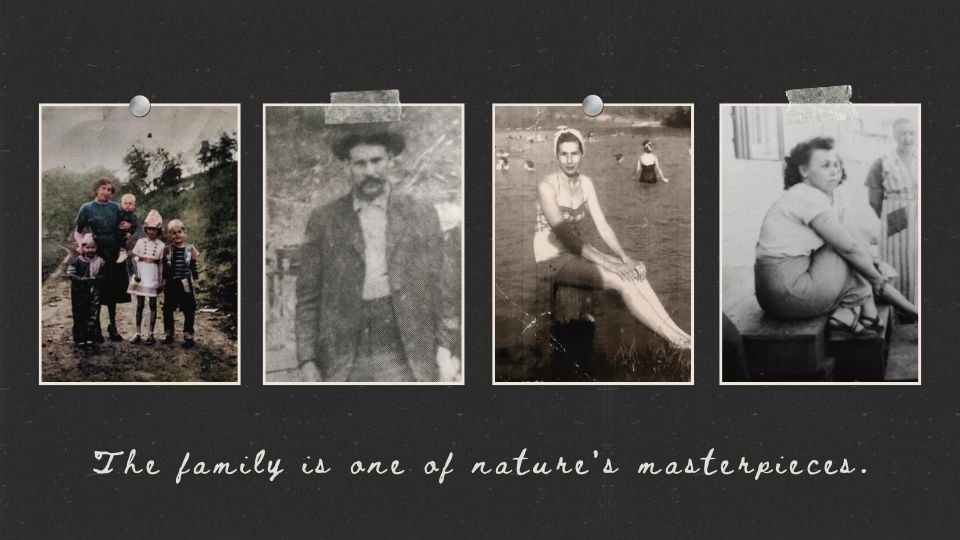
    A personal collage of photographs from several generations of the author's Appalachian family, including her grandmother Polly. The images accompany a reflection on genealogy, memory, Melungeon heritage, and the people whose individual lives are often reduced to names and dates on a family tree.

    More Than Three Races

    Melungeons have frequently been described with the old phrase “tri-racial isolate,” usually referring to European, African, and Native American ancestry. That terminology is useful for understanding older scholarship, but human ancestry is rarely as tidy as the label suggests.

    The people who eventually became associated with Melungeon communities were the products of complicated populations living in early America. European ancestry was part of that history. African ancestry was part of it. Native American ancestry appears in some lines.

    Individual families have their own histories, and not every ancestral component belongs equally to every Melungeon descendant. That complexity is important.

    There was never one Melungeon ancestor from whom everybody descended. There was never one moment when three neatly separated populations came together and created a new people.

    There were families, and families kept marrying families.

    The Mystery We Created

    For generations, writers seemed unable to resist making Melungeons mysterious.

    Were they Portuguese? Turkish? Lost colonists? Shipwreck survivors? Descendants of some forgotten expedition?

    The theories became part of the Melungeon story, but increasingly, I find the ordinary explanation far more compelling.

    These were people already living in early America whose ancestry and social identities did not fit comfortably inside the racial categories later Americans tried to impose upon them. Their descendants moved and intermarried. Some assimilated into surrounding white communities. Others continued to be identified as Melungeon or by other racial classifications. Eventually, some descendants stopped hearing the word altogether.

    Nothing about that makes their history less remarkable.

    Quite the opposite.

    Following Them Into America’s Past

    The farther I follow my family backward, the less distant early American history feels.

    The eighteenth century stops being something populated entirely by famous men whose portraits hang in museums. It becomes Susan Stallard standing before a small Baptist congregation while someone records a dispute in a church book.

    It becomes Gibson and Collins families moving through Virginia and toward Tennessee. It becomes Mullins families in the Carolina, Virginia, and Kentucky backcountry. It becomes people whose names survive because they married, bought land, appeared in court, joined churches, had children, or irritated their neighbors badly enough that somebody wrote it down.

    They were not standing outside American history. They were helping populate it, and they were doing so from places that don’t always occupy much space in the traditional telling of America’s beginnings.

    What DNA Cannot Tell Me

    DNA has transformed genealogy, and it can be an extraordinary tool. But there are questions DNA cannot answer.

    It cannot tell me what Susanna Stallard meant when she used the word recorded as Melungins. It cannot tell me what someone whispered about another family or why Polly became angry. It cannot tell me what was intentionally forgotten.

    And it certainly cannot tell me that Lena had butter mints.

    Those things require something more: records, context, family stories, memory, and the willingness to admit when we simply don’t know.

    That last part matters to me. There are contradictions in old genealogies. Dates don’t always agree. Birthplaces change from one family tree to another. People with identical names are easily confused. Family stories can preserve truth, but they can also change over generations.

    I don’t need to fill every blank.

    The history that can be documented is remarkable enough.

    Reclaiming Melungeon

    There is something almost circular about my relationship with the word.

    In 1813, it appears in a surviving record involving my fifth great-grandmother because two women were having a disagreement: “…them Melungins.”

    Whatever else was said that day has disappeared. The word remained.

    Then generations passed. Families moved through Virginia, Tennessee, Kentucky, and beyond. They married and their children married. Identities shifted. Some histories were remembered. Others weren’t.

    Eventually, two descendants carrying many of these interconnected Appalachian lines became my father’s parents.

    Generations after Susanna Stallard stood before that congregation, one of her descendants began following those families backward.

    Me.

    What I Found

    I did not discover that I was Melungeon.

    I discovered what that heritage contained.

    I found names I hadn’t known, places I hadn’t known, and connections between families I hadn’t recognized. I discovered that people I had initially thought belonged to separate branches were part of a much older web of families.

    Every time I thought I had reached the edges of it, another marriage, another surname, another county, or another record opened another path.

    The roots kept going. They still do.

    Perhaps that is why genealogy has changed what the word Melungeon means to me. It isn’t primarily a racial category. It isn’t a romantic mystery. It isn’t a list of approved surnames, and it isn’t a percentage in my DNA.

    It is a way of describing part of the historical world my family came through.

    Closing Thoughts: The People Behind the Tree

    Family trees can become enormous. Eventually the screen fills with boxes, names, and dates. One generation opens into two, then four, then eight, until hundreds of people disappear into a diagram.

    But those boxes were once lives.

    Susan wasn’t waiting around in 1813 to become somebody’s fifth great-grandmother. Polly didn’t know one of her descendants would someday reconsider her reaction to questions about ancestry. Lena certainly didn’t know that something as simple as her butter mints would survive in someone else’s memory.

    They were living in their own present.

    That may be what I value most about finding them.

    I already knew my family was mixed. What I didn’t know was how deep in America’s past their story went. I didn’t know how many roads would lead through the backcountry, how many familiar surnames I would encounter, or how often branches that seemed separate would eventually find one another again.

    I began with a family tree.

    What I found was a community.

    Behind that community were not mysterious people hiding somewhere in the Appalachian Mountains. They were simply people. Complicated people. Stubborn people. People who loved and fought, moved and stayed, remembered and forgot. People who survived long enough to become somebody else’s ancestors, mine among them.

    Their story isn’t valuable because every question about them can be answered. It is valuable because they were here.

    And after generations in which parts of that history were misunderstood, hidden, simplified, or forgotten, I have the privilege of learning their names again.
  • Made by Hand: Where Appalachian Craft Is Still Alive

    Made by Hand: Where Appalachian Craft Is Still Alive

    From clay and cane to quilts, wood, iron, and woven cloth, Appalachian craft carries generations of knowledge. Across the mountains, that knowledge is still being practiced, taught, changed, and passed along.

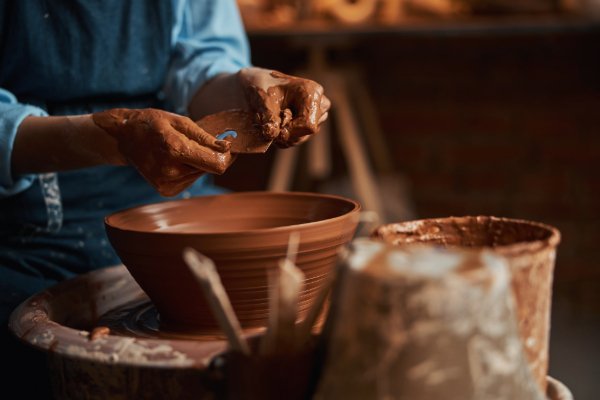
    There is something about watching a pair of hands work clay that makes the finished bowl seem almost secondary.

    The clay rises beneath the potter’s fingers, collapses a little, is pulled back into shape, and slowly becomes something recognizable. The process is messy. The hands are covered in earth and water. There is no button to press and no guarantee that the piece taking shape on the wheel will survive drying and firing. What looks effortless in practiced hands is the result of knowing the material well enough to understand what it will and will not do.

    The same thing happens in a blacksmith’s shop when iron begins to move beneath a hammer, at a loom when loose threads slowly become cloth, or in the hands of a basket maker coaxing strips of cane or wood into a shape strong enough to last.

    Throughout Appalachia, those skills are sometimes described collectively as “traditional crafts.” The phrase is convenient, but it can make them sound like remnants of a vanished world.

    They aren’t.

    Some are ancient Indigenous traditions. Some arrived with people who settled in the mountains. Others developed and changed through generations of cultural exchange, necessity, experimentation, commerce, and community. Many eventually moved from farms and household workshops into schools, studios, cooperatives, galleries, and craft centers.

    Today, you can still find them there. More importantly, you can still find the people who know how to do them.

    Before Anyone Called It Craft

    For much of Appalachian history, making something by hand wasn’t necessarily a statement about tradition. Sometimes you simply needed the thing.

    A household needed chairs, storage vessels, baskets, blankets, clothing, tools, brooms, crocks, handles, and countless other objects required for everyday life. Depending on where a family lived, what money they had, what markets were accessible, and what materials were available, buying everything wasn’t always practical.

    Knowledge filled some of those gaps.

    Knowing which wood made a strong tool handle mattered. So did understanding how to preserve food in a crock, mend clothing, piece a quilt, shape metal, prepare fiber, or repair something rather than replace it.

    That doesn’t mean every Appalachian household was self-sufficient or that mountain people lived isolated from commerce. They didn’t. Appalachians traded, purchased manufactured goods, followed changing fashions, traveled, migrated, and adopted new technologies like everyone else.

    But handmade objects remained part of life, and the things people produced often carried an unmistakable human quality.

    A chair had to support someone’s weight, but its maker could still care about its proportions. A quilt needed to provide warmth, but the person piecing it could still make decisions about pattern and color. A storage crock had a job to do, but generations later we can still recognize the distinctive work of individual pottery traditions.

    Usefulness and beauty were never required to be opposites.

    What the Mountains Provided

    Many traditional crafts begin long before anyone sits down at a workbench.

    They begin with material.

    Appalachia’s forests provided timber for houses and barns, but also smaller pieces of everyday life: chairs, bowls, spoons, handles, toys, musical instruments, baskets and carved objects. A skilled woodworker learned that one tree was not interchangeable with another. Hickory, oak, walnut, poplar and other woods behaved differently beneath a knife, saw, lathe or drawknife.

    Clay offered another possibility. In communities with access to workable deposits, potters could transform earth into crocks, jugs, bowls and storage vessels. The process demanded far more judgment than the finished object reveals. Clay had to be prepared and shaped correctly, dried without cracking and fired successfully before the vessel could ever reach someone’s kitchen.

    Fiber required its own knowledge. Wool and flax had to be prepared before they could become thread, and thread had to be managed carefully before it could become woven cloth. Quilting developed another vocabulary of fabric, pattern, stitching and reuse.

    Then there were the materials that belonged to traditions much older than the culture we now call Appalachia.

    Cherokee Craft Was Here First

    Any discussion of Appalachian craft needs to make an important distinction: Cherokee basketry, pottery, carving and other artistic traditions are not simply branches of “mountain folk craft.”

    They are Cherokee traditions.

    The Cherokee people were making objects from the materials of the southern mountains long before European settlers arrived. Basketry in particular demonstrates how much knowledge can be contained in something that, to an unfamiliar eye, might simply look beautiful.

    At Qualla Arts and Crafts Mutual Co-Op in Cherokee, North Carolina, visitors can encounter work by Cherokee artists whose baskets, carvings, jewelry and other pieces continue techniques passed through generations. The cooperative itself was established in 1946 by Cherokee craftspeople and leaders who recognized that preserving and promoting Cherokee arts could strengthen cultural traditions while also supporting livelihoods.

    Rivercane and white oak basketry require intimate knowledge not only of weaving, but of gathering and preparing the material before weaving ever begins. Natural materials traditionally provided dyes as well. That knowledge resides not just in an old basket preserved behind glass, but in the person who knows where to find the material, how to prepare it and what to do with it.

    That is the difference between preserving an object and preserving a tradition.

    One saves the thing.

    The other keeps the knowledge alive.

    Quilts Carried More Than Warmth

    Of all the objects associated with Appalachian homes, few carry as much emotional weight as quilts.

    At their simplest, quilts solve a practical problem. Layers of fabric stitched together create warmth. Yet the quilts that survived often tell us considerably more.

    Fabric could be reused from clothing and sewing remnants, while other quilts were made from fabric chosen specifically for the project. Patterns traveled between households and communities, changing in the hands of different quilters. Piecing required planning and spatial judgment, while hand quilting demanded patience and thousands upon thousands of stitches.

    Quilting could also be communal. A frame provided a place where several people could work together, but the work shared space with conversation, family news and community life.

    Perhaps that helps explain why old quilts can feel so personal. A factory-made blanket may have kept someone just as warm, but a handmade quilt carries evidence of time.

    Someone sat there and made it.

    The Potter’s Fingerprints

    Pottery gives us an even more literal connection to the maker.

    A handmade vessel may carry subtle ridges from throwing, variations in glaze, impressions, tool marks, or small irregularities created during shaping and firing. None necessarily makes the piece inferior. They tell you it passed through someone’s hands.

    Historically, pottery served decidedly unromantic purposes. Jugs held liquids. Crocks stored food. Churns helped make butter. Bowls and pitchers belonged to kitchens rather than galleries.

    That practicality remains one of the most appealing things about contemporary Appalachian pottery. Walk into the right studio today and you can still buy a bowl meant to hold soup rather than sit untouched on a shelf.

    The difference is that now we are more likely to call the person who made it an artist.

    Wood, Iron and the Art of Making Something Last

    Some traditional skills developed around another ordinary reality: things break.

    A broken handle did not necessarily mean replacing the whole tool. A chair could be repaired. Metal could be reshaped. Hinges, hooks, chains, farm implements and household hardware could be made or mended by someone who understood iron.

    Blacksmithing required the ability to read heat almost as if it were another language. Woodworking required an equally intimate understanding of grain, moisture, strength and the peculiarities of different species.

    Those skills produced objects that might never have been regarded as art by the people using them.

    A well-made chair was still a chair.

    A good axe handle was successful because it survived work.

    And a broom was successful because it swept the floor.

    Traditional craft becomes distorted when we preserve only the spectacular objects and forget how much skilled work once surrounded ordinary life.

    Brooms, Baskets and Things Nobody Thought to Save

    Museums present an interesting problem when we try to understand everyday history: museums are filled primarily with things that survived.

    Most ordinary things didn’t.

    Brooms wore out. Wooden spoons split. Baskets broke. Clothing became patches, and patches eventually became scraps. Chairs were repaired until another repair was no longer possible. Tools were sharpened until there wasn’t enough useful metal left to sharpen.

    That means the historical record naturally favors the exceptional object over the ordinary one.

    Yet traditional craft lived largely in those ordinary things.

    This is one reason seeing craft practiced today can reveal something an artifact cannot. Watching someone split wood for a basket or draw hot metal from a forge restores the labor to the object. You begin to understand what had to be known before anything could be made.

    And Appalachia still offers plenty of places where you can do exactly that.

    Where Appalachian Craft Is Still Alive

    You don’t have to experience Appalachian craft exclusively through a museum case.

    Across the region, craftspeople still throw pottery, weave cloth, build instruments, carve wood, make baskets, forge iron and teach other people how to do the same. Some destinations emphasize historical preservation, others contemporary studio craft, and some blur the distinction completely.

    That’s precisely what makes visiting them interesting.

    Brasstown, North Carolina: Come Prepared to Get Your Hands Dirty

    If you want to move beyond looking at craft and actually try it, John C. Campbell Folk School is one of the most immersive places to begin.

    Set on 270 acres in the western North Carolina mountains, the Folk School offers more than 800 weeklong and weekend classes each year across more than 50 subjects. Pottery, blacksmithing, woodworking, basketry, weaving and other crafts share the campus with music, dance, cooking, gardening, photography, writing and additional subjects.

    You don’t necessarily have to enroll in a class to experience the place, either. Visitors can explore the campus, stop at the Craft Shop and History Center, and observe classes in the studios. A self-guided walking tour explores the school’s history, Appalachian traditions and Cherokee cultural influence.

    Go here if: you want to learn rather than simply look.

    John C. Campbell Folk School

    Cherokee, North Carolina: Encounter Cherokee Art on Cherokee Terms

    Qualla Arts and Crafts Mutual Co-Op offers a fundamentally different experience because the traditions represented here belong specifically to Cherokee people.

    Established in 1946, Qualla Arts represents Cherokee member-artists producing baskets, pottery, carvings, jewelry and other works. It is an especially important stop for anyone interested in understanding why Cherokee arts should not be reduced to generic “Appalachian crafts.”

    Look closely at the work. Ask who made it. Learn about the materials. A basket becomes considerably more meaningful once you understand the knowledge required before weaving even begins.

    Go here if: you want to encounter authentic Cherokee work while supporting Cherokee artists directly.

    Qualla Arts and Crafts Mutual

    Asheville, North Carolina: See Tradition Beside Contemporary Craft

    Along the Blue Ridge Parkway, Southern Highland Craft Guild, Folk Art Center provides one of the easiest introductions to the extraordinary range of Southern Appalachian craft.

    The Folk Art Center houses exhibitions alongside Allanstand Craft Shop, established in 1895 and described by the Southern Highland Craft Guild as the oldest craft shop in America. More than 400 Guild artists and craftspeople are represented through work ranging from pottery and textiles to glass, jewelry, furniture and other forms. From March through December, Guild artisans also give daily craft demonstrations, allowing visitors to see the process rather than only the finished product.

    That combination is particularly valuable. Historic work doesn’t have to sit in opposition to contemporary craft. Put them together and you can begin to see how techniques survive while artists continue changing what they make.

    Go here if: you’re traveling the Blue Ridge Parkway and want a broad introduction to Southern Appalachian craft.

    Southern Highland Craft Guild Folk Art Center

    Berea, Kentucky: A Town Built Around Making

    Berea deserves more than a quick stop because craft isn’t confined to a single building there.

    The city identifies itself as Kentucky’s Folk Arts & Crafts Capital, and its Artisan Village contains working studios, galleries and shops. Berea College adds another unusual dimension through a craft program that has been part of its work-learning tradition since 1893.

    Today, Berea College Student Craft includes broomcraft, ceramics, weaving and woodcraft. Around 100 students participate each year, learning not simply how to produce an object but how to work through design, materials, production and quality.

    That makes Berea particularly interesting because it disrupts the idea that Appalachian craft belongs primarily to older people preserving the past. Here, young adults are still learning how materials behave beneath their own hands.

    The Log House Craft Gallery is another natural stop while exploring Berea’s craft community.

    Go here if: you want enough studios, shops and craft experiences to build an entire day or weekend around making.

    Berea College Student Craft

    Hindman, Kentucky: Craft as Community Work

    Eastern Kentucky gives us another side of the story.

    At the Appalachian Artisan Center, ceramics, blacksmithing, fibers and luthiery are not being preserved simply because they are picturesque reminders of the past. They are tied to education, economic development and community life. The center also operates artist studios and a Dulcimer Museum honoring regional builders and players.

    Its luthiery program is especially fitting in Appalachia. Making a stringed instrument brings woodworking and music together, turning craft into something that will eventually leave the workshop and make a sound.

    The center also uses art as part of its Culture of Recovery program, connecting artisan-led work with people in substance-use recovery. It is a striking example of traditional skills taking on contemporary community roles rather than being frozen in the past.

    Visitors can tour the studios, and workshops are offered throughout the year.

    Go here if: you want to see how craft, community, economic opportunity and contemporary Appalachian life intersect.

    Appalachian Artisan Center

    Gatlinburg, Tennessee: Learn in the Heart of a Tourism Town

    Gatlinburg may be known for Smoky Mountain tourism, but right in the middle of town sits Arrowmont School of Arts and Crafts.

    Arrowmont offers weeklong, weekend and community workshops across numerous media, including fibers, textiles and other contemporary craft disciplines.

    That juxtaposition is worth noticing. Appalachian craft doesn’t survive only in remote hollows or reconstructed cabins. It also exists inside one of the region’s busiest tourist destinations, where students continue arriving specifically because they want to learn how to make something.

    Go here if: you want to turn a Smoky Mountains trip into a hands-on creative experience.

    Arrowmont School of Arts and Crafts

    Beckley, West Virginia: Discover What West Virginia Is Making

    For travelers crossing West Virginia, Tamarack Marketplace in Beckley offers another way into the region’s contemporary creative culture.

    Rather than concentrating on one historic tradition, Tamarack brings a broad range of West Virginia-made work together in one destination. That makes it useful for travelers who may not have time to seek out individual studios scattered across the state.

    Go here if: you want a broad introduction to West Virginia artists and makers in one stop.

    Follow the Craft, Not Just the Highway

    One of the pleasures of exploring Appalachian craft is that the best experience may not happen at one of the large institutions at all.

    The original version of this story pointed readers toward craft trails and artisan communities, and that idea is worth keeping.

    A regional craft trail can lead you into pottery studios, galleries, blacksmith shops and working artists’ spaces you might otherwise drive past. A roadside sign announcing pottery for sale may lead to a conversation with the person who actually dug, shaped, glazed or fired the piece you’re holding.

    Those smaller encounters matter.

    If you’re traveling through Appalachia, watch for studio-tour weekends, open houses, county craft trails, guild events, demonstrations, farmers markets and local galleries carrying identifiable regional artists. Ask whether the person behind the counter knows who made something. Better yet, buy from the maker when you can.

    The story becomes much more interesting once the object has a name attached to it.

    When Household Work Became Appalachian Heritage

    There is another chapter to this story that deserves attention because our modern idea of “Appalachian craft” did not emerge entirely on its own.

    By the late nineteenth and early twentieth centuries, educators, reformers, settlement schools and other organizations began recognizing that weaving, woodworking and other household skills could provide income to mountain families while appealing to buyers outside the region.

    Berea became an important part of that movement. Its craft program dates to 1893 and continues today.

    Other institutions and craft organizations followed their own paths, helping create markets in which handmade Appalachian objects were valued specifically because they were handmade and Appalachian.

    That created opportunity, but it also changed the meaning of the objects.

    A woven coverlet once made primarily for household use could now be sold because an outside buyer wanted something “traditional.” Craft increasingly became a source of income, cultural representation and eventually tourism.

    And with that came a complicated question that still follows Appalachian culture today:

    What happens when outsiders begin deciding what “authentic Appalachia” is supposed to look like?

    The answer, at least among makers, seems to have been remarkably practical.

    They kept making things.

    Tradition Has Never Meant Standing Still

    Walk through a contemporary Appalachian craft center and you’ll quickly discover that not everything looks old-fashioned.

    Good.

    A living tradition shouldn’t.

    Today’s potters experiment with glazes and forms their great-grandparents never saw. Woodworkers combine traditional joinery with contemporary design. Fiber artists use old techniques to make distinctly modern pieces. Blacksmiths create sculpture alongside hardware. Basket makers explore new forms while preserving extraordinarily old knowledge about materials and construction.

    The object changes because the maker is alive.

    That does not necessarily weaken tradition. Sometimes adaptation is exactly what allows knowledge to survive.

    A skill practiced only because people feel obligated to reproduce the past eventually risks becoming a demonstration.

    A skill someone loves enough to experiment with has a future.

    The Knowledge Is Still in the Hands

    Perhaps that is what makes traditional Appalachian craft so difficult to define.

    It isn’t one aesthetic.

    It isn’t one people.

    It isn’t one historical period.

    And it certainly isn’t one romantic story about isolated mountain families making everything they owned.

    It is Cherokee basket makers carrying knowledge much older than Appalachia as a cultural label. It is a student in Berea learning to weave. It is a blacksmith in eastern Kentucky teaching someone how to read the color of heated iron. It is a potter centering clay on a wheel in a studio where visitors can hear the wheel turning. It is a quilter choosing fabric, a woodworker reading grain, a luthier listening to an instrument that did not exist a few weeks earlier.

    Some of those people learned from family. Others learned from teachers. Some grew up surrounded by these traditions, while others deliberately sought them out.

    That doesn’t make the knowledge less real.

    Tradition has always required another person willing to learn.

    Made to Be Used, Made to Be Remembered

    It is tempting to romanticize handmade life, especially from a world where nearly anything can arrive at the front door in a cardboard box.

    But making what you needed was work.

    It took time to prepare fiber before weaving it. Wood had to be selected before it could become a chair. Clay had to survive drying and firing before it could hold anything. Iron had to be heated and hammered. Baskets required material to be gathered and prepared before the first weave was made.

    People weren’t necessarily doing these things because they wanted a simpler life.

    They were living the life they had.

    What deserves our admiration isn’t hardship. It is knowledge.

    And across Appalachia, that knowledge hasn’t disappeared.

    You can stand beside a forge and feel the heat. You can hear the rhythmic clack of a loom. You can watch wood curl away beneath a sharp tool. You can run your fingers across a handmade quilt and see the tiny variations in the stitches.

    Or you can sit down at a pottery wheel, wet your hands, place them around a lump of clay and discover just how difficult it is to make the walls of a simple bowl rise evenly.

    Suddenly, the bowl sitting beside you looks different.

    Not because it is old.

    Not because someone labeled it Appalachian.

    But because now you understand a little more about what the hands that made it had to know.

    And perhaps that is the real inheritance contained in Appalachian craft.

    Not simply the things people made.

    The knowledge of how to make them.

  • Granny’s Magic Whiskey Honey & Lemon Cure

    Granny’s Magic Whiskey Honey & Lemon Cure

    The old Appalachian remedy where honey soothed the throat, lemon cut the sweetness, and a little whiskey was supposed to kill whatever had gotten hold of you.

    There was no alcohol in our house. My father was a preacher, so drinking wasn’t something casually accepted at home. On my mother’s side, there was another reason for keeping alcohol at a distance. Her father had been an alcoholic, and whiskey in particular carried memories that had nothing quaint or amusing about them.

    Under ordinary circumstances, bringing whiskey into our house would have been nearly unthinkable. But if somebody got sick enough, apparently the rules changed.

    Suddenly whiskey wasn’t whiskey anymore.

    It was medicine.

    Out came the honey and lemon, along with whatever strong liquor could be found, and an old family remedy somehow crossed a line almost nothing else could. Nobody was sitting around having cocktails. Somebody had a cough, and that was an entirely different matter.

    The explanation I grew up with was wonderfully straightforward: whiskey killed germs.

    There really wasn’t much more to discuss.

    Whatever Was Around Would Do

    Calling it a whiskey, honey and lemon cure makes the recipe sound considerably more precise than I remember it being.

    Honey and lemon were pretty dependable. The alcohol was another matter. Whiskey was traditional, but moonshine worked too. On at least one occasion, neither was readily available and the neighbors had rum, so rum went into service.

    Apparently the germs weren’t particular.

    There were no carefully measured tablespoons passed down on a handwritten recipe card in our family. Like so many things people learned to make at home, you knew approximately what went into it and adjusted from there. One household’s version might be stronger, sweeter or more lemony than another’s.

    The important thing was that when somebody was miserable with a cold, sore throat or cough, somebody else knew what to make.

    As it turns out, our family was far from alone.

    Granny Wasn’t the Only One Making It

    Alcohol-based cold remedies appear throughout American folk tradition, but whiskey and moonshine had a particularly natural place in Appalachian household medicine because distilled spirits were already familiar products in many mountain communities.

    The Blue Ridge Institute & Museum’s history of moonshine in the Blue Ridge documents homemade whiskey’s place in regional foodways and medicinal traditions. Folk remedies incorporated moonshine into tinctures and cough preparations, sometimes combining it with honey, lemon juice, ginger or sugar.

    That variety feels familiar.

    There wasn’t necessarily one authoritative “Appalachian cold remedy.” There were families and communities working from a shared cupboard of ingredients, beliefs and experience, making the version they had learned or simply using what they had available.

    And if the neighbor had rum, well, apparently that could work too.

    The Appalachian Medicine Cabinet Was Often the Kitchen

    Home remedies make more sense when we stop looking at them through the medicine cabinet we have today.

    For earlier generations, particularly in rural communities where professional medical care could be difficult to reach or afford, household knowledge mattered. What grew in the garden, what could be gathered nearby, what had been learned from older relatives and what was already sitting in the pantry could all become part of caring for someone who was sick.

    That doesn’t mean everything Granny prescribed worked. Traditional medicine contains a mixture of useful observations, cultural beliefs, treatments that probably did very little and remedies we now know could actually be harmful.

    People worked with what they knew.

    Sometimes they got more right than we might expect. Sometimes they most certainly didn’t. And sometimes the thing that made you feel better wasn’t actually doing what everyone thought it was doing.

    But Whiskey Kills Germs…Right?

    That was the logic in our family.

    Alcohol kills germs. Whiskey contains alcohol. Therefore, once swallowed, whiskey ought to kill the germs making you sick.

    The first part contains enough truth to make the rest sound perfectly reasonable. Alcohol can indeed be used as a disinfectant, but drinking whiskey doesn’t disinfect your throat or kill the respiratory viruses responsible for the common cold.

    According to the Centers for Disease Control and Prevention, there is no cure for the common cold. Treatment is primarily about relieving symptoms while the body recovers.

    So the whiskey wasn’t traveling down there and slaughtering germs on Granny’s behalf.

    That doesn’t mean everything in the cup was foolish.

    In fact, one of Granny’s ingredients has held up surprisingly well.

    Turns Out Granny Had Something Right About the Honey

    Modern medicine still recognizes honey as something that can help soothe a cough. The CDC recommends pasteurized honey for cough relief for adults and children at least one year old.

    Mayo Clinic also notes that honey may help relieve coughing, while warm liquids such as tea or warm lemon water can be soothing when you’re sick.

    The whiskey is where Granny and modern medicine part company.

    Current medical advice recommends staying hydrated when you have a cold, and Mayo Clinic advises avoiding alcohol because it can contribute to dehydration.

    So if we’re keeping score, Granny had a point about the honey. Warm liquid and lemon can certainly be comforting.

    Whiskey hunting down the germs?

    Not so much.

    I don’t think anybody in my family would have appreciated this scientific critique while coughing into a handkerchief.

    When Moonshine Tasted Like Grandma’s Apple Pie

    Of all my memories involving the medicinal use of liquor, one has stayed with me for an entirely different reason.

    I got sick once while staying at my aunt’s. Whatever the usual ingredients were, homemade apple pie moonshine was available, so that was what I got.

    And oh my goodness.

    It tasted like my grandma’s apple pie.

    There was probably a reason for that.

    My grandmother knew something about apple pie moonshine herself. When her children were growing up, she made it with their help and sold it to bring money into the household. Moonshine occupies a complicated place in Appalachian history, but beneath the legends about revenuers, hidden stills and fast cars were ordinary people and families for whom making and selling liquor could also mean income.

    Grandma’s story deserves its own telling someday.

    But that little taste of apple pie moonshine taught me something I couldn’t have understood at the time. Taste carries memory remarkably well.

    I don’t remember much about whatever illness had landed me at my aunt’s house.

    I remember Grandma’s apple pie.

    Not Everything Old Needs to Be Brought Back

    There is a danger in writing about folk medicine that deserves mentioning.

    Old does not automatically mean safe.

    Remembering traditional remedies is worthwhile because they are part of our cultural history. Recreating every remedy our ancestors used is another matter entirely. Medical knowledge has changed, and some things once considered treatments are now known to be ineffective or unsafe.

    Even our whiskey remedy deserves some modern boundaries. Honey should never be given to an infant younger than one year because of the risk of infant botulism. Alcohol isn’t an appropriate cold treatment for children, and modern medical guidance recommends avoiding alcohol when you’re sick.

    We can preserve folk knowledge without pretending we haven’t learned anything since.

    What Was in Your Granny’s Version?

    Ask enough Appalachian families about old cold remedies and you’ll quickly discover that everybody’s granny seems to have had her own pharmacy.

    Maybe yours used whiskey. Maybe it had to be moonshine. Maybe there was peppermint, horehound, rock candy, tea, ginger or something else entirely. Perhaps your family’s version came with strict instructions to drink something warm, bundle up beneath every quilt in the house and “sweat it out.”

    Somebody else’s granny probably swore your granny was doing it completely wrong.

    That’s part of what makes folk traditions interesting. They don’t move through communities like standardized pharmaceutical instructions. They travel from person to person, household to household and generation to generation, picking up substitutions and variations along the way.

    Our version survived even as my own family’s relationship with alcohol changed dramatically.

    My grandmother had once made moonshine for income. My mother’s family experienced the destructive side of alcohol through her father’s alcoholism. My father became a fundamentalist Baptist preacher, and my parents established a home where alcohol simply wasn’t welcome.

    Yet somehow the old remedy crossed all of those generations intact.

    When somebody got sick enough, whiskey still became medicine.

    Closing Thoughts: The Part of the Remedy We Remember

    I can look back now and separate the folklore from the medicine.

    Whiskey wasn’t killing the cold germs. Honey really could soothe a cough. Warm liquids could comfort a sore throat. Lemon made the whole thing considerably more pleasant, and the particular liquor involved apparently depended on what somebody could get their hands on.

    But reducing the tradition to a list of ingredients misses something important.

    When you were sick, somebody noticed. Someone went into the kitchen, found the honey and squeezed the lemon. In our house, somebody apparently crossed a fairly substantial moral boundary and found some whiskey.

    Then they brought it to you because this was what their people had taught them to do when somebody they loved wasn’t feeling well.

    Maybe that’s why so many of us remember these remedies long after we’ve forgotten the colds they were supposed to cure.

    We aren’t really remembering the illness.

    We’re remembering being cared for.

    And if that care occasionally arrived with a little moonshine in the cup, well…

    Granny said it killed germs.