In Appalachia, you didn’t always learn about plants from a book.
You learned by following somebody.
Maybe it was your grandmother walking along the edge of the garden. An uncle digging roots in the woods. A neighbor who knew what grew beside the creek. Someone who could look at a plant most people would walk past and tell you its name, when it appeared, where to find it again, and what the old people used it for.
The lesson might never have been announced as a lesson at all.
You watched.
You listened.
And eventually, you knew.
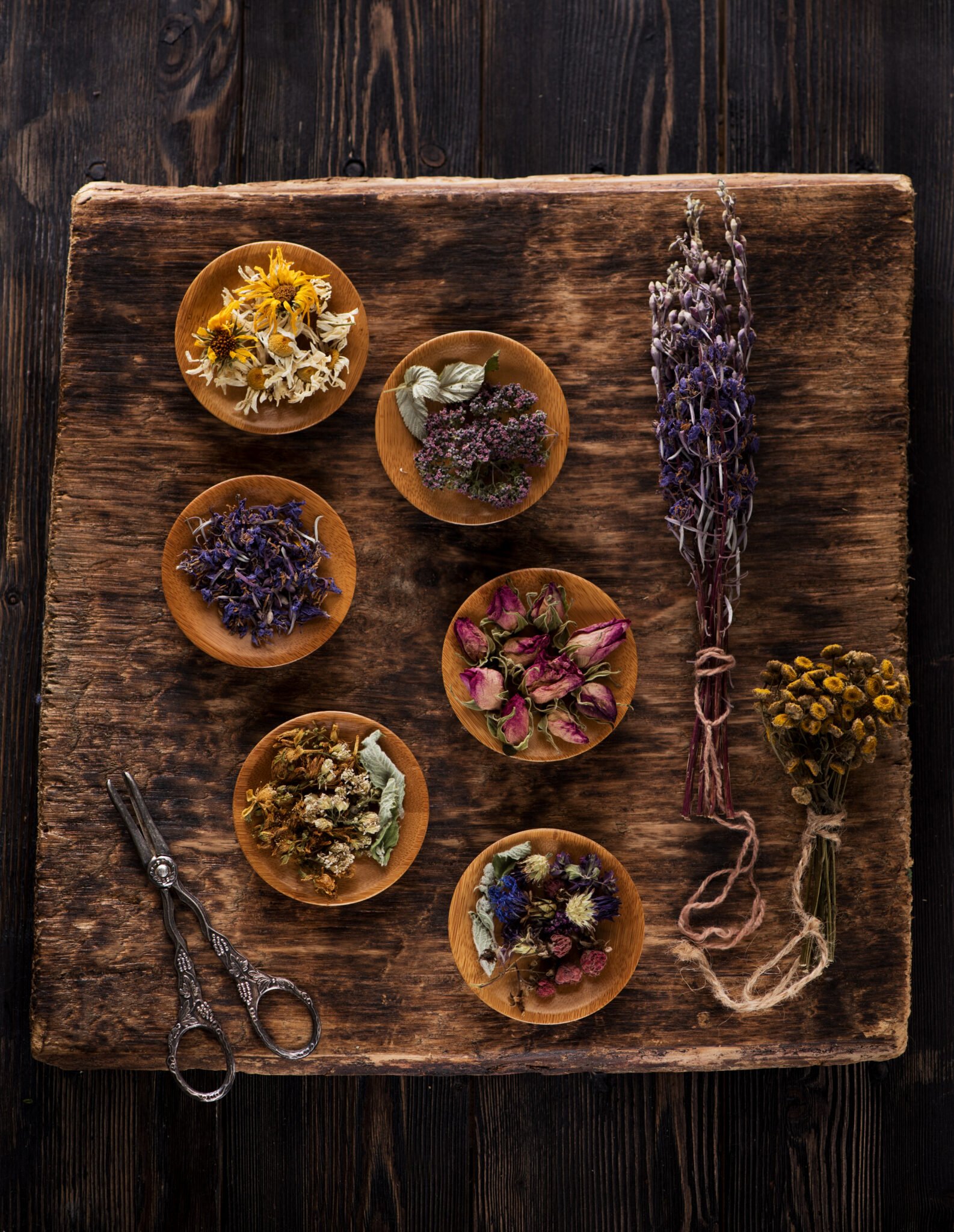
For generations, knowledge of roots, leaves, bark, berries, teas, poultices, tonics, and home remedies traveled through Appalachian families and communities this way. Some remedies were practical. Some were spiritual. Some belonged to particular families or cultural traditions. Others became so familiar that nobody remembered exactly where they began.
Together, they formed something more complicated than a collection of old cures.
They represented a way of knowing the land.
Knowledge Older Than Appalachia
The history of herbal healing in Appalachia did not begin when European settlers arrived in the mountains.
Indigenous peoples had developed extensive knowledge of the region’s plants over generations. Cherokee and other Native communities understood the landscapes in which they lived and maintained their own distinct medicinal and spiritual traditions.
European settlers brought traditions of their own.
Scottish, Irish, English, and German-speaking immigrants arrived with knowledge of European herbs, household remedies, charms, religious practices, and folk beliefs. Some encountered plants related to ones they already knew. Others had to learn an entirely unfamiliar landscape.
African and African American healing traditions also became part of Appalachian life, although their contributions have too often been minimized or omitted from popular accounts of the region.
The result was not one tidy system called “Appalachian medicine.”
Knowledge moved between people, but different communities also maintained traditions of their own. Practices varied from one mountain community to another and sometimes from one family to the next.
Over generations, these traditions became part of the complicated cultural landscape of Appalachia.
Explore: Smithsonian Center for Folklife and Cultural Heritage: Appalachian Folk Magic
What Grew Around You
Mountain families often made use of what was available nearby.
That might include cultivated plants growing around a house or garden, but much of the knowledge concerned plants growing in forests, fields, along roadsides, and beside streams.
American ginseng, commonly called “sang” in parts of Appalachia, became particularly important.
People dug the root for personal use, but ginseng also developed into a valuable cash commodity. For generations, digging sang provided some mountain families with seasonal income. Knowledge of where patches grew could be closely guarded and handed down within families.
The plant eventually connected remote Appalachian forests to an international market.
That history continues today, along with increasing concern about conservation and responsible harvesting.
Explore: Smithsonian Folklife: American Ginseng
Other plants frequently appear in accounts of Appalachian home remedies.
Goldenseal was gathered from the forest.
Elderberries were made into preparations.
Mint became tea.
Plantain leaves were used externally in household treatments.
Black cohosh appeared in traditions associated with women’s health.
Sassafras was familiar enough that generations remember its distinctive scent and the tea made from its roots.
But knowing a plant involved more than knowing its name.
People learned where it grew.
When it appeared.
Which part was gathered.
How much could be taken.
How it should be dried or stored.
And perhaps most importantly, they learned who actually knew what they were doing.
Traditional use does not mean that every old remedy was medically effective or safe. Some plants historically used as medicine can interact with medications, cause serious side effects, or be dangerous when prepared incorrectly.
The importance of these traditions lies not in treating every old remedy as modern medical advice, but in understanding the knowledge, experience, and relationships with the land that allowed those practices to survive.
Learning by Following
Much of this knowledge was passed orally.
A child walking through the woods with an older relative might learn that one plant appeared on a particular slope while another preferred the damp ground near water.
There were no flash cards.
No formal lesson plan.
You learned because you were there.
The same thing happened in kitchens and around sickbeds.
Someone watched how a tea was prepared, how roots were dried, how something was measured, or how a poultice was made. Years later, that person might repeat the process for someone else.
Sometimes instructions were written down.
Families kept handwritten “receipt” or recipe books containing household preparations, remedies, food recipes, and other practical knowledge.
But memory remained an important archive.
That made elders especially important.
When someone died without passing along what they knew, a small library could disappear with them.
The Granny Woman
Among the most remembered figures in Appalachian folk healing is the granny woman.
The term could describe an older woman known within her community for knowledge of childbirth, plants, household remedies, or healing. Some served as midwives. Others were sought for particular remedies or advice.
Their roles were not identical, and neither were their beliefs.
For some, plant knowledge existed comfortably alongside deeply held Christianity. Prayer might accompany a household treatment. Bible verses, faith healing, signs, charms, and beliefs about planting or gathering by the moon could coexist with very practical knowledge about childbirth, food, illness, and plants.
In communities where physicians could be far away, expensive, or simply unavailable when needed, a knowledgeable neighbor or granny woman could occupy an important place.
The Smithsonian Center for Folklife and Cultural Heritage has documented women who continue or remember these traditions, including accounts of older women serving as healers, midwives, and keepers of plant knowledge within Appalachian communities.
Read more: Smithsonian: Women Carry Traditions in Appalachian Folk Magic
Faith, Signs, and the Unseen
Appalachian folk healing was not always divided neatly into categories of medicine, religion, and folklore.
Those are modern labels.
For the people practicing these traditions, a plant remedy and a prayer did not necessarily contradict one another.
A Bible verse might be spoken over an illness.
A wart might have a remedy involving an action that seems mysterious to us now.
Planting, gathering, or certain household activities might be timed according to signs or phases of the moon.
Some traditions were spoken openly. Others were private.
And some people who practiced them would never have called what they were doing magic.
They were simply doing what they had been taught.
That distinction matters when we look back at Appalachian culture. Calling every granny woman a “witch” may make a good modern headline, but it can impose an identity on women who might have strongly rejected the word.
Their own understanding of what they did deserves to be part of the story.
When the Old Knowledge Began to Fade
Appalachia changed dramatically during the twentieth century.
Roads reached communities that had once been difficult to access. Hospitals and clinics expanded. Commercial medicines became more available. Families moved away for work. Coal towns grew and declined. Radio, television, automobiles, and eventually the modern world connected mountain communities to places far beyond the ridges.
Some old practices became unnecessary.
Others came to be regarded as superstition or something associated with an earlier way of life.
And sometimes knowledge simply stopped moving from one generation to the next.
But it did not disappear entirely.
In 1966, students at the Rabun Gap-Nacoochee School in northern Georgia began interviewing older people in their communities about the skills and traditions they knew.
Their project became Foxfire.
Students recorded oral histories about everything from log cabin construction and blacksmithing to planting, foodways, crafts, beliefs, and folk remedies. What began as a classroom magazine eventually became a celebrated series of books and a museum devoted to Appalachian life.
Foxfire demonstrated something important.
If nobody asks an elder what they know, that knowledge can disappear.
If somebody listens, it can travel much farther than anyone imagined.
Explore: The Foxfire Fund and Museum
The Knowledge Is Still Living
It would be easy to end this story by saying Appalachian herbal knowledge belongs to the past.
It doesn’t.
People throughout the mountains still forage, garden, gather plants, study herbalism, dig roots, make preparations, and pass knowledge between generations.
Some approach these traditions as family heritage. Others study them through botany, ethnobotany, conservation, or contemporary herbal practice.
American ginseng offers a particularly good example.
The Smithsonian’s American Ginseng project documents growers, harvesters, herbalists, conservationists, and mountain residents whose relationships with the plant show that traditional knowledge continues to evolve.
Among them are people such as the late Carol Judy, remembered as an herbalist, root digger, and “forest granny” in Tennessee’s Clear Fork Valley, and Laurie Quesinberry in southwestern Virginia, who inherited generations of ginseng knowledge through her husband’s family while becoming an advocate for conservation.
These are not reenactments of Appalachian culture.
They are part of its continuation.
More Than a Remedy
Perhaps that is what is easiest to miss when we reduce Appalachian herbal traditions to lists of plants and what they were supposedly “good for.”
The list was never the whole thing.
The real inheritance was knowing where to look.
It was recognizing a plant before it flowered.
Knowing which hillside held ginseng.
Remembering where mint returned every spring.
Knowing who in the community to ask when you didn’t know.
And understanding that knowledge carried responsibilities.
To the person teaching you.
To the person you might someday teach.
And to the land that provided what you gathered.
There is something deeply Appalachian in that kind of inheritance.
Not because mountain people possessed some mystical connection unavailable to everyone else, but because generations of people paid attention to the places where they lived.
They learned them.
And then they taught someone else.
Honoring the Old Ways
There is a difference between preserving an old remedy and preserving the knowledge surrounding it.
We do not have to believe every treatment worked to recognize the intelligence required to identify hundreds of plants, remember their seasons, understand where they grew, prepare them consistently, and carry that information through generations without a textbook.
Nor do we need to turn every granny woman into a legend.
Many were simply people doing what communities have always done when resources were limited.
They cared for one another with what they had and what they knew.
Some of that knowledge has been lost.
Some has changed.
Some survives in books, recordings, archives, gardens, family memories, and the people who still walk into the woods knowing exactly what they are looking for.
And somewhere in Appalachia, an older person is probably still pointing toward a plant while someone younger walks beside them.
Maybe the younger person realizes a lesson is taking place.
Maybe they don’t.
That is how knowledge has always traveled.
From hand to hand.
From voice to ear.
And from one walk through the mountains to the next.