
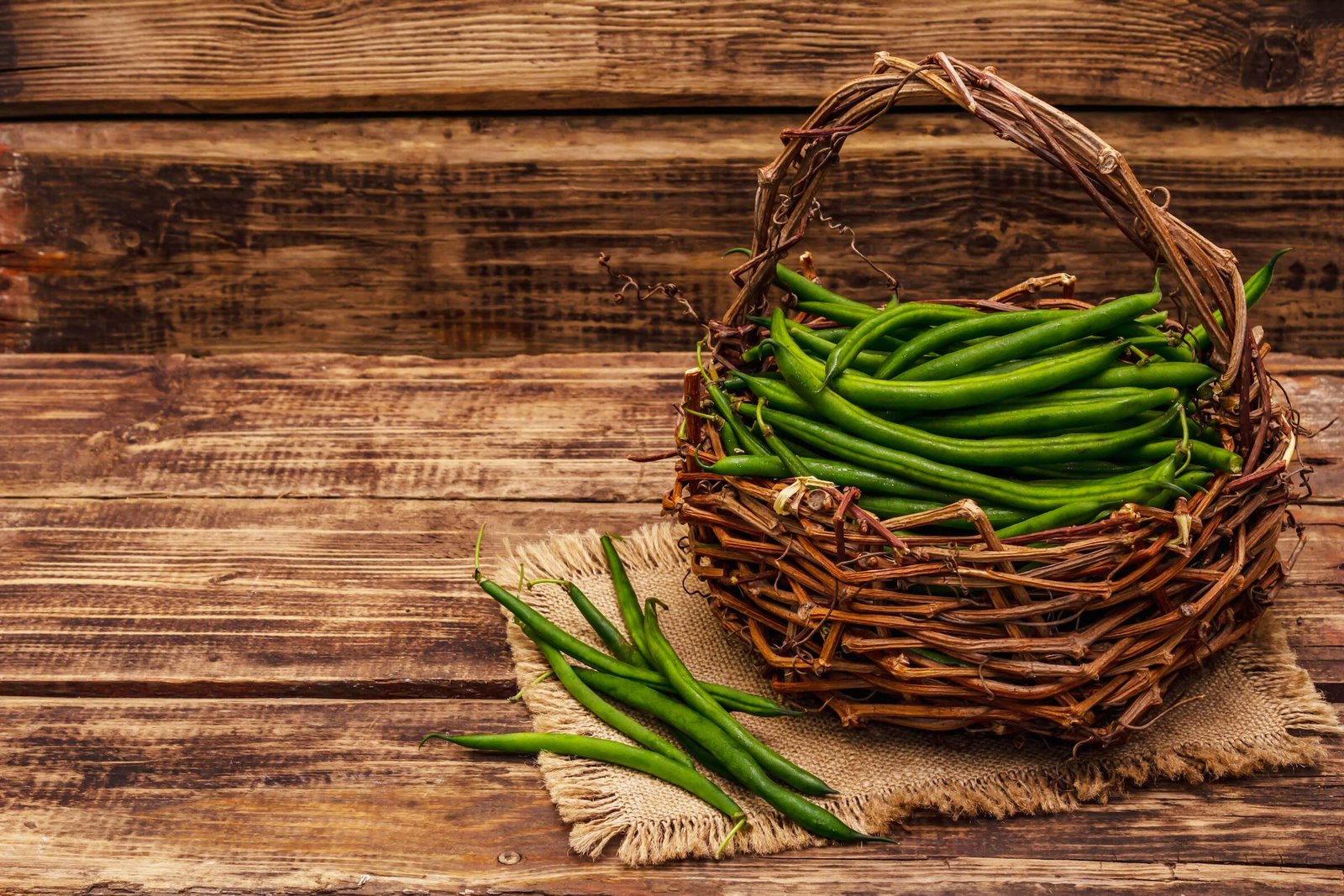
Tag: West Virginia

  • When the Beans Came In

    When the Beans Came In

    Long Summer Days of Work, Food and Belonging in Appalachia

    Some of my clearest memories of Appalachian summers begin in the garden.

    Harvest didn’t begin with baskets of vegetables sitting neatly on a porch. Somebody had to go out and pick everything first, and morning was better, before the heat settled heavily over the day.

    We went into the garden with buckets and baskets and started looking for what was ready. Beans hid underneath leaves and among the vines, so you had to reach into the plants and find them. Your hands got dirty. Your clothes got dirty. There might still be moisture on the plants from the morning, and little by little the empty containers began filling.

    Children weren’t spectators. We picked right alongside everyone else.

    I happened to like this arrangement because beans were one of my favorite foods. Fresh beans could be eaten while you were working, which meant a certain percentage of the harvest underwent what I considered necessary quality control before it ever reached the house.

    I’m not sure the adults considered that part of my contribution.

    There was always more than one thing coming in from the garden. Beans might have been the day’s big job, but tomatoes were ripening, cucumbers needed picking, onions were ready, and something else always seemed to be demanding attention. A garden doesn’t consult your plans before deciding that half of it is ready at the same time.

    Once everything came back toward the house, the work changed.

    THE PORCH BECAME THE WORKTABLE

    This is where my memories become less about the garden itself and more about the people around it.

    Beans came to the porch in buckets and baskets. People found places to sit, and hands stayed busy. Beans were snapped. Strings were pulled from those that needed stringing. Some would eventually be canned. Others would be dried. Pinto beans were part of the work too.

    The work itself could be repetitive, but the experience wasn’t. Someone had news. Someone had a story. Somebody remembered something that happened years before, and another person remembered it differently. People laughed, visited, kept an eye on children, wandered in and out, and helped with whatever needed doing.

    Nobody announced that we were participating in a meaningful intergenerational community activity.

    We had beans to do.

    That was enough.

    SHUCK BEANS, LEATHER BRITCHES AND THE LANGUAGE OF BEANS

    Beans have their own vocabulary in Appalachia, and that vocabulary isn’t necessarily the same from one family or community to another.

    In my family, we called them shuck beans. I also heard people use the term leather britches, and elsewhere readers may encounter shucky beans. The names can vary, but they belong to a long Appalachian tradition of preserving green beans by drying them.

    These weren’t simply dried versions of the same beans we ate fresh. Drying changed them. When eventually rehydrated and cooked, shuck beans had their own flavor and texture, different from fresh or canned beans. That difference was part of the reason preserving beans in more than one way made sense. One summer crop could become several different foods.

    Even “stringing beans” can mean more than one thing depending on the conversation. Traditional string beans often have a fibrous string that needs to be removed before cooking or preserving. Green beans could also literally be strung onto thread for drying.

    Nobody needed to standardize the vocabulary for us. Families called foods what they had always called them, and sometimes you discovered that people a few communities away had another name entirely.

    That’s part of the richness of Appalachian foodways. There isn’t always one Appalachian word, recipe, bean or method. Traditions traveled through families and communities, changing a little along the way.

    CHILDREN HAD A PLACE IN THE WORK

    Looking back, one thing I appreciate is that work and childhood weren’t treated as opposites.

    We picked. We snapped. We strung. We shucked. We fetched things when somebody needed them. We listened to conversations that weren’t necessarily directed toward us and absorbed more than the adults probably realized.

    Then we got bored.

    Or hungry.

    Or hot.

    And because we were children, sooner or later we disappeared to do something else.

    There wasn’t anything unusual about moving between work and play. We weren’t excluded from household work because we were children, but neither do I remember harvest as some grim childhood obligation. We participated because everybody participated.

    There was satisfaction in it, too. When food appeared on the table later, some part of you knew that you had helped bring it there. You had picked those beans. You had snapped them. You knew which hillside the berries came from and which tomatoes had been carried out of the garden that morning.

    You belonged to what was happening because you had a place in it.

    GO GET SOME BERRIES

    If children became hungry or restless around the middle of the day, the adults had a remarkably effective solution.

    Go gather some berries.

    Off we went.

    We knew where to go. Nobody needed to provide a lesson on identifying the berry patch or explain that wild food could be found beyond the garden. We had been there before. We knew what we were looking for.

    Of course, telling a group of children to gather berries and expecting every berry to arrive home is optimistic.

    We ate while we picked.

    By the time we returned, our fingers were stained. Our mouths and faces were stained. There was a fair chance our clothes were stained. Our stomachs were considerably fuller, and the buckets contained whatever portion of the harvest had survived us.

    The berries that did make it home could become preserves, jam, jelly, pies or something else for the family to eat. Even our break from the beans had somehow remained connected to food.

    I don’t remember anyone explaining the significance of that to us.

    Nobody said, “Today we’re going to teach you how to forage.”

    They said, “Go get some berries.”

    And we knew where to go.

    WHEN THE DAY GOT TOO HOT

    Sometimes the afternoon heat became too much and there was another place for children to disappear.

    The creek.

    We might go down and splash, swim and cool ourselves for a while. Again, nobody scheduled this. There wasn’t a designated recreational period in the day’s harvest itinerary.

    It was hot. We were kids. The creek was there.

    So we went.

    There was a rhythm to those days that I understand differently now than I did then. The garden decided when something was ready. The temperature helped decide when children needed a break. Hunger could send us toward the berry patch. Ripening fruit could suddenly become more important than whatever everyone thought they would be doing next.

    The day wasn’t entirely ruled by a clock. Things happened when they needed to happen.

    Eventually we came back from the creek.

    And, remarkably, the beans had not snapped themselves while we were gone.

    THERE WERE ALWAYS MORE BEANS

    There could still be baskets waiting when we returned, and sometimes the work continued into another day.

    That seems worth remembering now, when so much of life is measured by how quickly something gets completed. Nobody had failed because every bean wasn’t finished by a predetermined hour. There was work to do, and the work took however long it took.

    Tomorrow existed.

    The next day people could sit down again, pick up where they had stopped and keep going. Meanwhile, other parts of the harvest continued demanding attention.

    Food was being canned. Beans were drying. Cucumbers and other vegetables could become pickles. Fruit became preserves. Tomatoes and other produce were put away for later.

    Little by little, food that had been growing outside only days before began changing into something that could feed people long after summer was gone.

    But before winter came, there was supper.

    THE HARVEST SUPPER

    The first day or two of a big harvest often brought one of the meals I remember best.

    There might be fresh beans from the garden, meat, boiled potatoes, cucumbers, onions and tomatoes. Other vegetables appeared according to whatever was ready. Much of what was on the table had been growing nearby shortly before we ate it.

    Sometimes we ate outside in the yard as evening approached. By then, the worst heat was beginning to loosen its grip. Adults could finally sit down and eat, while children who had somehow recovered from all the day’s alleged exhaustion ran around with cousins and neighborhood kids.

    Nobody called it farm-to-table dining.

    It was supper.

    That’s an important distinction because I don’t remember anyone treating the food as unusual or particularly picturesque. Cucumbers, onions and tomatoes weren’t arranged to create a rustic experience. The beans weren’t there to demonstrate a return to traditional living.

    They were there because we had picked beans.

    We ate what we had, and what we had was good.

    The days after that first larger meal could be much simpler. There might be leftovers or sandwiches, plates of fresh vegetables, tomatoes, cucumbers, onions, fruit or whatever was easy to eat while the preservation work continued.

    There was something almost funny about being surrounded by so much food while nobody particularly wanted to stop working with food long enough to make an elaborate meal.

    Summer had arrived all at once, and everybody was trying to put some of it away.

    WHAT WE LEARNED WITHOUT LESSONS

    As a child, I didn’t think of any of this as education.

    Yet we were learning constantly.

    We learned how to tell when food was ready and where certain things grew. We learned how beans came off the plant and what happened to them afterward. We learned that weather mattered, that some foods could wait and others couldn’t, and that abundance brought work with it.

    We learned that the same food could taste completely different depending on what was done with it. Fresh beans weren’t canned beans, and canned beans weren’t shuck beans. Summer food could become winter food, but it changed along the way.

    We also learned who knew how to do things.

    Knowledge moved around those gatherings almost invisibly. Somebody showed you how to snap a bean properly. You watched how another person handled something. You listened while adults talked. You tried it yourself. Eventually, something that had once required instruction became something you simply knew how to do.

    Children weren’t sitting through lessons on Appalachian foodways.

    We were living inside them.

    And this wasn’t some distant pioneer past.

    We had cars. We watched television. People bought groceries. We wore the same ordinary clothes other Americans wore. Modern life and older practices weren’t mutually exclusive.

    You could watch television in the evening and still spend part of the day snapping beans with your family.

    That was simply life.

    WANT TO PRESERVE BEANS THE TRADITIONAL WAY?

    For people interested in Appalachian food traditions today, beans are a wonderful place to begin because one harvest can demonstrate several different preservation methods.

    Traditional Appalachian dried green beans, commonly called leather britches, shuck beans or shucky beans depending on the family or community, offer an especially interesting connection to the past. Drying removed enough moisture from the beans to extend their usefulness beyond the fresh harvest, while also creating a distinctive food rather than merely imitating the flavor and texture of fresh beans.

    West Virginia University Extension documents the Appalachian leather-britches tradition and describes green beans being washed, trimmed and threaded with a needle onto a long thread before being hung to dry thoroughly. Once dry, they can be stored until they’re ready to be cooked.

    For anyone interested in trying traditional food preservation, however, there is an important distinction between preserving a tradition and blindly reproducing every old household method. Food-safety knowledge has changed. Historical practices tell us how families lived and preserved food, but current Extension guidance provides tested recommendations for doing it safely today.

    WVU Extension’s resources on heritage beans and home food preservation are excellent places to begin. Readers outside West Virginia can also contact their own university Cooperative Extension service for guidance appropriate to their area.

    Learning the traditional methods isn’t only about preparing food for storage. It can help explain why families chose particular varieties, why certain foods developed distinctive flavors, and why the same crop might be eaten fresh, canned or dried.

    And if you have an older relative who remembers putting up beans, ask them what they called them.

    Shuck beans?

    Shucky beans?

    Leather britches?

    Something else entirely?

    The answer itself is worth preserving.

    MORE THAN NECESSITY

    Gardens mattered because they fed people. Putting food away mattered because summer didn’t last forever. There is no reason to pretend necessity wasn’t part of the story.

    But necessity and misery are not the same thing.

    Neither do I want to polish these memories until everybody is smiling blissfully over a basket of beans. People got tired. Children got bored. It was hot. Some jobs were tedious. I’m sure people occasionally got on one another’s nerves because that’s what happens when human beings spend enough time together.

    All of that existed beside laughter, abundance, cousins, neighbors, food, stories, creeks, berries and the satisfaction of seeing the results of your work.

    Survival and joy weren’t mutually exclusive.

    Perhaps that’s part of what can be difficult to communicate about these memories now. Looking backward, people sometimes want to sort the past neatly into hardship or nostalgia. Lived experience rarely cooperates with those categories.

    Something can be necessary and enjoyable. Work can be tiring and still create belonging. A child can contribute and still have a childhood. A family can buy groceries and still put up a garden.

    Tradition doesn’t require people to be trapped in the past.

    Sometimes it’s simply what people continue doing because it works, because they know how, because they like the food, and because somebody taught them.

    WHAT WE MAY REALLY BE MISSING

    Today, people can spend hours online watching other people garden, forage, bake bread, make preserves, can vegetables, cook from scratch and build lives around the seasons.

    I understand the attraction.

    Maybe some of what people are searching for isn’t really the jar of home-canned beans or the loaf of homemade bread. Maybe it’s the feeling surrounding those things.

    They see hands doing useful work. They see food with an origin they can understand. They see people moving according to seasons rather than notifications. They see families or friends accomplishing something together.

    Perhaps what looks like nostalgia for an older way of living is sometimes a longing for participation.

    But watching connection and experiencing connection aren’t the same thing.

    A screen can show you a family snapping beans together. It cannot give you a place in their circle.

    Participation was what made the difference.

    I didn’t belong because somebody explained belonging to me. I belonged because there was a bucket beside me and somebody expected me to help fill it. Later there was a basket of beans and a place to sit. There were berries on a hillside I knew how to find and a creek I knew how to reach.

    I had something to contribute.

    So did everybody else.

    PRESERVING MORE THAN FOOD

    Nobody sitting around those beans thought we were preserving Appalachian culture.

    We thought we were preserving food.

    But both were happening.

    The beans survived because somebody knew what to do with them. The knowledge survived because children participated. Family stories survived because people had hours to talk while their hands were occupied. Relationships were strengthened because neighbors and relatives kept showing up.

    Culture didn’t always announce itself as culture.

    Sometimes it looked like dirty hands.

    Sometimes it sounded like people talking over one another on a porch.

    Sometimes it was a child eating half the berries she was supposed to bring home.

    And sometimes it was simply a basket of beans that everybody knew needed to be finished sooner or later.

    When I think about those summers now, I remember the work, but I don’t remember it separately from the people. The two belong together.

    I can still picture evening settling over the yard after a long day. The heat finally beginning to break. Empty plates. Adults sitting around a little longer. Children still finding enough energy to play.

    There might still be beans waiting somewhere for tomorrow.

    Inside, jars were beginning to accumulate. Beans were drying. What had been growing in the summer sun was slowly being transformed into food that would remain after the garden stopped producing.

    Outside, summer was still happening.

    Inside, little by little, we were putting it away for winter.

    We just didn’t know we were preserving the memory of summer, too.

    Preserve Your Harvest Safely

    Interested in trying traditional food preservation at home? West Virginia University Extension provides science-based guidance for home canning, freezing, drying and other preservation methods, including current food-safety recommendations.
    Visit WVU Extension’s Home Food Preservation Resources →

  • Discover Off-the-Beaten-Path: 10 Appalachian Places Worth the Detour

    Discover Off-the-Beaten-Path: 10 Appalachian Places Worth the Detour

    There are places in Appalachia everyone seems to know.

    The Great Smoky Mountains. The Blue Ridge Parkway. New River Gorge. Shenandoah. The Appalachian Trail.

    They deserve their reputations, but some of the most memorable Appalachian experiences begin when you turn away from the familiar route.

    Sometimes it is a narrow road climbing toward an old forest. Sometimes it is a trail leading into a canyon where the walls seem far too large for the little blue line on the map. Sometimes it is a mountain settlement, a bog that looks as though it belongs hundreds of miles farther north, or a patch of ancient forest that somehow escaped the saw.

    These aren’t necessarily secret places. Some are well known locally, and a few become quite busy at certain times of year.

    But they offer something increasingly difficult to find while traveling: the feeling that the journey itself is part of the destination.

    Here are ten Appalachian places worth taking the long way to see.

    1. Highlands Nature Sanctuary, Ohio

    Where caves, cliffs, wildflowers, and Appalachian forest meet

    Southern Ohio may not be the first place travelers imagine when they picture dramatic Appalachian landscapes.

    Highlands Nature Sanctuary gives them reason to reconsider.

    Located near Bainbridge in Highland County, the 3,000-acre preserve protects the Rocky Fork Gorge, a steep-walled dolomite canyon filled with rock formations, springs, grottos, ancient white cedars, and an extraordinary variety of plant life.

    The preserve is the oldest and largest in the Arc of Appalachia system.

    Spring is particularly remarkable here. Wildflowers begin appearing in late March, followed by hepatica and large displays of trillium in April. Birding becomes especially rewarding later in spring.

    There is another story hidden in the landscape.

    Part of today’s sanctuary was once 7 Caves, a twentieth-century family attraction that opened in 1930. The Arc of Appalachia gradually acquired the property, and the former attraction became part of the protected sanctuary. The old gift shop now serves as the Appalachian Forest Museum.

    Some of the original cave habitat has been restored for bats, while two caves can still be viewed seasonally.

    Why make the detour?

    Because this is a fascinating intersection of Appalachian geology, conservation, wildflowers, caves, and the history of roadside tourism.

    Know before you go

    This is a highly protected nature preserve. Visitors must remain on designated trails, and activities such as collecting plants, swimming, climbing, and entering closed caves are prohibited. Some trails also prohibit dogs.

    Plan your visit: Highlands Nature Sanctuary

    2. Cathedral State Park, West Virginia

    Walk beneath one of West Virginia’s last great old forests

    There are forests that are beautiful.

    Then there are forests that make you instinctively lower your voice.

    Cathedral State Park near Aurora, West Virginia, is one of them.

    The park protects 133 acres of old-growth forest and one of the largest remaining stands of virgin eastern hemlock in West Virginia. More than 170 species of trees, ferns, and wildflowers have been documented here.

    The forest survived in part because someone decided it should.

    The property had once been associated with the Brookside Resort, a nineteenth-century mountain retreat. Caretaker Branson Haas eventually acquired the land and later sold it to West Virginia with the stipulation that the forest remain uncut.

    Today, three miles of trails wind beneath the old trees.

    This isn’t a destination requiring an elaborate itinerary.

    That’s part of its appeal.

    You come here to walk.

    To look up.

    To understand, for a little while, what portions of the Appalachian forest once looked like before industrial logging transformed so much of the region.

    Why make the detour?

    Because genuinely old Appalachian forest has become rare, and Cathedral allows you to walk through a surviving piece of it without undertaking an expedition into the backcountry.

    Know before you go

    Cathedral is primarily a day-use park and does not offer overnight lodging within the park.

    Plan your visit: Cathedral State Park

    3. Cranberry Glades Botanical Area, West Virginia

    A northern wetland hiding in the mountains

    This is not the West Virginia landscape most people expect.

    At roughly 3,400 feet in the mountains of Pocahontas County lies a remarkable complex of high-elevation wetlands known as Cranberry Glades.

    Sphagnum moss, cranberries, orchids, and other plants grow in an environment that feels strangely northern for a place this far south. The wetland complex contains bogs, fens, alder swamp, beaver ponds, and old-growth forested swamp.

    The glades are also ecologically important headwaters for the Cranberry River.

    A boardwalk provides visitors with a way to experience part of this fragile landscape without walking directly across the sensitive wetland vegetation.

    Come slowly.

    This isn’t a place that reveals itself through one enormous overlook.

    Look instead at the moss, water, flowers, birds, and small details along the boardwalk.

    Why make the detour?

    Because it feels like finding a misplaced piece of another latitude tucked into the West Virginia mountains.

    Know before you go

    Stay on the boardwalk and designated paths. The vegetation and wetland soils are extremely sensitive to disturbance.

    Learn more: Cranberry Glades Wetland Fact Sheet

    4. Gaudineer Knob, West Virginia

    A surviving island of ancient red spruce

    West Virginia once held vast forests of red spruce.

    Most were logged.

    At Gaudineer Knob, a fragment survived.

    High on Cheat Mountain, Gaudineer Knob rises to about 4,450 feet. Nearby, the Gaudineer Scenic Area protects one of the remaining tracts of old-growth red spruce in the Central Appalachians.

    Some trees in the surviving forest are more than 300 years old.

    The high elevation creates a cool environment that feels more like northern New England or southern Canada than the valleys below. Red spruce, northern hardwoods, warblers, thrushes, and other high-elevation species make the area distinctive even within West Virginia.

    The story of why this patch remains makes the experience even more meaningful.

    When so much surrounding forest disappeared to industrial logging, this small piece endured.

    Why make the detour?

    Because you’re not simply looking at large trees. You’re walking into a fragment of the forest that once covered far more of the high Alleghenies.

    Know before you go

    Mountain roads and weather can change quickly at high elevation. Check current Monongahela National Forest conditions before making the trip.

    Learn more: Gaudineer Knob, U.S. Geological Survey

    5. The Backroads of New River Gorge, West Virginia

    Leave the bridge crowd behind

    Yes, New River Gorge National Park and Preserve is famous.

    No, that doesn’t mean you’ve seen it once you’ve photographed the bridge.

    The National Park Service itself maintains an “Off the Beaten Path” collection for visitors willing to explore beyond the park’s busiest locations.

    Among the possibilities are Trump-Lilly Farm and Richmond Hamilton Farm, where preserved buildings and landscapes provide glimpses into Appalachian subsistence farming.

    There is also an African American Heritage Auto Tour exploring Black history in the gorge, along with trails around Sandstone, Grandview, Thurmond, Stone Cliff, and Cunard.

    This is where a famous destination becomes a much more complicated place.

    The gorge isn’t simply cliffs and whitewater.

    It contains the remains of farms, railroads, mining communities, roads, family histories, and people whose lives were connected to the river long before anyone called the landscape a national park.

    Why make the detour?

    Because New River Gorge becomes far more interesting when you stop treating the bridge as the destination and start treating the entire gorge as a landscape.

    Know before you go

    Some backcountry destinations involve rough or high-clearance roads. Check the National Park Service’s individual location guidance before heading out.

    Explore: New River Gorge: Off the Beaten Path

    6. Breaks Interstate Park, Virginia and Kentucky

    Go into the canyon, not just to the overlook

    The Russell Fork has carved a spectacular canyon along the Virginia-Kentucky border.

    Breaks Interstate Park gives travelers several ways to experience it.

    If you want the scenery without committing to an extreme hike, the park has overlooks and shorter trails. The Geological Trail runs through unusual sandstone formations, while Laurel Branch follows a mountain stream past cliffs, rhododendron, and a small canyon known as the Notches.

    More experienced hikers can venture deeper.

    The Prospector Trail descends beneath the first cliff line into the canyon landscape, and the park’s most demanding routes reach the Russell Fork itself.

    There is human history in these woods, too.

    Some trails follow old roadbeds and logging routes or pass former mountain homesites, reminders that these forests were once working landscapes as well as wild ones.

    Why make the detour?

    Because the Breaks offers that unmistakable Appalachian combination of enormous geology and traces of people who lived and worked within it.

    Know before you go

    Do not underestimate the canyon. Some Breaks trails are genuinely strenuous and include steep grades, exposed terrain, ladders, and rugged footing. Choose a route appropriate to your ability.

    Plan your visit: Breaks Interstate Park Hiking Guide

    7. Frozen Head, Tennessee

    One of the Cumberland Mountains’ quieter wild places

    Between Knoxville and the Cumberland Plateau lies a mountain landscape that still feels remarkably intact.

    Frozen Head State Natural Area and State Park protect a large expanse of the Cumberland Mountains near Wartburg, Tennessee.

    The natural area contains mature forest, rare plants, streams, high ridges, and nearly 60 miles of trails. Frozen Head Mountain rises to 3,324 feet, while more than a dozen other peaks in the natural area exceed 3,000 feet.

    Many trails were originally constructed by the Civilian Conservation Corps during the 1930s.

    This is not a roadside-overlook destination.

    Frozen Head rewards people who want to spend time inside the mountains rather than simply look at them from a distance.

    Why make the detour?

    Because it preserves one of the least-disturbed landscapes remaining in Tennessee’s Cumberland Mountains.

    Know before you go

    Trail difficulty varies considerably. Camping is available by reservation, and dogs are permitted on leash in appropriate areas.

    Plan your visit: Frozen Head State Natural Area

    8. Hensley Settlement, Kentucky

    A mountain community preserved above Cumberland Gap

    High on Brush Mountain within Cumberland Gap National Historical Park is a place that can make the modern world feel very far away.

    Hensley Settlement preserves the landscape of an early twentieth-century Appalachian farming community established by members of the Hensley and Gibbons families.

    Homes, barns, a schoolhouse, spring houses, corn cribs, fields, trails, and other structures remain across the mountaintop.

    The National Park Service preserves approximately 67 acres of the settlement, offering visitors a glimpse into a community where families grew food, raised livestock, used local timber and stone, and lived without paved roads or rural electrification.

    It is easy to romanticize places like this.

    Don’t.

    Life here required enormous amounts of labor.

    That’s precisely what makes Hensley worth seeing. The settlement turns broad phrases such as “self-sufficient mountain life” into physical reality. You can see the buildings, fields, distances, tools, and landscape that made that life possible.

    Why make the detour?

    Because it provides something photographs cannot quite convey: the scale and isolation of a mountain community built largely around what families could produce themselves.

    Know before you go

    Access is limited by the mountain location. Check current National Park Service information about tours, shuttle availability, hiking access, and seasonal conditions before planning your visit.

    Explore: Cumberland Gap National Historical Park

    9. Bad Branch Falls State Nature Preserve, Kentucky

    Waterfall country beneath Pine Mountain

    On the southern face of Pine Mountain in Letcher County, Bad Branch Falls drops about 60 feet into a forested gorge.

    But the waterfall is only part of the story.

    The surrounding state nature preserve protects a rich Appalachian landscape of hemlock forest, streams, sandstone cliffs, rare plants, and mountain habitat.

    Trails can also lead farther into the preserve toward High Rock, a large sandstone exposure along the crest of Pine Mountain.

    This is the kind of place that rewards travelers who are willing to trade roadside convenience for a pair of hiking shoes.

    Why make the detour?

    Because the waterfall is the invitation, but Pine Mountain is the real destination.

    Know before you go

    Bad Branch is a protected nature preserve, not an amusement area. Stay on designated trails and check Kentucky State Nature Preserves information for current conditions and regulations before visiting.

    Learn more: Kentucky State Nature Preserves

    10. Colton Point and Pine Creek Gorge, Pennsylvania

    Take the quieter rim of Pennsylvania’s Grand Canyon

    Pine Creek Gorge cuts for more than 45 miles through the Appalachian Plateau of north-central Pennsylvania.

    At its northern end, most travelers encounter the gorge through Leonard Harrison and Colton Point state parks, which sit on opposite rims.

    For travelers seeking the rougher side of the experience, Colton Point is particularly appealing.

    The 368-acre park retains the rustic character of its Civilian Conservation Corps development, with wooded trails and rugged overlooks along the western rim.

    At this end of Pine Creek Gorge, the canyon is roughly 800 feet deep.

    The surrounding landscape tells another familiar Appalachian story. Native travel routes came first. Later came settlement and extensive logging. Eventually, portions of the landscape were protected and forests returned.

    Today, the gorge offers hiking, wildlife watching, camping, fishing, and access to a much larger forested landscape.

    Why make the detour?

    Because the view is enormous, but Colton Point can feel surprisingly understated.

    No elaborate attraction is required.

    The gorge does the work.

    Know before you go

    The park is open year-round, but facilities and road conditions can vary seasonally. Fall foliage draws considerably more visitors, particularly from late September into October.

    Plan your visit: Colton Point State Park

    Take the Road That Wanders

    There is a temptation when traveling to Appalachia to collect the famous places.

    Drive the Parkway.

    Photograph the bridge.

    Stand at the overlook.

    Hike the trail everyone told you to hike.

    There is nothing wrong with any of that.

    But Appalachia is far too large and far too varied to understand through its greatest hits.

    Sometimes the place you remember is the little state park where ancient hemlocks blocked out the afternoon sun.

    Or the boardwalk crossing a West Virginia bog that seemed to belong in Canada.

    Or the old farm road disappearing into the woods.

    Or a mountaintop settlement where you suddenly understand how much work was required simply to live there.

    The destinations on this list aren’t valuable because nobody knows about them.

    They’re valuable because each reveals something different about Appalachia.

    Old forest.

    Industrial history.

    Geology.

    Wetlands.

    Mountain farming.

    Conservation.

    Wildflowers.

    Canyons.

    And the lives people built between them.

    So visit the famous places.

    Then look at the map again.

    Find the thinner road.

    Take the turn you almost passed.

    Sometimes Appalachia saves its best stories for the detour.