
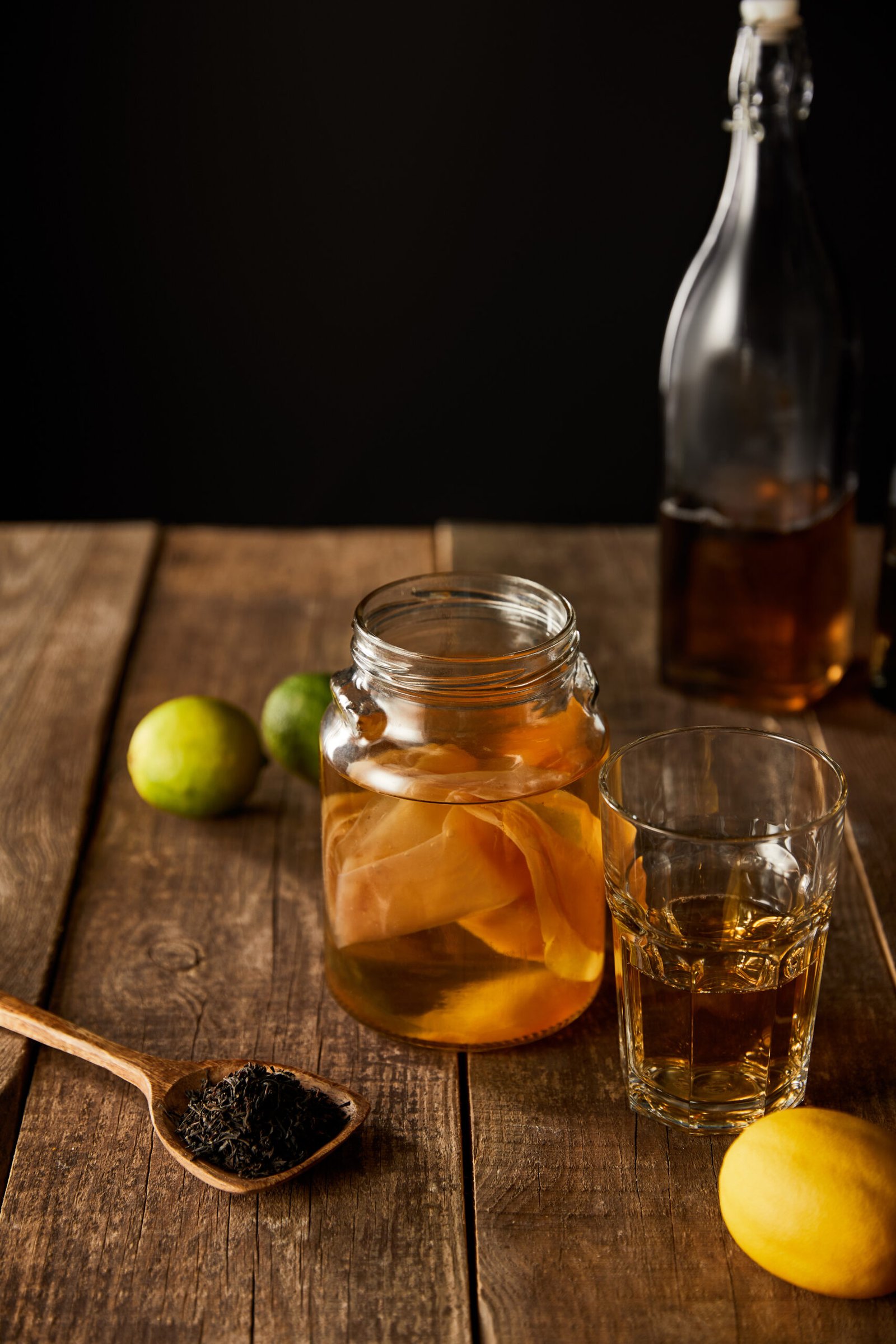
The old Appalachian remedy where honey soothed the throat, lemon cut the sweetness, and a little whiskey was supposed to kill whatever had gotten hold of you.
There was no alcohol in our house. My father was a preacher, so drinking wasn’t something casually accepted at home. On my mother’s side, there was another reason for keeping alcohol at a distance. Her father had been an alcoholic, and whiskey in particular carried memories that had nothing quaint or amusing about them.
Under ordinary circumstances, bringing whiskey into our house would have been nearly unthinkable. But if somebody got sick enough, apparently the rules changed.
Suddenly whiskey wasn’t whiskey anymore.
It was medicine.
Out came the honey and lemon, along with whatever strong liquor could be found, and an old family remedy somehow crossed a line almost nothing else could. Nobody was sitting around having cocktails. Somebody had a cough, and that was an entirely different matter.
The explanation I grew up with was wonderfully straightforward: whiskey killed germs.
There really wasn’t much more to discuss.
Whatever Was Around Would Do
Calling it a whiskey, honey and lemon cure makes the recipe sound considerably more precise than I remember it being.
Honey and lemon were pretty dependable. The alcohol was another matter. Whiskey was traditional, but moonshine worked too. On at least one occasion, neither was readily available and the neighbors had rum, so rum went into service.
Apparently the germs weren’t particular.
There were no carefully measured tablespoons passed down on a handwritten recipe card in our family. Like so many things people learned to make at home, you knew approximately what went into it and adjusted from there. One household’s version might be stronger, sweeter or more lemony than another’s.
The important thing was that when somebody was miserable with a cold, sore throat or cough, somebody else knew what to make.
As it turns out, our family was far from alone.
Granny Wasn’t the Only One Making It
Alcohol-based cold remedies appear throughout American folk tradition, but whiskey and moonshine had a particularly natural place in Appalachian household medicine because distilled spirits were already familiar products in many mountain communities.
The Blue Ridge Institute & Museum’s history of moonshine in the Blue Ridge documents homemade whiskey’s place in regional foodways and medicinal traditions. Folk remedies incorporated moonshine into tinctures and cough preparations, sometimes combining it with honey, lemon juice, ginger or sugar.
That variety feels familiar.
There wasn’t necessarily one authoritative “Appalachian cold remedy.” There were families and communities working from a shared cupboard of ingredients, beliefs and experience, making the version they had learned or simply using what they had available.
And if the neighbor had rum, well, apparently that could work too.
The Appalachian Medicine Cabinet Was Often the Kitchen
Home remedies make more sense when we stop looking at them through the medicine cabinet we have today.
For earlier generations, particularly in rural communities where professional medical care could be difficult to reach or afford, household knowledge mattered. What grew in the garden, what could be gathered nearby, what had been learned from older relatives and what was already sitting in the pantry could all become part of caring for someone who was sick.
That doesn’t mean everything Granny prescribed worked. Traditional medicine contains a mixture of useful observations, cultural beliefs, treatments that probably did very little and remedies we now know could actually be harmful.
People worked with what they knew.
Sometimes they got more right than we might expect. Sometimes they most certainly didn’t. And sometimes the thing that made you feel better wasn’t actually doing what everyone thought it was doing.
But Whiskey Kills Germs…Right?
That was the logic in our family.
Alcohol kills germs. Whiskey contains alcohol. Therefore, once swallowed, whiskey ought to kill the germs making you sick.
The first part contains enough truth to make the rest sound perfectly reasonable. Alcohol can indeed be used as a disinfectant, but drinking whiskey doesn’t disinfect your throat or kill the respiratory viruses responsible for the common cold.
According to the Centers for Disease Control and Prevention, there is no cure for the common cold. Treatment is primarily about relieving symptoms while the body recovers.
So the whiskey wasn’t traveling down there and slaughtering germs on Granny’s behalf.
That doesn’t mean everything in the cup was foolish.
In fact, one of Granny’s ingredients has held up surprisingly well.
Turns Out Granny Had Something Right About the Honey
Modern medicine still recognizes honey as something that can help soothe a cough. The CDC recommends pasteurized honey for cough relief for adults and children at least one year old.
Mayo Clinic also notes that honey may help relieve coughing, while warm liquids such as tea or warm lemon water can be soothing when you’re sick.
The whiskey is where Granny and modern medicine part company.
Current medical advice recommends staying hydrated when you have a cold, and Mayo Clinic advises avoiding alcohol because it can contribute to dehydration.
So if we’re keeping score, Granny had a point about the honey. Warm liquid and lemon can certainly be comforting.
Whiskey hunting down the germs?
Not so much.
I don’t think anybody in my family would have appreciated this scientific critique while coughing into a handkerchief.
When Moonshine Tasted Like Grandma’s Apple Pie
Of all my memories involving the medicinal use of liquor, one has stayed with me for an entirely different reason.
I got sick once while staying at my aunt’s. Whatever the usual ingredients were, homemade apple pie moonshine was available, so that was what I got.
And oh my goodness.
It tasted like my grandma’s apple pie.
There was probably a reason for that.
My grandmother knew something about apple pie moonshine herself. When her children were growing up, she made it with their help and sold it to bring money into the household. Moonshine occupies a complicated place in Appalachian history, but beneath the legends about revenuers, hidden stills and fast cars were ordinary people and families for whom making and selling liquor could also mean income.
Grandma’s story deserves its own telling someday.
But that little taste of apple pie moonshine taught me something I couldn’t have understood at the time. Taste carries memory remarkably well.
I don’t remember much about whatever illness had landed me at my aunt’s house.
I remember Grandma’s apple pie.
Not Everything Old Needs to Be Brought Back
There is a danger in writing about folk medicine that deserves mentioning.
Old does not automatically mean safe.
Remembering traditional remedies is worthwhile because they are part of our cultural history. Recreating every remedy our ancestors used is another matter entirely. Medical knowledge has changed, and some things once considered treatments are now known to be ineffective or unsafe.
Even our whiskey remedy deserves some modern boundaries. Honey should never be given to an infant younger than one year because of the risk of infant botulism. Alcohol isn’t an appropriate cold treatment for children, and modern medical guidance recommends avoiding alcohol when you’re sick.
We can preserve folk knowledge without pretending we haven’t learned anything since.
What Was in Your Granny’s Version?
Ask enough Appalachian families about old cold remedies and you’ll quickly discover that everybody’s granny seems to have had her own pharmacy.
Maybe yours used whiskey. Maybe it had to be moonshine. Maybe there was peppermint, horehound, rock candy, tea, ginger or something else entirely. Perhaps your family’s version came with strict instructions to drink something warm, bundle up beneath every quilt in the house and “sweat it out.”
Somebody else’s granny probably swore your granny was doing it completely wrong.
That’s part of what makes folk traditions interesting. They don’t move through communities like standardized pharmaceutical instructions. They travel from person to person, household to household and generation to generation, picking up substitutions and variations along the way.
Our version survived even as my own family’s relationship with alcohol changed dramatically.
My grandmother had once made moonshine for income. My mother’s family experienced the destructive side of alcohol through her father’s alcoholism. My father became a fundamentalist Baptist preacher, and my parents established a home where alcohol simply wasn’t welcome.
Yet somehow the old remedy crossed all of those generations intact.
When somebody got sick enough, whiskey still became medicine.
Closing Thoughts: The Part of the Remedy We Remember
I can look back now and separate the folklore from the medicine.
Whiskey wasn’t killing the cold germs. Honey really could soothe a cough. Warm liquids could comfort a sore throat. Lemon made the whole thing considerably more pleasant, and the particular liquor involved apparently depended on what somebody could get their hands on.
But reducing the tradition to a list of ingredients misses something important.
When you were sick, somebody noticed. Someone went into the kitchen, found the honey and squeezed the lemon. In our house, somebody apparently crossed a fairly substantial moral boundary and found some whiskey.
Then they brought it to you because this was what their people had taught them to do when somebody they loved wasn’t feeling well.
Maybe that’s why so many of us remember these remedies long after we’ve forgotten the colds they were supposed to cure.
We aren’t really remembering the illness.
We’re remembering being cared for.
And if that care occasionally arrived with a little moonshine in the cup, well…
Granny said it killed germs.