Tag: Appalachian History

  • The Legacy of My Melungeon Heritage: Following My Family Through America’s Backcountry

    The Legacy of My Melungeon Heritage: Following My Family Through America’s Backcountry

    Resilience, identity, and generations of interconnected Appalachian families

    I already knew we were mixed. That was never the revelation.

    What I didn’t know was all of the family names, how many of those families were connected to one another, or exactly how deep their roots reached into America’s past.

    The farther I followed my father’s family backward, the more familiar names began appearing. Mullins. Gibson. Collins. Sizemore. Justice. Thacker. Stallard. Akers. Ratliff. Webb. Addington. Blackburn. And still more.

    Some are names researchers have associated directly with historic Melungeon communities. Others entered my family through generations of marriages among families living across the same Virginia, Tennessee, Kentucky, and Carolina backcountry.

    I didn’t find one distant Melungeon ancestor hiding in an otherwise unrelated family tree. I kept finding families, and then I found more of them. The farther back I went, the more I began to understand that this wasn’t simply one interesting branch of my father’s ancestry. These were the people who made up much of the tree.

    A Word Written Down in 1813

    There is one reason the word Melungeon holds a particularly important place in my understanding of my heritage. It involves my fifth great-grandmother, Susan, or Susanna, Stallard.

    On September 26, 1813, the members of Stony Creek Baptist Church in Scott County, Virginia, gathered for a church meeting. During the meeting, Sister Kitchen brought a complaint against Susanna Stallard.

    The surviving church minutes record the accusation:

    “Susanna Stallard for saying she harbored them Melungins.”

    It is a tiny fragment of an ordinary disagreement between two women. More than two hundred years later, it is extraordinary.

    The 1813 Stony Creek minutes contain one of the earliest surviving written appearances of the word that would eventually be spelled Melungeon, and my fifth great-grandmother is standing right there in the middle of it.

    That does not prove Susanna herself was Melungeon, nor do I need it to. Its importance to me is different.

    The word existed in her world. The people sitting in that church apparently understood who was being discussed. Nobody stopped the meeting to define a “Melungin.” The clerk simply wrote it down.

    For me, that makes Melungeon more than a term encountered in a genealogy book generations later. The word is embedded in my family’s historical landscape.

    They Were Already Here

    One of the strangest things about tracing my father’s ancestry was discovering just how long these families had been in America. By the middle of the eighteenth century, most of the ancestral lines I have traced were already here.

    But when we hear the words colonial ancestors, our imaginations often go somewhere that doesn’t resemble the world I found in my genealogy. I wasn’t looking primarily at wealthy planters, prominent merchants, or people living at the center of colonial society.

    Again and again, I found people farther out. They were backcountry people living along rivers and creeks, moving into newly settled territory, establishing farms and communities, joining small churches, marrying people from neighboring families, and continuing farther into the mountains.

    Long before modern state borders made these places seem separate, families moved through Virginia and the Carolinas and eventually into the mountain country of Tennessee, Kentucky, and what became West Virginia.

    That movement is important to the larger Melungeon story as well. Historical and genealogical research has traced families later associated with Melungeon communities from Virginia and North Carolina into northeastern Tennessee and southwestern Virginia. Newman’s Ridge and Blackwater Valley in what became Hancock County, Tennessee, eventually became the best-known Melungeon communities, but those communities were part of a much larger network of families and migrations.

    My own family tree moves through that same broader backcountry world.

    The Families Behind the Name

    There is a temptation when discussing Melungeon genealogy to produce a list of surnames: Collins, Gibson, Mullins, Goins, Bunch, Bowlin, Denham. Those are among the surnames identified with some of the earliest documented Melungeon families.

    But surnames alone cannot tell this story. Not every Mullins was Melungeon. Neither was every Gibson, Collins, or person carrying another surname later associated with Melungeon families. The geography matters. The records matter. Above all, the relationships matter.

    That’s what became so striking when I began looking at my own genealogy. The names didn’t simply appear independently. They connected.

    Families married into other families. Their children married into still others. Generations later, branches crossed again. A surname that seemed unrelated at first could lead back into another family I had already encountered several generations earlier.

    Eventually, the genealogy stopped looking like a collection of separate family names.

    It began looking like a community.

    My Mullins Family

    The Mullins line is one of the clearest examples.

    My family traces through James Booker Mullins and his wife, Mary Polly Newsome, and through descendants who lived in the mountain country around Grassy Creek, Russell and Buchanan counties in Virginia, and the surrounding Virginia-Kentucky borderlands.

    Later generations include John Wesley Mullins and Mariah Reed, George Washington Mullins and Martha Lurinda Fuller, and still more Mullins descendants. These aren’t simply names from a list of people historically associated with Appalachia. They are branches leading toward people my family actually knew.

    Then there is Lena.

    Lena Mullins is not merely a name several generations removed from me on a genealogy chart. She belongs to family memory, and when I think about Lena, I remember butter mints.

    That tiny detail may seem insignificant beside church records, racial classifications, migration patterns, and centuries of genealogy. To me, it isn’t. It is exactly the point.

    Genealogy gives us names. History gives us context. Memory gives those people back their humanity.

    Somewhere between James Booker Mullins in the early American backcountry and a woman I remember with butter mints, history became family.

    Gibson, Collins, and Stony Creek

    The connections continue elsewhere in my tree.

    My Gibson ancestry also intersects with the world surrounding Stony Creek, and Collins relatives enter the extended family through marriage. That matters because Collins and Gibson families appear prominently in research concerning the early Melungeon population.

    The surviving Stony Creek church records contain members of those families years before Susanna Stallard’s dispute was recorded in 1813.

    This is one reason I resist the old image of Melungeons as some mysterious people hidden away from everyone else in the mountains. The records show something much more ordinary and much more interesting.

    These people belonged to churches. They married, moved, bought and worked land, argued, raised children, appeared in courtrooms, and worshipped alongside their neighbors. Some eventually moved farther into Tennessee.

    They weren’t characters waiting for nineteenth-century writers to discover them. They were living their lives.

    A Family Tree That Keeps Folding Back Into Itself

    As my research expanded, I began recognizing another pattern. The same interconnected families kept returning.

    My father’s parents both carried ancestry connected to this larger population. Following either side backward doesn’t lead neatly away from it. Instead, branches intersect with other branches.

    Mullins connects to Fuller and Reed. Other branches bring in Justice, Thacker, and Blackburn. Sizemore, Gearheart, Halbert, Addington, Stallard, Akers, Ratliff, Webb, Perry, and others appear as the generations expand.

    Some surnames have direct historical associations with documented Melungeon communities. Others became connected to my particular family through marriage. That distinction is important.

    I don’t believe a surname should ever be used as proof that someone was Melungeon. But when generations of documented families occupy the same geographical world, repeatedly intermarry, and connect back into historically identified families, the relationships themselves become part of the story.

    The more generations I uncovered, the more those relationships appeared.

    Mixed Was Never the Secret

    This is perhaps the biggest difference between my experience and the popular modern story of discovering Melungeon ancestry.

    I didn’t need a DNA test to shock me with the revelation that my family was mixed. I already knew.

    What I didn’t understand was the depth. I didn’t know all their names. I didn’t know how many branches connected. I didn’t know how early many of them were living in America.

    And I didn’t understand how much history could disappear while the people themselves remained.

    That last part may be the most important.

    When Identity Had Consequences

    Today, genealogy can feel almost recreational. We build trees, search databases, compare photographs, order DNA tests, and watch percentages appear on screens.

    Our ancestors did not live in that world.

    For them, racial identity could affect where someone was permitted to live, whether someone could vote, whom someone could legally marry, how neighbors treated a family, and what opportunities were available to their children.

    Free people of color occupied an especially complicated place in Virginia and other Southern states. They were free, but freedom did not mean equality. Laws and social customs placed restrictions upon them, and racial classifications could carry consequences that followed families across generations.

    Melungeon families encountered their own forms of discrimination. The word itself was often not something people proudly called themselves. It could be an insult, something whispered, something assigned by somebody else, or something a family might prefer their children eventually forget.

    That changes how I understand some of the people I knew.

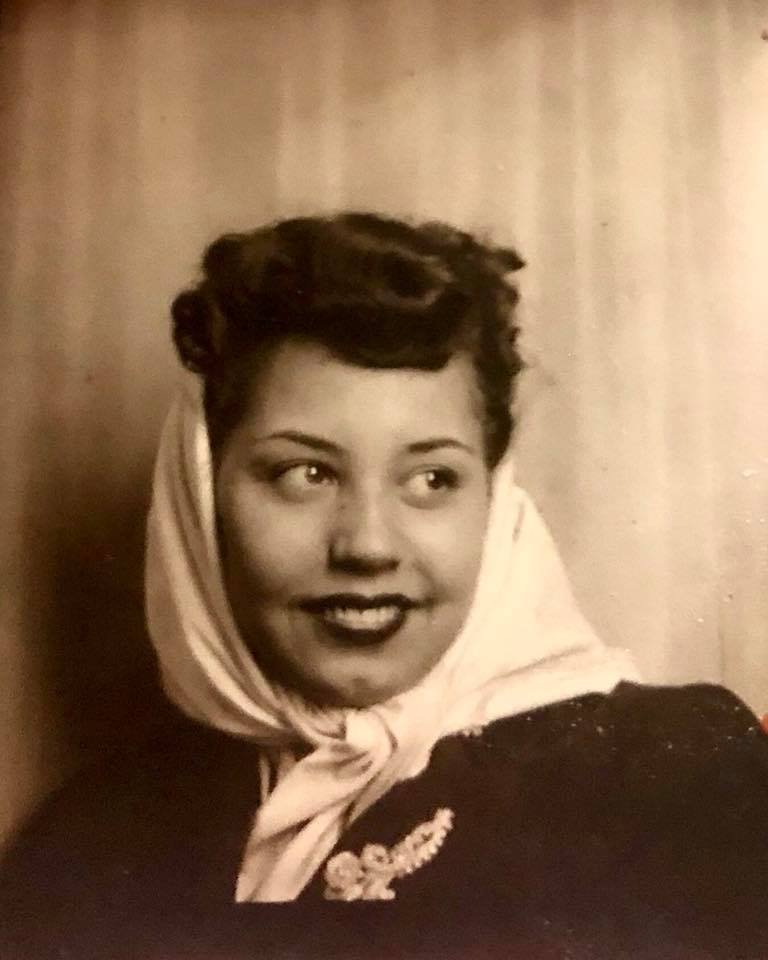
    My Grandmother Polly

    My grandmother Polly could become genuinely angry if someone suggested that she looked Native American.

    When I was younger, that reaction was difficult to understand. Why would that make someone angry?

    Genealogy has made me reconsider the question.

    Today, people can proudly explore complicated ancestry from the relative safety of historical distance. Previous generations did not necessarily have that luxury. There were good reasons people learned to control what was said about a family’s ancestry, reasons identities became simplified, and reasons stories changed.

    There were also reasons children sometimes weren’t told things.

    Perhaps the most durable inheritance from discrimination isn’t always the label itself. Sometimes it is the instinct to avoid the label.

    The explanation can disappear while the reaction remains.
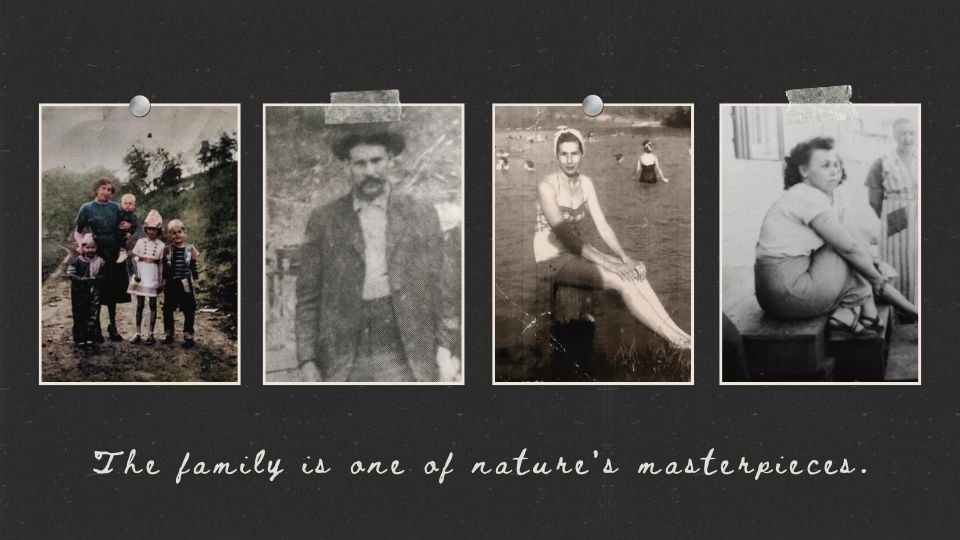
    A personal collage of photographs from several generations of the author's Appalachian family, including her grandmother Polly. The images accompany a reflection on genealogy, memory, Melungeon heritage, and the people whose individual lives are often reduced to names and dates on a family tree.

    More Than Three Races

    Melungeons have frequently been described with the old phrase “tri-racial isolate,” usually referring to European, African, and Native American ancestry. That terminology is useful for understanding older scholarship, but human ancestry is rarely as tidy as the label suggests.

    The people who eventually became associated with Melungeon communities were the products of complicated populations living in early America. European ancestry was part of that history. African ancestry was part of it. Native American ancestry appears in some lines.

    Individual families have their own histories, and not every ancestral component belongs equally to every Melungeon descendant. That complexity is important.

    There was never one Melungeon ancestor from whom everybody descended. There was never one moment when three neatly separated populations came together and created a new people.

    There were families, and families kept marrying families.

    The Mystery We Created

    For generations, writers seemed unable to resist making Melungeons mysterious.

    Were they Portuguese? Turkish? Lost colonists? Shipwreck survivors? Descendants of some forgotten expedition?

    The theories became part of the Melungeon story, but increasingly, I find the ordinary explanation far more compelling.

    These were people already living in early America whose ancestry and social identities did not fit comfortably inside the racial categories later Americans tried to impose upon them. Their descendants moved and intermarried. Some assimilated into surrounding white communities. Others continued to be identified as Melungeon or by other racial classifications. Eventually, some descendants stopped hearing the word altogether.

    Nothing about that makes their history less remarkable.

    Quite the opposite.

    Following Them Into America’s Past

    The farther I follow my family backward, the less distant early American history feels.

    The eighteenth century stops being something populated entirely by famous men whose portraits hang in museums. It becomes Susan Stallard standing before a small Baptist congregation while someone records a dispute in a church book.

    It becomes Gibson and Collins families moving through Virginia and toward Tennessee. It becomes Mullins families in the Carolina, Virginia, and Kentucky backcountry. It becomes people whose names survive because they married, bought land, appeared in court, joined churches, had children, or irritated their neighbors badly enough that somebody wrote it down.

    They were not standing outside American history. They were helping populate it, and they were doing so from places that don’t always occupy much space in the traditional telling of America’s beginnings.

    What DNA Cannot Tell Me

    DNA has transformed genealogy, and it can be an extraordinary tool. But there are questions DNA cannot answer.

    It cannot tell me what Susanna Stallard meant when she used the word recorded as Melungins. It cannot tell me what someone whispered about another family or why Polly became angry. It cannot tell me what was intentionally forgotten.

    And it certainly cannot tell me that Lena had butter mints.

    Those things require something more: records, context, family stories, memory, and the willingness to admit when we simply don’t know.

    That last part matters to me. There are contradictions in old genealogies. Dates don’t always agree. Birthplaces change from one family tree to another. People with identical names are easily confused. Family stories can preserve truth, but they can also change over generations.

    I don’t need to fill every blank.

    The history that can be documented is remarkable enough.

    Reclaiming Melungeon

    There is something almost circular about my relationship with the word.

    In 1813, it appears in a surviving record involving my fifth great-grandmother because two women were having a disagreement: “…them Melungins.”

    Whatever else was said that day has disappeared. The word remained.

    Then generations passed. Families moved through Virginia, Tennessee, Kentucky, and beyond. They married and their children married. Identities shifted. Some histories were remembered. Others weren’t.

    Eventually, two descendants carrying many of these interconnected Appalachian lines became my father’s parents.

    Generations after Susanna Stallard stood before that congregation, one of her descendants began following those families backward.

    Me.

    What I Found

    I did not discover that I was Melungeon.

    I discovered what that heritage contained.

    I found names I hadn’t known, places I hadn’t known, and connections between families I hadn’t recognized. I discovered that people I had initially thought belonged to separate branches were part of a much older web of families.

    Every time I thought I had reached the edges of it, another marriage, another surname, another county, or another record opened another path.

    The roots kept going. They still do.

    Perhaps that is why genealogy has changed what the word Melungeon means to me. It isn’t primarily a racial category. It isn’t a romantic mystery. It isn’t a list of approved surnames, and it isn’t a percentage in my DNA.

    It is a way of describing part of the historical world my family came through.

    Closing Thoughts: The People Behind the Tree

    Family trees can become enormous. Eventually the screen fills with boxes, names, and dates. One generation opens into two, then four, then eight, until hundreds of people disappear into a diagram.

    But those boxes were once lives.

    Susan wasn’t waiting around in 1813 to become somebody’s fifth great-grandmother. Polly didn’t know one of her descendants would someday reconsider her reaction to questions about ancestry. Lena certainly didn’t know that something as simple as her butter mints would survive in someone else’s memory.

    They were living in their own present.

    That may be what I value most about finding them.

    I already knew my family was mixed. What I didn’t know was how deep in America’s past their story went. I didn’t know how many roads would lead through the backcountry, how many familiar surnames I would encounter, or how often branches that seemed separate would eventually find one another again.

    I began with a family tree.

    What I found was a community.

    Behind that community were not mysterious people hiding somewhere in the Appalachian Mountains. They were simply people. Complicated people. Stubborn people. People who loved and fought, moved and stayed, remembered and forgot. People who survived long enough to become somebody else’s ancestors, mine among them.

    Their story isn’t valuable because every question about them can be answered. It is valuable because they were here.

    And after generations in which parts of that history were misunderstood, hidden, simplified, or forgotten, I have the privilege of learning their names again.

  • The Appalachian Salt Boom: Eastern Kentucky’s Forgotten Industry

    The Appalachian Salt Boom: Eastern Kentucky’s Forgotten Industry

    Before coal came to dominate the story of Eastern Kentucky’s economy, another mineral drew people, commerce, roads, and industry into the mountains: salt.
    Today, it is easy to overlook salt.
    It sits on our tables, costs little, and can be found in nearly every grocery store in America. But in the Appalachian frontier of the late eighteenth and early nineteenth centuries, salt was anything but ordinary.


    It preserved meat when there was no refrigeration. It was essential for livestock. It supported tanning and food production. It could be traded for other necessities. For families living far from established commercial centers, reliable access to salt could make the difference between a place that was difficult to inhabit and one where a community could take root.
    Long before coal tipples and rail lines became familiar parts of Eastern Kentucky’s landscape, salt licks, brine wells, furnaces, kettles, pack animals, and wagon roads were already shaping an Appalachian economy.
    And for a time, some of Kentucky’s mountain communities sat at the center of it.
    Salt Before Coal
    Natural salt licks had attracted wildlife and people long before European settlement.
    Animals traveled to mineral-rich springs, creating paths that humans also followed. Native peoples knew these landscapes long before settlers entered Kentucky, and many of the routes later used by hunters, explorers, traders, and migrants followed older Native paths and animal traces.
    As settlement expanded, salt became an increasingly important commodity.
    Making it was laborious.
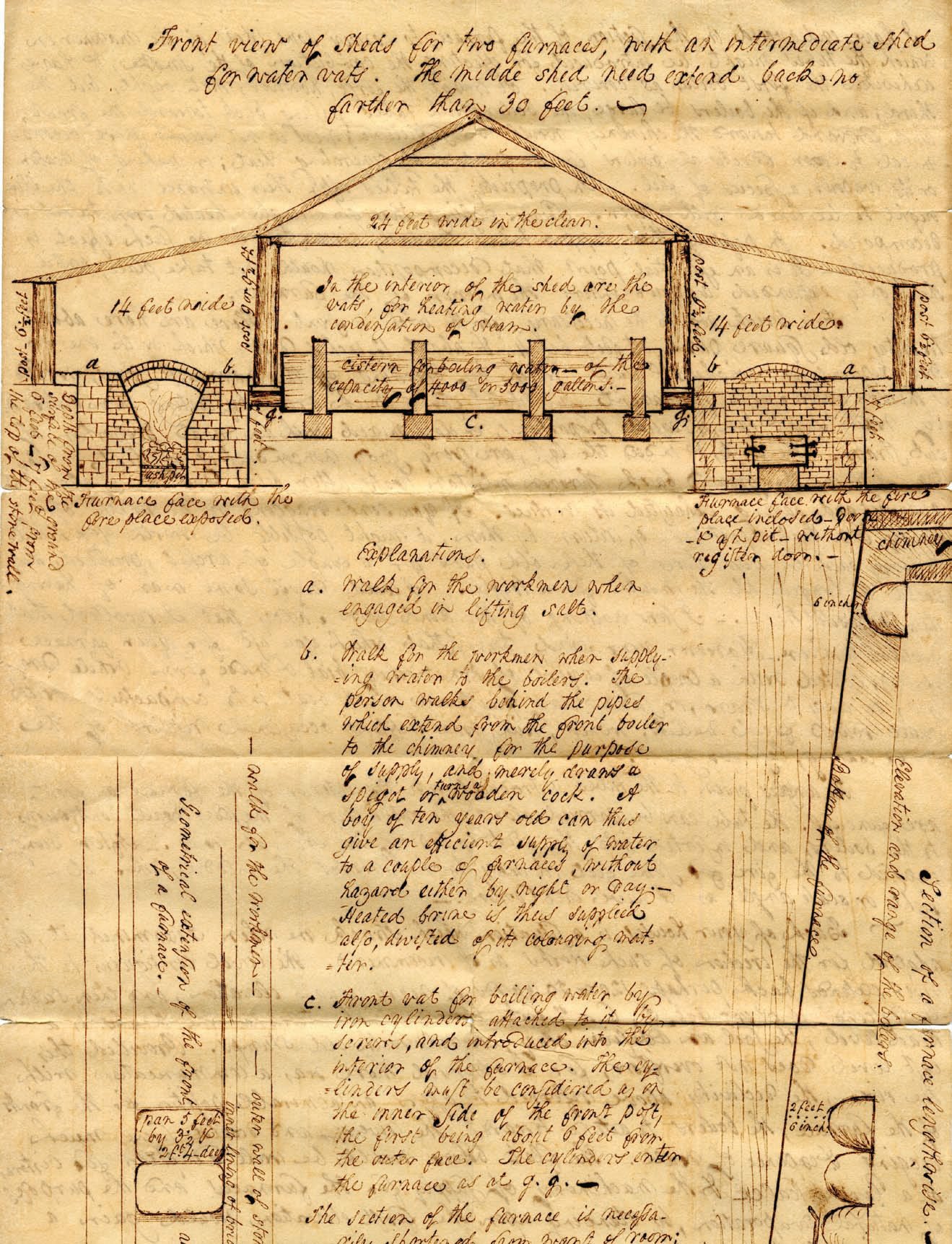
    Workers drilled wells or collected brine and then boiled away enormous quantities of water until salt remained. Early operations relied on large kettles positioned over furnaces and required tremendous amounts of fuel, labor, and time.
    A surviving early nineteenth-century saltworks drawing in the collections of The Filson Historical Society provides a remarkable glimpse into this process. The plan shows furnaces, a cistern for holding brine, and rows of kettles used during production.
    Explore the original saltworks drawing and its history:
    The Filson Historical Society: Browsing Our Archives
    Salt production was not simply a household activity. Where sufficient brine could be found, it became industry.
    Clay County Becomes a Salt Center
    Few places illustrate that transformation better than Clay County.
    After 1800, the county developed into one of Kentucky’s most important salt-producing regions. Salt works appeared along Goose Creek, Collins Fork, Red Bird Creek, and other waterways.
    Producing salt required more than finding salty water.
    Wells had to be drilled, sometimes largely by human or animal power. Brine had to be raised and transported. Furnaces consumed enormous quantities of wood. Heavy kettles and equipment had to reach places where roads were primitive or nonexistent.
    Yet the industry grew.
    Historical research preserved by The Filson Historical Society records that by 1846, fifteen Clay County furnaces were producing approximately 200,000 bushels of salt annually.
    That is an extraordinary amount for an industry operating in a mountain region before modern highways, trucks, electric pumps, or industrial drilling equipment.
    Read more:
    The Filson Historical Society: The Salt-Making Industry of Clay County, Kentucky
    The salt works also helped shape transportation.
    Roads connecting the works with the Wilderness Road and surrounding markets became commercially important because salt had to move outward and supplies had to move in. Packhorses and wagons traveled into the mountains from Virginia, Tennessee, North Carolina, and elsewhere to obtain Kentucky salt.
    And not every transaction involved money.
    Historic accounts describe hides, furs, thread, flour, whiskey, and other commodities being exchanged for Clay County salt.
    For a modern reader, that detail may say more about salt’s importance than any production statistic ever could.
    Salt was woven into everyday exchange.
    The Town the Salt Trade Helped Build
    Manchester grew within this landscape of salt production and commerce.
    The surrounding Goose Creek salt industry brought workers, merchants, travelers, animals, equipment, and trade into the area. What might otherwise appear today as a small Appalachian county seat was once connected to a regional commodity network stretching far beyond the surrounding mountains.
    This was not industry in the later image we often associate with Appalachia.
    There were no endless strings of coal cars or enormous preparation plants.
    Instead, there were wells and furnaces, smoke rising from salt works, teams of horses and oxen, wagon roads, stacks of firewood, kettles of boiling brine, and people whose livelihoods depended upon keeping the process moving.
    It was industrial Appalachia before the industrial Appalachia most Americans remember.
    Perry County and the Brashears Salt Works
    The salt story extended deeper into Eastern Kentucky.
    In Perry County, the Brashears family developed a salt operation near what is now Cornettsville. A Kentucky historical marker records that in 1835 the Brashears well was producing salt from strong brine.
    For roughly half a century, the works supplied salt to the surrounding area.
    The wells were drilled by hand.
    From this isolated mountain operation, salt traveled not only through Kentucky but into Virginia. Historical accounts describe it being transported over difficult mountain trails by mule and oxen.
    Imagine the journey.
    A commodity we now pick up without thought had to be produced by boiling brine, packed for transport, loaded onto animals or wagons, and hauled across mountain roads.
    The Brashears wells survived the upheavals of the nineteenth century only to meet another Appalachian force that could not be negotiated with.
    Floodwater.
    According to the Kentucky Historical Society, the wells were destroyed by a flood in 1892.
    Explore the historical marker:
    Kentucky Historical Society: Salt Works, Perry County
    Salt Goes to War
    The same quality that made salt essential to mountain households made it strategically important during wartime.
    Armies needed food that could survive transportation and storage. Horses and livestock required salt. Communities supporting soldiers needed preserved food.
    During the Civil War, Eastern Kentucky’s salt works therefore became more than commercial enterprises.
    They became military resources.
    The National Park Service’s records of Civil War operations in Kentucky document the destruction of the Goose Creek Salt Works in October 1862 as Union and Confederate forces struggled for control of Eastern Kentucky.
    The region was already deeply divided by the war. Control of roads, rivers, recruitment centers, supplies, and resources mattered, and salt belonged on that list.
    Explore the Civil War history:
    National Park Service: Civil War in Kentucky
    Nearby, the Battle of Middle Creek outside Prestonsburg in January 1862 became part of that larger struggle for Eastern Kentucky. Union forces commanded by Colonel James A. Garfield confronted Confederate forces under Brigadier General Humphrey Marshall, helping secure Union control of the region during the early part of the war.
    Learn more:
    National Park Service: Battle of Middle Creek
    Salt was not the cause of these battles.
    But the destruction of salt works demonstrates how valuable the commodity remained.
    An Industry Hidden Beneath Another
    Eventually, Eastern Kentucky became associated with a different mineral.
    Coal.
    The scale of coal extraction, the arrival of railroads, the growth of company towns, the labor struggles surrounding mining, and the enormous influence of coal on twentieth-century Appalachia became so significant that they overshadowed much of what came before.
    Salt slipped quietly into the background.
    Yet the earlier industry had already helped shape roads, commerce, settlement, and communities.
    That makes the salt boom important for another reason.
    It complicates the idea that Appalachian economic history begins with coal.
    It does not.
    Long before coal companies arrived, mountain residents were participating in regional trade networks. Entrepreneurs invested in production. Workers drilled wells and tended furnaces. Teamsters hauled commodities over difficult roads. Families traded what they produced for what they needed.
    Eastern Kentucky was remote in a geographic sense.
    It was never disconnected from the larger economic world.
    What Remains
    Much of the physical world of Kentucky’s early salt industry has disappeared.
    Wooden structures decayed. Furnaces collapsed. Roads changed. Forests reclaimed former industrial sites. Floods altered river valleys. Later development covered still more.
    But absence can be deceptive.
    The history remains in place names, old roads, archival records, archaeological traces, historical markers, family histories, and communities that grew around the trade.
    Even the surviving drawings and accounts of the salt works give us something valuable.
    They allow us to see an Appalachia that existed before the familiar photographs of coal camps and railroad towns.
    An Appalachia of brine wells and boiling kettles.
    Of packhorses climbing mountain roads.
    Of farmers arriving with goods to barter.
    Of furnaces burning through the night.
    Of a mineral so ordinary to us now that it is difficult to imagine people building roads, businesses, and communities around it.
    Salted Into Our Story
    Coal would eventually transform Eastern Kentucky on a scale the salt makers could never have imagined.
    But coal was not the beginning.
    Before the mines, before the railroads, and before the company towns, people were already extracting something valuable from beneath these mountains and carrying it across Appalachian roads to distant markets.
    Salt helped feed families, preserve harvests, support livestock, supply armies, encourage trade, and connect mountain communities to a much larger world.
    The furnaces are mostly gone now.
    The old wells have fallen silent.
    But the industry left something behind.
    It left roads and towns, records and family stories, and another layer in the complicated history of how people made lives in these mountains.
    Sometimes the most revealing Appalachian history is not hidden because someone deliberately forgot it.
    Sometimes another story simply became louder.
    For Eastern Kentucky, coal became that louder story.
    But before coal became king, there was salt.

  • How Appalachian Herbal Remedies Were Passed Down Through Generations

    How Appalachian Herbal Remedies Were Passed Down Through Generations

    In Appalachia, you didn’t always learn about plants from a book.

    You learned by following somebody.

    Maybe it was your grandmother walking along the edge of the garden. An uncle digging roots in the woods. A neighbor who knew what grew beside the creek. Someone who could look at a plant most people would walk past and tell you its name, when it appeared, where to find it again, and what the old people used it for.

    The lesson might never have been announced as a lesson at all.

    You watched.

    You listened.

    And eventually, you knew.

    For generations, knowledge of roots, leaves, bark, berries, teas, poultices, tonics, and home remedies traveled through Appalachian families and communities this way. Some remedies were practical. Some were spiritual. Some belonged to particular families or cultural traditions. Others became so familiar that nobody remembered exactly where they began.

    Together, they formed something more complicated than a collection of old cures.

    They represented a way of knowing the land.

    Knowledge Older Than Appalachia

    The history of herbal healing in Appalachia did not begin when European settlers arrived in the mountains.

    Indigenous peoples had developed extensive knowledge of the region’s plants over generations. Cherokee and other Native communities understood the landscapes in which they lived and maintained their own distinct medicinal and spiritual traditions.

    European settlers brought traditions of their own.

    Scottish, Irish, English, and German-speaking immigrants arrived with knowledge of European herbs, household remedies, charms, religious practices, and folk beliefs. Some encountered plants related to ones they already knew. Others had to learn an entirely unfamiliar landscape.

    African and African American healing traditions also became part of Appalachian life, although their contributions have too often been minimized or omitted from popular accounts of the region.

    The result was not one tidy system called “Appalachian medicine.”

    Knowledge moved between people, but different communities also maintained traditions of their own. Practices varied from one mountain community to another and sometimes from one family to the next.

    Over generations, these traditions became part of the complicated cultural landscape of Appalachia.

    Explore: Smithsonian Center for Folklife and Cultural Heritage: Appalachian Folk Magic

    What Grew Around You

    Mountain families often made use of what was available nearby.

    That might include cultivated plants growing around a house or garden, but much of the knowledge concerned plants growing in forests, fields, along roadsides, and beside streams.

    American ginseng, commonly called “sang” in parts of Appalachia, became particularly important.

    People dug the root for personal use, but ginseng also developed into a valuable cash commodity. For generations, digging sang provided some mountain families with seasonal income. Knowledge of where patches grew could be closely guarded and handed down within families.

    The plant eventually connected remote Appalachian forests to an international market.

    That history continues today, along with increasing concern about conservation and responsible harvesting.

    Explore: Smithsonian Folklife: American Ginseng

    Other plants frequently appear in accounts of Appalachian home remedies.

    Goldenseal was gathered from the forest.

    Elderberries were made into preparations.

    Mint became tea.

    Plantain leaves were used externally in household treatments.

    Black cohosh appeared in traditions associated with women’s health.

    Sassafras was familiar enough that generations remember its distinctive scent and the tea made from its roots.

    But knowing a plant involved more than knowing its name.

    People learned where it grew.

    When it appeared.

    Which part was gathered.

    How much could be taken.

    How it should be dried or stored.

    And perhaps most importantly, they learned who actually knew what they were doing.

    Traditional use does not mean that every old remedy was medically effective or safe. Some plants historically used as medicine can interact with medications, cause serious side effects, or be dangerous when prepared incorrectly.

    The importance of these traditions lies not in treating every old remedy as modern medical advice, but in understanding the knowledge, experience, and relationships with the land that allowed those practices to survive.

    Learning by Following

    Much of this knowledge was passed orally.

    A child walking through the woods with an older relative might learn that one plant appeared on a particular slope while another preferred the damp ground near water.

    There were no flash cards.

    No formal lesson plan.

    You learned because you were there.

    The same thing happened in kitchens and around sickbeds.

    Someone watched how a tea was prepared, how roots were dried, how something was measured, or how a poultice was made. Years later, that person might repeat the process for someone else.

    Sometimes instructions were written down.

    Families kept handwritten “receipt” or recipe books containing household preparations, remedies, food recipes, and other practical knowledge.

    But memory remained an important archive.

    That made elders especially important.

    When someone died without passing along what they knew, a small library could disappear with them.

    The Granny Woman

    Among the most remembered figures in Appalachian folk healing is the granny woman.

    The term could describe an older woman known within her community for knowledge of childbirth, plants, household remedies, or healing. Some served as midwives. Others were sought for particular remedies or advice.

    Their roles were not identical, and neither were their beliefs.

    For some, plant knowledge existed comfortably alongside deeply held Christianity. Prayer might accompany a household treatment. Bible verses, faith healing, signs, charms, and beliefs about planting or gathering by the moon could coexist with very practical knowledge about childbirth, food, illness, and plants.

    In communities where physicians could be far away, expensive, or simply unavailable when needed, a knowledgeable neighbor or granny woman could occupy an important place.

    The Smithsonian Center for Folklife and Cultural Heritage has documented women who continue or remember these traditions, including accounts of older women serving as healers, midwives, and keepers of plant knowledge within Appalachian communities.

    Read more: Smithsonian: Women Carry Traditions in Appalachian Folk Magic

    Faith, Signs, and the Unseen

    Appalachian folk healing was not always divided neatly into categories of medicine, religion, and folklore.

    Those are modern labels.

    For the people practicing these traditions, a plant remedy and a prayer did not necessarily contradict one another.

    A Bible verse might be spoken over an illness.

    A wart might have a remedy involving an action that seems mysterious to us now.

    Planting, gathering, or certain household activities might be timed according to signs or phases of the moon.

    Some traditions were spoken openly. Others were private.

    And some people who practiced them would never have called what they were doing magic.

    They were simply doing what they had been taught.

    That distinction matters when we look back at Appalachian culture. Calling every granny woman a “witch” may make a good modern headline, but it can impose an identity on women who might have strongly rejected the word.

    Their own understanding of what they did deserves to be part of the story.

    When the Old Knowledge Began to Fade

    Appalachia changed dramatically during the twentieth century.

    Roads reached communities that had once been difficult to access. Hospitals and clinics expanded. Commercial medicines became more available. Families moved away for work. Coal towns grew and declined. Radio, television, automobiles, and eventually the modern world connected mountain communities to places far beyond the ridges.

    Some old practices became unnecessary.

    Others came to be regarded as superstition or something associated with an earlier way of life.

    And sometimes knowledge simply stopped moving from one generation to the next.

    But it did not disappear entirely.

    In 1966, students at the Rabun Gap-Nacoochee School in northern Georgia began interviewing older people in their communities about the skills and traditions they knew.

    Their project became Foxfire.

    Students recorded oral histories about everything from log cabin construction and blacksmithing to planting, foodways, crafts, beliefs, and folk remedies. What began as a classroom magazine eventually became a celebrated series of books and a museum devoted to Appalachian life.

    Foxfire demonstrated something important.

    If nobody asks an elder what they know, that knowledge can disappear.

    If somebody listens, it can travel much farther than anyone imagined.

    Explore: The Foxfire Fund and Museum

    The Knowledge Is Still Living

    It would be easy to end this story by saying Appalachian herbal knowledge belongs to the past.

    It doesn’t.

    People throughout the mountains still forage, garden, gather plants, study herbalism, dig roots, make preparations, and pass knowledge between generations.

    Some approach these traditions as family heritage. Others study them through botany, ethnobotany, conservation, or contemporary herbal practice.

    American ginseng offers a particularly good example.

    The Smithsonian’s American Ginseng project documents growers, harvesters, herbalists, conservationists, and mountain residents whose relationships with the plant show that traditional knowledge continues to evolve.

    Among them are people such as the late Carol Judy, remembered as an herbalist, root digger, and “forest granny” in Tennessee’s Clear Fork Valley, and Laurie Quesinberry in southwestern Virginia, who inherited generations of ginseng knowledge through her husband’s family while becoming an advocate for conservation.

    These are not reenactments of Appalachian culture.

    They are part of its continuation.

    More Than a Remedy

    Perhaps that is what is easiest to miss when we reduce Appalachian herbal traditions to lists of plants and what they were supposedly “good for.”

    The list was never the whole thing.

    The real inheritance was knowing where to look.

    It was recognizing a plant before it flowered.

    Knowing which hillside held ginseng.

    Remembering where mint returned every spring.

    Knowing who in the community to ask when you didn’t know.

    And understanding that knowledge carried responsibilities.

    To the person teaching you.

    To the person you might someday teach.

    And to the land that provided what you gathered.

    There is something deeply Appalachian in that kind of inheritance.

    Not because mountain people possessed some mystical connection unavailable to everyone else, but because generations of people paid attention to the places where they lived.

    They learned them.

    And then they taught someone else.

    Honoring the Old Ways

    There is a difference between preserving an old remedy and preserving the knowledge surrounding it.

    We do not have to believe every treatment worked to recognize the intelligence required to identify hundreds of plants, remember their seasons, understand where they grew, prepare them consistently, and carry that information through generations without a textbook.

    Nor do we need to turn every granny woman into a legend.

    Many were simply people doing what communities have always done when resources were limited.

    They cared for one another with what they had and what they knew.

    Some of that knowledge has been lost.

    Some has changed.

    Some survives in books, recordings, archives, gardens, family memories, and the people who still walk into the woods knowing exactly what they are looking for.

    And somewhere in Appalachia, an older person is probably still pointing toward a plant while someone younger walks beside them.

    Maybe the younger person realizes a lesson is taking place.

    Maybe they don’t.

    That is how knowledge has always traveled.

    From hand to hand.

    From voice to ear.

    And from one walk through the mountains to the next.

  • The Golden Cracks of Appalachia: A Story of Land, People, and Resilient Beauty

    The Golden Cracks of Appalachia: A Story of Land, People, and Resilient Beauty

    The Golden Cracks of Appalachia: A Story of Land, People, and Enduring Beauty

    There is an old Japanese art called kintsugi in which broken pottery is repaired with lacquer and powdered gold. The object is not restored by disguising what happened to it. Its fractures become part of its story, traced in gold rather than hidden from view.

    There is something about that idea that feels familiar in Appalachia.

    These mountains are ancient, shaped across hundreds of millions of years by forces far greater than any human lifetime. Their ridgelines have risen, folded, weathered, and softened. Rivers have carved passages through stone. Forests have disappeared and returned. Generations of people have built homes, raised families, made music, worked the land, extracted its resources, fought over it, left it, returned to it, and carried pieces of it with them wherever they went.

    Appalachia is not broken pottery waiting to be repaired.

    But look closely, and there are golden seams everywhere.

    They run through old railroad towns and reclaimed forests, through fiddle tunes carried across generations, through quilts pieced from scraps too useful to waste. They can be found in churchyards, mining communities, family gardens, Cherokee arts, hand-hewn cabins, union halls, front porches, college classrooms, trail towns, and workshops where craftspeople still shape wood and clay with their hands.

    The beauty of Appalachia has never depended upon being untouched.

    It comes, in part, from the layers.

    A Landscape Written in Layers

    Long before Appalachia had a name, Indigenous peoples lived throughout these mountains, valleys, and river systems.

    Cherokee, Shawnee, Haudenosaunee, and many other Native peoples developed communities, trade networks, agricultural traditions, and relationships with these lands over thousands of years. Their histories are not simply prologues to the Appalachian story. Native communities remain part of Appalachia today, carrying languages, traditions, governments, arts, and relationships with ancestral homelands into the present.

    European migration brought additional cultures into the mountains. Scots-Irish, German, English, African, and other peoples contributed traditions that mingled over generations with those already here.

    Music changed.

    Food changed.

    Language changed.

    Ways of farming, building, worshipping, celebrating, mourning, and telling stories crossed paths.

    What emerged was not one Appalachian culture, but many Appalachian cultures connected by geography and generations of exchange.

    Then came another transformation.

    Timber, coal, railroads, and industrial development brought jobs and prosperity to some communities while fundamentally altering others. Mountains became sources of raw materials for an industrializing nation. Rail lines reached into previously isolated valleys. Company towns appeared. Forests were cut. Mines extended beneath mountainsides.

    Southern West Virginia still preserves much of this complicated history. The National Coal Heritage Area encompasses thousands of square miles where historic mining communities, industrial sites, railroads, and company towns tell the story of an industry that shaped both the landscape and the people who lived there.

    These places should not be viewed simply as ruins of something that failed.

    They are records.

    The Land Remembers

    Appalachian landscapes have an extraordinary capacity to hold history.

    Walk through New River Gorge in West Virginia and the forest can feel timeless. Yet hidden among the trees are traces of communities that once lined the river. Stone foundations, coke ovens, abandoned rail structures, and former mining sites remain beneath a canopy that has steadily reclaimed spaces once dominated by industry.

    Today, New River Gorge National Park and Preserve protects more than spectacular cliffs and whitewater. It preserves the intertwined natural and human history of the gorge.

    Explore: New River Gorge National Park and Preserve

    Elsewhere, the story takes a different form.

    At Cades Cove in Great Smoky Mountains National Park, historic churches, cabins, barns, fields, and cemeteries preserve portions of a community that existed before the national park. The surrounding mountains may command the first glance, but the structures scattered through the valley reveal generations of ordinary lives lived there.

    Explore: Cades Cove, Great Smoky Mountains National Park

    These landscapes remind us that preservation does not always mean returning a place to some imagined moment before people touched it.

    Sometimes preservation means understanding what happened there.

    A Living Cherokee Homeland

    In western North Carolina, the Qualla Boundary offers an especially important reminder that Appalachian history is not merely something preserved behind museum glass.

    The Eastern Band of Cherokee Indians is a sovereign, federally recognized tribal nation whose citizens have maintained their connection to their homeland despite centuries of displacement, political pressure, and profound loss.

    Cherokee culture here is living culture.

    Language revitalization, traditional arts, storytelling, community institutions, contemporary businesses, government, education, and family life all belong to the present as much as to the past.

    Visitors can learn about Cherokee history and culture through institutions such as the Museum of the Cherokee People and through the work of Cherokee artists and cultural organizations.

    Learn more: Eastern Band of Cherokee Indians

    Visit: Museum of the Cherokee People

    This distinction matters.

    Appalachia’s Native peoples are not evidence of a culture that somehow survived long enough for travelers to observe it. They are communities shaping Appalachia now.

    The Seams Run Through the People

    Perhaps the most interesting thing about Appalachia is that continuity rarely means remaining unchanged.

    Consider the region’s music.

    Ballads crossed oceans and changed as generations sang them. African American musical traditions profoundly influenced the development of banjo music, blues, old-time music, bluegrass, country, and other sounds associated with Appalachia.

    Songs moved from homes and churches to porches, community gatherings, radio broadcasts, recording studios, festivals, and stages.

    In Bristol, along the Tennessee-Virginia line, the 1927 Bristol Sessions became one important chapter in that much larger story. Today, the Birthplace of Country Music Museum explores the recordings and the musical traditions surrounding them.

    Explore: Birthplace of Country Music Museum

    The same pattern appears in Appalachian craft.

    A quilt can be both practical and beautiful. A basket can carry vegetables and cultural knowledge. A piece of pottery can be shaped using techniques learned from someone who learned them from someone else.

    In Berea, Kentucky, generations of artists and craftspeople have helped make traditional and contemporary Appalachian arts part of the town’s identity. Studios, workshops, galleries, and working artists continue traditions without freezing them in the past.

    Explore: Berea, Kentucky

    That may be one of Appalachia’s most persistent characteristics.

    Tradition here is rarely static.

    It is used.

    Adapted.

    Handed down.

    And sometimes reinvented entirely.

    Beyond the Old Appalachian Story

    For generations, outsiders have often told Appalachian stories through extremes.

    The region has been romanticized as an untouched mountain paradise and caricatured as an isolated land of poverty and backwardness. Neither leaves much room for the complicated reality in between.

    Appalachia contains struggling communities and thriving ones. Industrial landscapes and protected wilderness. College towns and family farms. Immigrant communities, Black Appalachian communities, Native nations, old coal camps, suburbs, artists, entrepreneurs, scientists, musicians, tradespeople, farmers, and people whose families arrived only recently.

    There is hardship here because hardship exists wherever people live.

    There is also abundance.

    Not merely material abundance, but knowledge, memory, relationships, skill, humor, creativity, food, music, community, and an intimate awareness of place.

    Those things are easy to overlook if we arrive expecting only to see scars.

    Finding the Golden Seams

    Travel through Appalachia slowly enough and the metaphor begins to change.

    The golden seams are not simply the places where something damaged has been repaired.

    They are connections.

    Between past and present.

    Between land and people.

    Between an old song and the person learning to play it.

    Between an abandoned industrial site and the forest growing around it.

    Between a recipe remembered by one generation and cooked by the next.

    Between traditional craft and contemporary art.

    Between a mountain community and the people determined to decide its future for themselves.

    Even the Appalachian Trail tells part of that larger story. Its protected corridor stretches through landscapes that are ecological, cultural, recreational, and inhabited. Conservation organizations increasingly recognize that protecting Appalachia means thinking beyond individual scenic places toward connected forests, waterways, wildlife habitats, communities, and cultural landscapes.

    Learn more: Appalachian Trail Conservancy: Landscape Conservation

    The mountains do not need us to pretend nothing difficult ever happened here.

    Neither do the people.

    What they deserve is something more difficult and more meaningful: to be seen whole.

    Closing Thoughts: Beauty from Brokenness

    Appalachia does not need its rough edges polished away to be beautiful.

    There are scars on this land. Mountains have been cut open, forests cleared, communities displaced, towns built and abandoned, and generations of people have known hard work, loss, uncertainty, and change. Those truths belong here. So do the gardens planted again in spring, the music carried from one generation to another, the old buildings given new purpose, the forests returning to hillsides, and the communities still deciding what comes next.

    Appalachia does not shy away from its past. It carries it.

    That is where the metaphor of kintsugi feels most true.

    The gold does not erase the crack. It follows it.

    It says: this happened. This is part of the story. And the story continued.

    There is a particular kind of beauty in that honesty. Not beauty because something suffered, and not the romantic notion that hardship somehow makes people better, but beauty in survival, reinvention, and the quiet celebration of what remains.

    Like a piece of kintsugi pottery, Appalachia reminds us that brokenness does not have to be the end of a story. Sometimes what grows around the broken places becomes part of what makes a place unmistakably itself.

    Perhaps that is why these mountains can feel so different when you know what you are looking at.

    An old foundation disappearing beneath the trees is no longer simply a ruin. A coal camp is more than an artifact of industry. A family recipe is more than food. A fiddle tune is more than music. A hand-stitched quilt is more than cloth. Each carries something forward.

    Those are the golden seams.

    When you journey through Appalachia, you do not simply look at the past. You walk among the places where past and present meet, where loss and renewal can occupy the same ground, and where beauty has never required perfection.

    Come witness it for yourself. Look closely enough, and you may find the gold in the broken places.