
The Golden Cracks of Appalachia: A Story of Land, People, and Enduring Beauty
There is an old Japanese art called kintsugi in which broken pottery is repaired with lacquer and powdered gold. The object is not restored by disguising what happened to it. Its fractures become part of its story, traced in gold rather than hidden from view.
There is something about that idea that feels familiar in Appalachia.
These mountains are ancient, shaped across hundreds of millions of years by forces far greater than any human lifetime. Their ridgelines have risen, folded, weathered, and softened. Rivers have carved passages through stone. Forests have disappeared and returned. Generations of people have built homes, raised families, made music, worked the land, extracted its resources, fought over it, left it, returned to it, and carried pieces of it with them wherever they went.
Appalachia is not broken pottery waiting to be repaired.
But look closely, and there are golden seams everywhere.
They run through old railroad towns and reclaimed forests, through fiddle tunes carried across generations, through quilts pieced from scraps too useful to waste. They can be found in churchyards, mining communities, family gardens, Cherokee arts, hand-hewn cabins, union halls, front porches, college classrooms, trail towns, and workshops where craftspeople still shape wood and clay with their hands.
The beauty of Appalachia has never depended upon being untouched.
It comes, in part, from the layers.
A Landscape Written in Layers
Long before Appalachia had a name, Indigenous peoples lived throughout these mountains, valleys, and river systems.
Cherokee, Shawnee, Haudenosaunee, and many other Native peoples developed communities, trade networks, agricultural traditions, and relationships with these lands over thousands of years. Their histories are not simply prologues to the Appalachian story. Native communities remain part of Appalachia today, carrying languages, traditions, governments, arts, and relationships with ancestral homelands into the present.
European migration brought additional cultures into the mountains. Scots-Irish, German, English, African, and other peoples contributed traditions that mingled over generations with those already here.
Music changed.
Food changed.
Language changed.
Ways of farming, building, worshipping, celebrating, mourning, and telling stories crossed paths.
What emerged was not one Appalachian culture, but many Appalachian cultures connected by geography and generations of exchange.
Then came another transformation.
Timber, coal, railroads, and industrial development brought jobs and prosperity to some communities while fundamentally altering others. Mountains became sources of raw materials for an industrializing nation. Rail lines reached into previously isolated valleys. Company towns appeared. Forests were cut. Mines extended beneath mountainsides.
Southern West Virginia still preserves much of this complicated history. The National Coal Heritage Area encompasses thousands of square miles where historic mining communities, industrial sites, railroads, and company towns tell the story of an industry that shaped both the landscape and the people who lived there.
These places should not be viewed simply as ruins of something that failed.
They are records.
The Land Remembers
Appalachian landscapes have an extraordinary capacity to hold history.
Walk through New River Gorge in West Virginia and the forest can feel timeless. Yet hidden among the trees are traces of communities that once lined the river. Stone foundations, coke ovens, abandoned rail structures, and former mining sites remain beneath a canopy that has steadily reclaimed spaces once dominated by industry.
Today, New River Gorge National Park and Preserve protects more than spectacular cliffs and whitewater. It preserves the intertwined natural and human history of the gorge.
Explore: New River Gorge National Park and Preserve
Elsewhere, the story takes a different form.
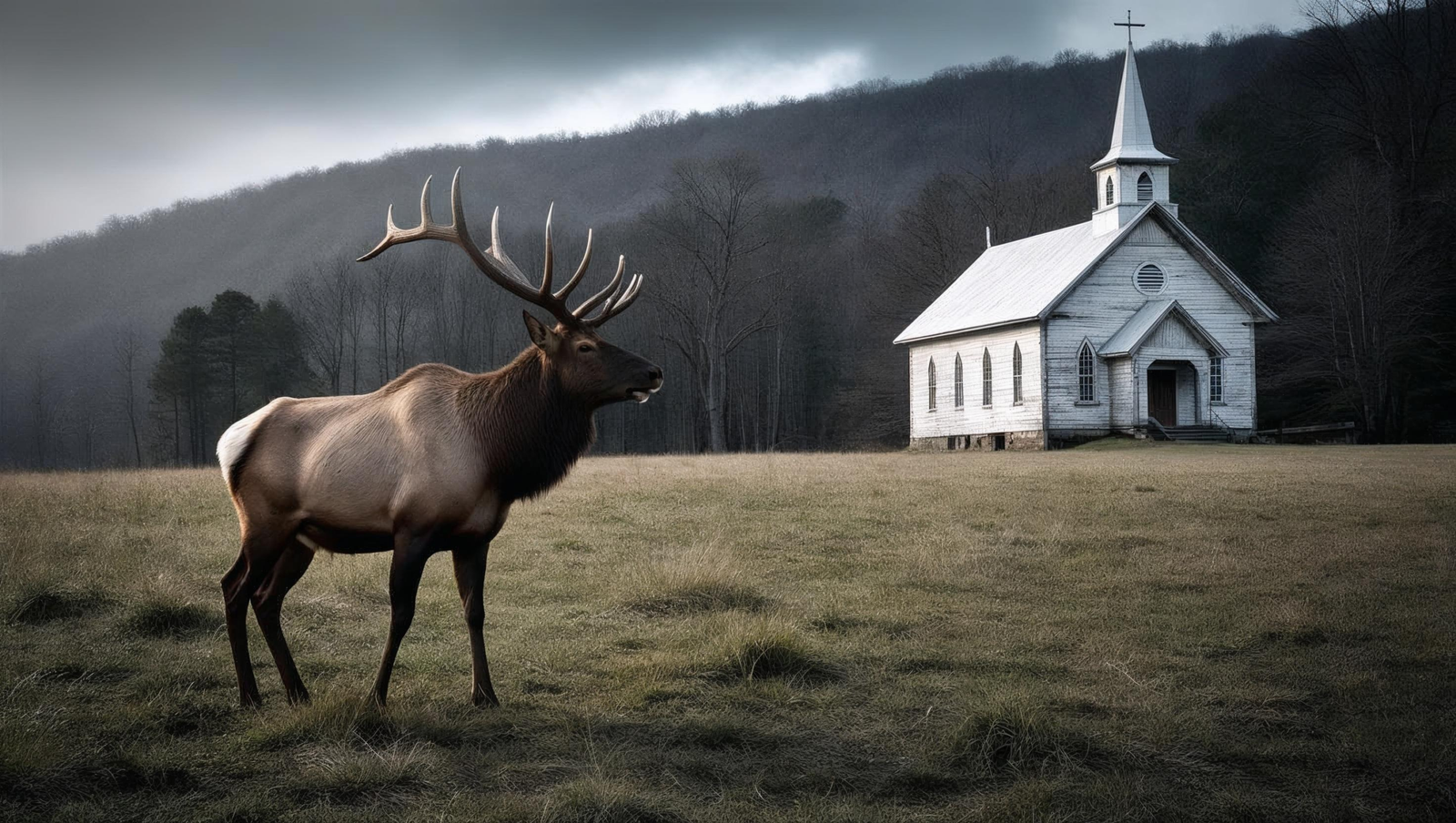
At Cades Cove in Great Smoky Mountains National Park, historic churches, cabins, barns, fields, and cemeteries preserve portions of a community that existed before the national park. The surrounding mountains may command the first glance, but the structures scattered through the valley reveal generations of ordinary lives lived there.
Explore: Cades Cove, Great Smoky Mountains National Park
These landscapes remind us that preservation does not always mean returning a place to some imagined moment before people touched it.
Sometimes preservation means understanding what happened there.
A Living Cherokee Homeland
In western North Carolina, the Qualla Boundary offers an especially important reminder that Appalachian history is not merely something preserved behind museum glass.
The Eastern Band of Cherokee Indians is a sovereign, federally recognized tribal nation whose citizens have maintained their connection to their homeland despite centuries of displacement, political pressure, and profound loss.
Cherokee culture here is living culture.
Language revitalization, traditional arts, storytelling, community institutions, contemporary businesses, government, education, and family life all belong to the present as much as to the past.
Visitors can learn about Cherokee history and culture through institutions such as the Museum of the Cherokee People and through the work of Cherokee artists and cultural organizations.
Learn more: Eastern Band of Cherokee Indians
Visit: Museum of the Cherokee People
This distinction matters.
Appalachia’s Native peoples are not evidence of a culture that somehow survived long enough for travelers to observe it. They are communities shaping Appalachia now.
The Seams Run Through the People
Perhaps the most interesting thing about Appalachia is that continuity rarely means remaining unchanged.
Consider the region’s music.
Ballads crossed oceans and changed as generations sang them. African American musical traditions profoundly influenced the development of banjo music, blues, old-time music, bluegrass, country, and other sounds associated with Appalachia.
Songs moved from homes and churches to porches, community gatherings, radio broadcasts, recording studios, festivals, and stages.
In Bristol, along the Tennessee-Virginia line, the 1927 Bristol Sessions became one important chapter in that much larger story. Today, the Birthplace of Country Music Museum explores the recordings and the musical traditions surrounding them.
Explore: Birthplace of Country Music Museum
The same pattern appears in Appalachian craft.
A quilt can be both practical and beautiful. A basket can carry vegetables and cultural knowledge. A piece of pottery can be shaped using techniques learned from someone who learned them from someone else.
In Berea, Kentucky, generations of artists and craftspeople have helped make traditional and contemporary Appalachian arts part of the town’s identity. Studios, workshops, galleries, and working artists continue traditions without freezing them in the past.
Explore: Berea, Kentucky
That may be one of Appalachia’s most persistent characteristics.
Tradition here is rarely static.
It is used.
Adapted.
Handed down.
And sometimes reinvented entirely.
Beyond the Old Appalachian Story
For generations, outsiders have often told Appalachian stories through extremes.
The region has been romanticized as an untouched mountain paradise and caricatured as an isolated land of poverty and backwardness. Neither leaves much room for the complicated reality in between.
Appalachia contains struggling communities and thriving ones. Industrial landscapes and protected wilderness. College towns and family farms. Immigrant communities, Black Appalachian communities, Native nations, old coal camps, suburbs, artists, entrepreneurs, scientists, musicians, tradespeople, farmers, and people whose families arrived only recently.
There is hardship here because hardship exists wherever people live.
There is also abundance.
Not merely material abundance, but knowledge, memory, relationships, skill, humor, creativity, food, music, community, and an intimate awareness of place.
Those things are easy to overlook if we arrive expecting only to see scars.
Finding the Golden Seams
Travel through Appalachia slowly enough and the metaphor begins to change.
The golden seams are not simply the places where something damaged has been repaired.
They are connections.
Between past and present.
Between land and people.
Between an old song and the person learning to play it.
Between an abandoned industrial site and the forest growing around it.
Between a recipe remembered by one generation and cooked by the next.
Between traditional craft and contemporary art.
Between a mountain community and the people determined to decide its future for themselves.
Even the Appalachian Trail tells part of that larger story. Its protected corridor stretches through landscapes that are ecological, cultural, recreational, and inhabited. Conservation organizations increasingly recognize that protecting Appalachia means thinking beyond individual scenic places toward connected forests, waterways, wildlife habitats, communities, and cultural landscapes.
Learn more: Appalachian Trail Conservancy: Landscape Conservation
The mountains do not need us to pretend nothing difficult ever happened here.
Neither do the people.
What they deserve is something more difficult and more meaningful: to be seen whole.
Closing Thoughts: Beauty from Brokenness
Appalachia does not need its rough edges polished away to be beautiful.
There are scars on this land. Mountains have been cut open, forests cleared, communities displaced, towns built and abandoned, and generations of people have known hard work, loss, uncertainty, and change. Those truths belong here. So do the gardens planted again in spring, the music carried from one generation to another, the old buildings given new purpose, the forests returning to hillsides, and the communities still deciding what comes next.
Appalachia does not shy away from its past. It carries it.
That is where the metaphor of kintsugi feels most true.
The gold does not erase the crack. It follows it.
It says: this happened. This is part of the story. And the story continued.
There is a particular kind of beauty in that honesty. Not beauty because something suffered, and not the romantic notion that hardship somehow makes people better, but beauty in survival, reinvention, and the quiet celebration of what remains.
Like a piece of kintsugi pottery, Appalachia reminds us that brokenness does not have to be the end of a story. Sometimes what grows around the broken places becomes part of what makes a place unmistakably itself.
Perhaps that is why these mountains can feel so different when you know what you are looking at.
An old foundation disappearing beneath the trees is no longer simply a ruin. A coal camp is more than an artifact of industry. A family recipe is more than food. A fiddle tune is more than music. A hand-stitched quilt is more than cloth. Each carries something forward.
Those are the golden seams.
When you journey through Appalachia, you do not simply look at the past. You walk among the places where past and present meet, where loss and renewal can occupy the same ground, and where beauty has never required perfection.
Come witness it for yourself. Look closely enough, and you may find the gold in the broken places.
Leave a Reply