Tag: Appalachian Traditions

  • When the Beans Came In

    When the Beans Came In

    Long Summer Days of Work, Food and Belonging in Appalachia

    Some of my clearest memories of Appalachian summers begin in the garden.

    Harvest didn’t begin with baskets of vegetables sitting neatly on a porch. Somebody had to go out and pick everything first, and morning was better, before the heat settled heavily over the day.

    We went into the garden with buckets and baskets and started looking for what was ready. Beans hid underneath leaves and among the vines, so you had to reach into the plants and find them. Your hands got dirty. Your clothes got dirty. There might still be moisture on the plants from the morning, and little by little the empty containers began filling.

    Children weren’t spectators. We picked right alongside everyone else.

    I happened to like this arrangement because beans were one of my favorite foods. Fresh beans could be eaten while you were working, which meant a certain percentage of the harvest underwent what I considered necessary quality control before it ever reached the house.

    I’m not sure the adults considered that part of my contribution.

    There was always more than one thing coming in from the garden. Beans might have been the day’s big job, but tomatoes were ripening, cucumbers needed picking, onions were ready, and something else always seemed to be demanding attention. A garden doesn’t consult your plans before deciding that half of it is ready at the same time.

    Once everything came back toward the house, the work changed.

    THE PORCH BECAME THE WORKTABLE

    This is where my memories become less about the garden itself and more about the people around it.

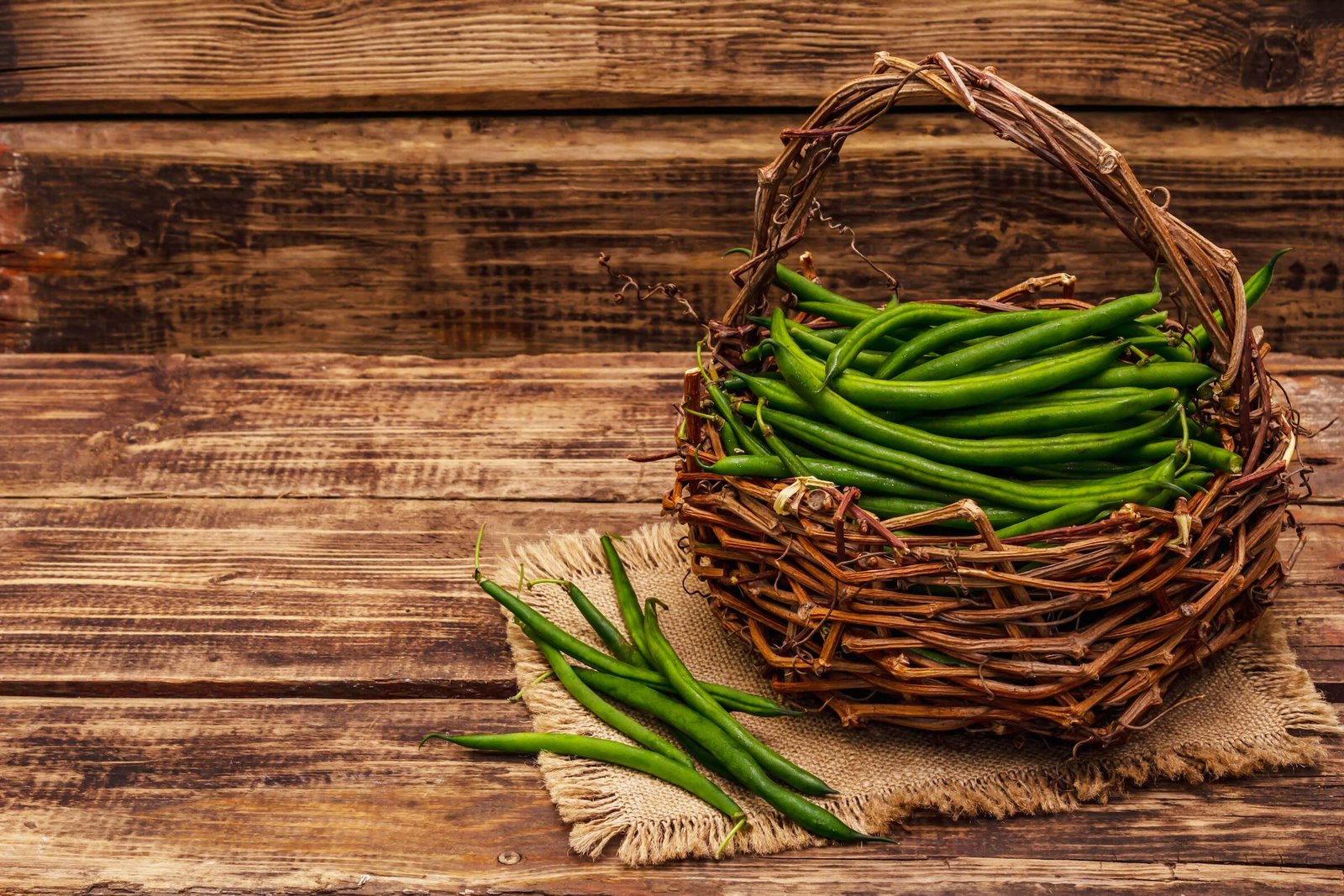
    Beans came to the porch in buckets and baskets. People found places to sit, and hands stayed busy. Beans were snapped. Strings were pulled from those that needed stringing. Some would eventually be canned. Others would be dried. Pinto beans were part of the work too.

    The work itself could be repetitive, but the experience wasn’t. Someone had news. Someone had a story. Somebody remembered something that happened years before, and another person remembered it differently. People laughed, visited, kept an eye on children, wandered in and out, and helped with whatever needed doing.

    Nobody announced that we were participating in a meaningful intergenerational community activity.

    We had beans to do.

    That was enough.

    SHUCK BEANS, LEATHER BRITCHES AND THE LANGUAGE OF BEANS

    Beans have their own vocabulary in Appalachia, and that vocabulary isn’t necessarily the same from one family or community to another.

    In my family, we called them shuck beans. I also heard people use the term leather britches, and elsewhere readers may encounter shucky beans. The names can vary, but they belong to a long Appalachian tradition of preserving green beans by drying them.

    These weren’t simply dried versions of the same beans we ate fresh. Drying changed them. When eventually rehydrated and cooked, shuck beans had their own flavor and texture, different from fresh or canned beans. That difference was part of the reason preserving beans in more than one way made sense. One summer crop could become several different foods.

    Even “stringing beans” can mean more than one thing depending on the conversation. Traditional string beans often have a fibrous string that needs to be removed before cooking or preserving. Green beans could also literally be strung onto thread for drying.

    Nobody needed to standardize the vocabulary for us. Families called foods what they had always called them, and sometimes you discovered that people a few communities away had another name entirely.

    That’s part of the richness of Appalachian foodways. There isn’t always one Appalachian word, recipe, bean or method. Traditions traveled through families and communities, changing a little along the way.

    CHILDREN HAD A PLACE IN THE WORK

    Looking back, one thing I appreciate is that work and childhood weren’t treated as opposites.

    We picked. We snapped. We strung. We shucked. We fetched things when somebody needed them. We listened to conversations that weren’t necessarily directed toward us and absorbed more than the adults probably realized.

    Then we got bored.

    Or hungry.

    Or hot.

    And because we were children, sooner or later we disappeared to do something else.

    There wasn’t anything unusual about moving between work and play. We weren’t excluded from household work because we were children, but neither do I remember harvest as some grim childhood obligation. We participated because everybody participated.

    There was satisfaction in it, too. When food appeared on the table later, some part of you knew that you had helped bring it there. You had picked those beans. You had snapped them. You knew which hillside the berries came from and which tomatoes had been carried out of the garden that morning.

    You belonged to what was happening because you had a place in it.

    GO GET SOME BERRIES

    If children became hungry or restless around the middle of the day, the adults had a remarkably effective solution.

    Go gather some berries.

    Off we went.

    We knew where to go. Nobody needed to provide a lesson on identifying the berry patch or explain that wild food could be found beyond the garden. We had been there before. We knew what we were looking for.

    Of course, telling a group of children to gather berries and expecting every berry to arrive home is optimistic.

    We ate while we picked.

    By the time we returned, our fingers were stained. Our mouths and faces were stained. There was a fair chance our clothes were stained. Our stomachs were considerably fuller, and the buckets contained whatever portion of the harvest had survived us.

    The berries that did make it home could become preserves, jam, jelly, pies or something else for the family to eat. Even our break from the beans had somehow remained connected to food.

    I don’t remember anyone explaining the significance of that to us.

    Nobody said, “Today we’re going to teach you how to forage.”

    They said, “Go get some berries.”

    And we knew where to go.

    WHEN THE DAY GOT TOO HOT

    Sometimes the afternoon heat became too much and there was another place for children to disappear.

    The creek.

    We might go down and splash, swim and cool ourselves for a while. Again, nobody scheduled this. There wasn’t a designated recreational period in the day’s harvest itinerary.

    It was hot. We were kids. The creek was there.

    So we went.

    There was a rhythm to those days that I understand differently now than I did then. The garden decided when something was ready. The temperature helped decide when children needed a break. Hunger could send us toward the berry patch. Ripening fruit could suddenly become more important than whatever everyone thought they would be doing next.

    The day wasn’t entirely ruled by a clock. Things happened when they needed to happen.

    Eventually we came back from the creek.

    And, remarkably, the beans had not snapped themselves while we were gone.

    THERE WERE ALWAYS MORE BEANS

    There could still be baskets waiting when we returned, and sometimes the work continued into another day.

    That seems worth remembering now, when so much of life is measured by how quickly something gets completed. Nobody had failed because every bean wasn’t finished by a predetermined hour. There was work to do, and the work took however long it took.

    Tomorrow existed.

    The next day people could sit down again, pick up where they had stopped and keep going. Meanwhile, other parts of the harvest continued demanding attention.

    Food was being canned. Beans were drying. Cucumbers and other vegetables could become pickles. Fruit became preserves. Tomatoes and other produce were put away for later.

    Little by little, food that had been growing outside only days before began changing into something that could feed people long after summer was gone.

    But before winter came, there was supper.

    THE HARVEST SUPPER

    The first day or two of a big harvest often brought one of the meals I remember best.

    There might be fresh beans from the garden, meat, boiled potatoes, cucumbers, onions and tomatoes. Other vegetables appeared according to whatever was ready. Much of what was on the table had been growing nearby shortly before we ate it.

    Sometimes we ate outside in the yard as evening approached. By then, the worst heat was beginning to loosen its grip. Adults could finally sit down and eat, while children who had somehow recovered from all the day’s alleged exhaustion ran around with cousins and neighborhood kids.

    Nobody called it farm-to-table dining.

    It was supper.

    That’s an important distinction because I don’t remember anyone treating the food as unusual or particularly picturesque. Cucumbers, onions and tomatoes weren’t arranged to create a rustic experience. The beans weren’t there to demonstrate a return to traditional living.

    They were there because we had picked beans.

    We ate what we had, and what we had was good.

    The days after that first larger meal could be much simpler. There might be leftovers or sandwiches, plates of fresh vegetables, tomatoes, cucumbers, onions, fruit or whatever was easy to eat while the preservation work continued.

    There was something almost funny about being surrounded by so much food while nobody particularly wanted to stop working with food long enough to make an elaborate meal.

    Summer had arrived all at once, and everybody was trying to put some of it away.

    WHAT WE LEARNED WITHOUT LESSONS

    As a child, I didn’t think of any of this as education.

    Yet we were learning constantly.

    We learned how to tell when food was ready and where certain things grew. We learned how beans came off the plant and what happened to them afterward. We learned that weather mattered, that some foods could wait and others couldn’t, and that abundance brought work with it.

    We learned that the same food could taste completely different depending on what was done with it. Fresh beans weren’t canned beans, and canned beans weren’t shuck beans. Summer food could become winter food, but it changed along the way.

    We also learned who knew how to do things.

    Knowledge moved around those gatherings almost invisibly. Somebody showed you how to snap a bean properly. You watched how another person handled something. You listened while adults talked. You tried it yourself. Eventually, something that had once required instruction became something you simply knew how to do.

    Children weren’t sitting through lessons on Appalachian foodways.

    We were living inside them.

    And this wasn’t some distant pioneer past.

    We had cars. We watched television. People bought groceries. We wore the same ordinary clothes other Americans wore. Modern life and older practices weren’t mutually exclusive.

    You could watch television in the evening and still spend part of the day snapping beans with your family.

    That was simply life.

    WANT TO PRESERVE BEANS THE TRADITIONAL WAY?

    For people interested in Appalachian food traditions today, beans are a wonderful place to begin because one harvest can demonstrate several different preservation methods.

    Traditional Appalachian dried green beans, commonly called leather britches, shuck beans or shucky beans depending on the family or community, offer an especially interesting connection to the past. Drying removed enough moisture from the beans to extend their usefulness beyond the fresh harvest, while also creating a distinctive food rather than merely imitating the flavor and texture of fresh beans.

    West Virginia University Extension documents the Appalachian leather-britches tradition and describes green beans being washed, trimmed and threaded with a needle onto a long thread before being hung to dry thoroughly. Once dry, they can be stored until they’re ready to be cooked.

    For anyone interested in trying traditional food preservation, however, there is an important distinction between preserving a tradition and blindly reproducing every old household method. Food-safety knowledge has changed. Historical practices tell us how families lived and preserved food, but current Extension guidance provides tested recommendations for doing it safely today.

    WVU Extension’s resources on heritage beans and home food preservation are excellent places to begin. Readers outside West Virginia can also contact their own university Cooperative Extension service for guidance appropriate to their area.

    Learning the traditional methods isn’t only about preparing food for storage. It can help explain why families chose particular varieties, why certain foods developed distinctive flavors, and why the same crop might be eaten fresh, canned or dried.

    And if you have an older relative who remembers putting up beans, ask them what they called them.

    Shuck beans?

    Shucky beans?

    Leather britches?

    Something else entirely?

    The answer itself is worth preserving.

    MORE THAN NECESSITY

    Gardens mattered because they fed people. Putting food away mattered because summer didn’t last forever. There is no reason to pretend necessity wasn’t part of the story.

    But necessity and misery are not the same thing.

    Neither do I want to polish these memories until everybody is smiling blissfully over a basket of beans. People got tired. Children got bored. It was hot. Some jobs were tedious. I’m sure people occasionally got on one another’s nerves because that’s what happens when human beings spend enough time together.

    All of that existed beside laughter, abundance, cousins, neighbors, food, stories, creeks, berries and the satisfaction of seeing the results of your work.

    Survival and joy weren’t mutually exclusive.

    Perhaps that’s part of what can be difficult to communicate about these memories now. Looking backward, people sometimes want to sort the past neatly into hardship or nostalgia. Lived experience rarely cooperates with those categories.

    Something can be necessary and enjoyable. Work can be tiring and still create belonging. A child can contribute and still have a childhood. A family can buy groceries and still put up a garden.

    Tradition doesn’t require people to be trapped in the past.

    Sometimes it’s simply what people continue doing because it works, because they know how, because they like the food, and because somebody taught them.

    WHAT WE MAY REALLY BE MISSING

    Today, people can spend hours online watching other people garden, forage, bake bread, make preserves, can vegetables, cook from scratch and build lives around the seasons.

    I understand the attraction.

    Maybe some of what people are searching for isn’t really the jar of home-canned beans or the loaf of homemade bread. Maybe it’s the feeling surrounding those things.

    They see hands doing useful work. They see food with an origin they can understand. They see people moving according to seasons rather than notifications. They see families or friends accomplishing something together.

    Perhaps what looks like nostalgia for an older way of living is sometimes a longing for participation.

    But watching connection and experiencing connection aren’t the same thing.

    A screen can show you a family snapping beans together. It cannot give you a place in their circle.

    Participation was what made the difference.

    I didn’t belong because somebody explained belonging to me. I belonged because there was a bucket beside me and somebody expected me to help fill it. Later there was a basket of beans and a place to sit. There were berries on a hillside I knew how to find and a creek I knew how to reach.

    I had something to contribute.

    So did everybody else.

    PRESERVING MORE THAN FOOD

    Nobody sitting around those beans thought we were preserving Appalachian culture.

    We thought we were preserving food.

    But both were happening.

    The beans survived because somebody knew what to do with them. The knowledge survived because children participated. Family stories survived because people had hours to talk while their hands were occupied. Relationships were strengthened because neighbors and relatives kept showing up.

    Culture didn’t always announce itself as culture.

    Sometimes it looked like dirty hands.

    Sometimes it sounded like people talking over one another on a porch.

    Sometimes it was a child eating half the berries she was supposed to bring home.

    And sometimes it was simply a basket of beans that everybody knew needed to be finished sooner or later.

    When I think about those summers now, I remember the work, but I don’t remember it separately from the people. The two belong together.

    I can still picture evening settling over the yard after a long day. The heat finally beginning to break. Empty plates. Adults sitting around a little longer. Children still finding enough energy to play.

    There might still be beans waiting somewhere for tomorrow.

    Inside, jars were beginning to accumulate. Beans were drying. What had been growing in the summer sun was slowly being transformed into food that would remain after the garden stopped producing.

    Outside, summer was still happening.

    Inside, little by little, we were putting it away for winter.

    We just didn’t know we were preserving the memory of summer, too.

    Preserve Your Harvest Safely

    Interested in trying traditional food preservation at home? West Virginia University Extension provides science-based guidance for home canning, freezing, drying and other preservation methods, including current food-safety recommendations.


    Visit WVU Extension’s Home Food Preservation Resources →

  • How Appalachian Herbal Remedies Were Passed Down Through Generations

    How Appalachian Herbal Remedies Were Passed Down Through Generations

    In Appalachia, you didn’t always learn about plants from a book.

    You learned by following somebody.

    Maybe it was your grandmother walking along the edge of the garden. An uncle digging roots in the woods. A neighbor who knew what grew beside the creek. Someone who could look at a plant most people would walk past and tell you its name, when it appeared, where to find it again, and what the old people used it for.

    The lesson might never have been announced as a lesson at all.

    You watched.

    You listened.

    And eventually, you knew.

    For generations, knowledge of roots, leaves, bark, berries, teas, poultices, tonics, and home remedies traveled through Appalachian families and communities this way. Some remedies were practical. Some were spiritual. Some belonged to particular families or cultural traditions. Others became so familiar that nobody remembered exactly where they began.

    Together, they formed something more complicated than a collection of old cures.

    They represented a way of knowing the land.

    Knowledge Older Than Appalachia

    The history of herbal healing in Appalachia did not begin when European settlers arrived in the mountains.

    Indigenous peoples had developed extensive knowledge of the region’s plants over generations. Cherokee and other Native communities understood the landscapes in which they lived and maintained their own distinct medicinal and spiritual traditions.

    European settlers brought traditions of their own.

    Scottish, Irish, English, and German-speaking immigrants arrived with knowledge of European herbs, household remedies, charms, religious practices, and folk beliefs. Some encountered plants related to ones they already knew. Others had to learn an entirely unfamiliar landscape.

    African and African American healing traditions also became part of Appalachian life, although their contributions have too often been minimized or omitted from popular accounts of the region.

    The result was not one tidy system called “Appalachian medicine.”

    Knowledge moved between people, but different communities also maintained traditions of their own. Practices varied from one mountain community to another and sometimes from one family to the next.

    Over generations, these traditions became part of the complicated cultural landscape of Appalachia.

    Explore: Smithsonian Center for Folklife and Cultural Heritage: Appalachian Folk Magic

    What Grew Around You

    Mountain families often made use of what was available nearby.

    That might include cultivated plants growing around a house or garden, but much of the knowledge concerned plants growing in forests, fields, along roadsides, and beside streams.

    American ginseng, commonly called “sang” in parts of Appalachia, became particularly important.

    People dug the root for personal use, but ginseng also developed into a valuable cash commodity. For generations, digging sang provided some mountain families with seasonal income. Knowledge of where patches grew could be closely guarded and handed down within families.

    The plant eventually connected remote Appalachian forests to an international market.

    That history continues today, along with increasing concern about conservation and responsible harvesting.

    Explore: Smithsonian Folklife: American Ginseng

    Other plants frequently appear in accounts of Appalachian home remedies.

    Goldenseal was gathered from the forest.

    Elderberries were made into preparations.

    Mint became tea.

    Plantain leaves were used externally in household treatments.

    Black cohosh appeared in traditions associated with women’s health.

    Sassafras was familiar enough that generations remember its distinctive scent and the tea made from its roots.

    But knowing a plant involved more than knowing its name.

    People learned where it grew.

    When it appeared.

    Which part was gathered.

    How much could be taken.

    How it should be dried or stored.

    And perhaps most importantly, they learned who actually knew what they were doing.

    Traditional use does not mean that every old remedy was medically effective or safe. Some plants historically used as medicine can interact with medications, cause serious side effects, or be dangerous when prepared incorrectly.

    The importance of these traditions lies not in treating every old remedy as modern medical advice, but in understanding the knowledge, experience, and relationships with the land that allowed those practices to survive.

    Learning by Following

    Much of this knowledge was passed orally.

    A child walking through the woods with an older relative might learn that one plant appeared on a particular slope while another preferred the damp ground near water.

    There were no flash cards.

    No formal lesson plan.

    You learned because you were there.

    The same thing happened in kitchens and around sickbeds.

    Someone watched how a tea was prepared, how roots were dried, how something was measured, or how a poultice was made. Years later, that person might repeat the process for someone else.

    Sometimes instructions were written down.

    Families kept handwritten “receipt” or recipe books containing household preparations, remedies, food recipes, and other practical knowledge.

    But memory remained an important archive.

    That made elders especially important.

    When someone died without passing along what they knew, a small library could disappear with them.

    The Granny Woman

    Among the most remembered figures in Appalachian folk healing is the granny woman.

    The term could describe an older woman known within her community for knowledge of childbirth, plants, household remedies, or healing. Some served as midwives. Others were sought for particular remedies or advice.

    Their roles were not identical, and neither were their beliefs.

    For some, plant knowledge existed comfortably alongside deeply held Christianity. Prayer might accompany a household treatment. Bible verses, faith healing, signs, charms, and beliefs about planting or gathering by the moon could coexist with very practical knowledge about childbirth, food, illness, and plants.

    In communities where physicians could be far away, expensive, or simply unavailable when needed, a knowledgeable neighbor or granny woman could occupy an important place.

    The Smithsonian Center for Folklife and Cultural Heritage has documented women who continue or remember these traditions, including accounts of older women serving as healers, midwives, and keepers of plant knowledge within Appalachian communities.

    Read more: Smithsonian: Women Carry Traditions in Appalachian Folk Magic

    Faith, Signs, and the Unseen

    Appalachian folk healing was not always divided neatly into categories of medicine, religion, and folklore.

    Those are modern labels.

    For the people practicing these traditions, a plant remedy and a prayer did not necessarily contradict one another.

    A Bible verse might be spoken over an illness.

    A wart might have a remedy involving an action that seems mysterious to us now.

    Planting, gathering, or certain household activities might be timed according to signs or phases of the moon.

    Some traditions were spoken openly. Others were private.

    And some people who practiced them would never have called what they were doing magic.

    They were simply doing what they had been taught.

    That distinction matters when we look back at Appalachian culture. Calling every granny woman a “witch” may make a good modern headline, but it can impose an identity on women who might have strongly rejected the word.

    Their own understanding of what they did deserves to be part of the story.

    When the Old Knowledge Began to Fade

    Appalachia changed dramatically during the twentieth century.

    Roads reached communities that had once been difficult to access. Hospitals and clinics expanded. Commercial medicines became more available. Families moved away for work. Coal towns grew and declined. Radio, television, automobiles, and eventually the modern world connected mountain communities to places far beyond the ridges.

    Some old practices became unnecessary.

    Others came to be regarded as superstition or something associated with an earlier way of life.

    And sometimes knowledge simply stopped moving from one generation to the next.

    But it did not disappear entirely.

    In 1966, students at the Rabun Gap-Nacoochee School in northern Georgia began interviewing older people in their communities about the skills and traditions they knew.

    Their project became Foxfire.

    Students recorded oral histories about everything from log cabin construction and blacksmithing to planting, foodways, crafts, beliefs, and folk remedies. What began as a classroom magazine eventually became a celebrated series of books and a museum devoted to Appalachian life.

    Foxfire demonstrated something important.

    If nobody asks an elder what they know, that knowledge can disappear.

    If somebody listens, it can travel much farther than anyone imagined.

    Explore: The Foxfire Fund and Museum

    The Knowledge Is Still Living

    It would be easy to end this story by saying Appalachian herbal knowledge belongs to the past.

    It doesn’t.

    People throughout the mountains still forage, garden, gather plants, study herbalism, dig roots, make preparations, and pass knowledge between generations.

    Some approach these traditions as family heritage. Others study them through botany, ethnobotany, conservation, or contemporary herbal practice.

    American ginseng offers a particularly good example.

    The Smithsonian’s American Ginseng project documents growers, harvesters, herbalists, conservationists, and mountain residents whose relationships with the plant show that traditional knowledge continues to evolve.

    Among them are people such as the late Carol Judy, remembered as an herbalist, root digger, and “forest granny” in Tennessee’s Clear Fork Valley, and Laurie Quesinberry in southwestern Virginia, who inherited generations of ginseng knowledge through her husband’s family while becoming an advocate for conservation.

    These are not reenactments of Appalachian culture.

    They are part of its continuation.

    More Than a Remedy

    Perhaps that is what is easiest to miss when we reduce Appalachian herbal traditions to lists of plants and what they were supposedly “good for.”

    The list was never the whole thing.

    The real inheritance was knowing where to look.

    It was recognizing a plant before it flowered.

    Knowing which hillside held ginseng.

    Remembering where mint returned every spring.

    Knowing who in the community to ask when you didn’t know.

    And understanding that knowledge carried responsibilities.

    To the person teaching you.

    To the person you might someday teach.

    And to the land that provided what you gathered.

    There is something deeply Appalachian in that kind of inheritance.

    Not because mountain people possessed some mystical connection unavailable to everyone else, but because generations of people paid attention to the places where they lived.

    They learned them.

    And then they taught someone else.

    Honoring the Old Ways

    There is a difference between preserving an old remedy and preserving the knowledge surrounding it.

    We do not have to believe every treatment worked to recognize the intelligence required to identify hundreds of plants, remember their seasons, understand where they grew, prepare them consistently, and carry that information through generations without a textbook.

    Nor do we need to turn every granny woman into a legend.

    Many were simply people doing what communities have always done when resources were limited.

    They cared for one another with what they had and what they knew.

    Some of that knowledge has been lost.

    Some has changed.

    Some survives in books, recordings, archives, gardens, family memories, and the people who still walk into the woods knowing exactly what they are looking for.

    And somewhere in Appalachia, an older person is probably still pointing toward a plant while someone younger walks beside them.

    Maybe the younger person realizes a lesson is taking place.

    Maybe they don’t.

    That is how knowledge has always traveled.

    From hand to hand.

    From voice to ear.

    And from one walk through the mountains to the next.

  • Granny’s Magic Whiskey Honey & Lemon Cure

    Granny’s Magic Whiskey Honey & Lemon Cure

    The old Appalachian remedy where honey soothed the throat, lemon cut the sweetness, and a little whiskey was supposed to kill whatever had gotten hold of you.

    There was no alcohol in our house. My father was a preacher, so drinking wasn’t something casually accepted at home. On my mother’s side, there was another reason for keeping alcohol at a distance. Her father had been an alcoholic, and whiskey in particular carried memories that had nothing quaint or amusing about them.

    Under ordinary circumstances, bringing whiskey into our house would have been nearly unthinkable. But if somebody got sick enough, apparently the rules changed.

    Suddenly whiskey wasn’t whiskey anymore.

    It was medicine.

    Out came the honey and lemon, along with whatever strong liquor could be found, and an old family remedy somehow crossed a line almost nothing else could. Nobody was sitting around having cocktails. Somebody had a cough, and that was an entirely different matter.

    The explanation I grew up with was wonderfully straightforward: whiskey killed germs.

    There really wasn’t much more to discuss.

    Whatever Was Around Would Do

    Calling it a whiskey, honey and lemon cure makes the recipe sound considerably more precise than I remember it being.

    Honey and lemon were pretty dependable. The alcohol was another matter. Whiskey was traditional, but moonshine worked too. On at least one occasion, neither was readily available and the neighbors had rum, so rum went into service.

    Apparently the germs weren’t particular.

    There were no carefully measured tablespoons passed down on a handwritten recipe card in our family. Like so many things people learned to make at home, you knew approximately what went into it and adjusted from there. One household’s version might be stronger, sweeter or more lemony than another’s.

    The important thing was that when somebody was miserable with a cold, sore throat or cough, somebody else knew what to make.

    As it turns out, our family was far from alone.

    Granny Wasn’t the Only One Making It

    Alcohol-based cold remedies appear throughout American folk tradition, but whiskey and moonshine had a particularly natural place in Appalachian household medicine because distilled spirits were already familiar products in many mountain communities.

    The Blue Ridge Institute & Museum’s history of moonshine in the Blue Ridge documents homemade whiskey’s place in regional foodways and medicinal traditions. Folk remedies incorporated moonshine into tinctures and cough preparations, sometimes combining it with honey, lemon juice, ginger or sugar.

    That variety feels familiar.

    There wasn’t necessarily one authoritative “Appalachian cold remedy.” There were families and communities working from a shared cupboard of ingredients, beliefs and experience, making the version they had learned or simply using what they had available.

    And if the neighbor had rum, well, apparently that could work too.

    The Appalachian Medicine Cabinet Was Often the Kitchen

    Home remedies make more sense when we stop looking at them through the medicine cabinet we have today.

    For earlier generations, particularly in rural communities where professional medical care could be difficult to reach or afford, household knowledge mattered. What grew in the garden, what could be gathered nearby, what had been learned from older relatives and what was already sitting in the pantry could all become part of caring for someone who was sick.

    That doesn’t mean everything Granny prescribed worked. Traditional medicine contains a mixture of useful observations, cultural beliefs, treatments that probably did very little and remedies we now know could actually be harmful.

    People worked with what they knew.

    Sometimes they got more right than we might expect. Sometimes they most certainly didn’t. And sometimes the thing that made you feel better wasn’t actually doing what everyone thought it was doing.

    But Whiskey Kills Germs…Right?

    That was the logic in our family.

    Alcohol kills germs. Whiskey contains alcohol. Therefore, once swallowed, whiskey ought to kill the germs making you sick.

    The first part contains enough truth to make the rest sound perfectly reasonable. Alcohol can indeed be used as a disinfectant, but drinking whiskey doesn’t disinfect your throat or kill the respiratory viruses responsible for the common cold.

    According to the Centers for Disease Control and Prevention, there is no cure for the common cold. Treatment is primarily about relieving symptoms while the body recovers.

    So the whiskey wasn’t traveling down there and slaughtering germs on Granny’s behalf.

    That doesn’t mean everything in the cup was foolish.

    In fact, one of Granny’s ingredients has held up surprisingly well.

    Turns Out Granny Had Something Right About the Honey

    Modern medicine still recognizes honey as something that can help soothe a cough. The CDC recommends pasteurized honey for cough relief for adults and children at least one year old.

    Mayo Clinic also notes that honey may help relieve coughing, while warm liquids such as tea or warm lemon water can be soothing when you’re sick.

    The whiskey is where Granny and modern medicine part company.

    Current medical advice recommends staying hydrated when you have a cold, and Mayo Clinic advises avoiding alcohol because it can contribute to dehydration.

    So if we’re keeping score, Granny had a point about the honey. Warm liquid and lemon can certainly be comforting.

    Whiskey hunting down the germs?

    Not so much.

    I don’t think anybody in my family would have appreciated this scientific critique while coughing into a handkerchief.

    When Moonshine Tasted Like Grandma’s Apple Pie

    Of all my memories involving the medicinal use of liquor, one has stayed with me for an entirely different reason.

    I got sick once while staying at my aunt’s. Whatever the usual ingredients were, homemade apple pie moonshine was available, so that was what I got.

    And oh my goodness.

    It tasted like my grandma’s apple pie.

    There was probably a reason for that.

    My grandmother knew something about apple pie moonshine herself. When her children were growing up, she made it with their help and sold it to bring money into the household. Moonshine occupies a complicated place in Appalachian history, but beneath the legends about revenuers, hidden stills and fast cars were ordinary people and families for whom making and selling liquor could also mean income.

    Grandma’s story deserves its own telling someday.

    But that little taste of apple pie moonshine taught me something I couldn’t have understood at the time. Taste carries memory remarkably well.

    I don’t remember much about whatever illness had landed me at my aunt’s house.

    I remember Grandma’s apple pie.

    Not Everything Old Needs to Be Brought Back

    There is a danger in writing about folk medicine that deserves mentioning.

    Old does not automatically mean safe.

    Remembering traditional remedies is worthwhile because they are part of our cultural history. Recreating every remedy our ancestors used is another matter entirely. Medical knowledge has changed, and some things once considered treatments are now known to be ineffective or unsafe.

    Even our whiskey remedy deserves some modern boundaries. Honey should never be given to an infant younger than one year because of the risk of infant botulism. Alcohol isn’t an appropriate cold treatment for children, and modern medical guidance recommends avoiding alcohol when you’re sick.

    We can preserve folk knowledge without pretending we haven’t learned anything since.

    What Was in Your Granny’s Version?

    Ask enough Appalachian families about old cold remedies and you’ll quickly discover that everybody’s granny seems to have had her own pharmacy.

    Maybe yours used whiskey. Maybe it had to be moonshine. Maybe there was peppermint, horehound, rock candy, tea, ginger or something else entirely. Perhaps your family’s version came with strict instructions to drink something warm, bundle up beneath every quilt in the house and “sweat it out.”

    Somebody else’s granny probably swore your granny was doing it completely wrong.

    That’s part of what makes folk traditions interesting. They don’t move through communities like standardized pharmaceutical instructions. They travel from person to person, household to household and generation to generation, picking up substitutions and variations along the way.

    Our version survived even as my own family’s relationship with alcohol changed dramatically.

    My grandmother had once made moonshine for income. My mother’s family experienced the destructive side of alcohol through her father’s alcoholism. My father became a fundamentalist Baptist preacher, and my parents established a home where alcohol simply wasn’t welcome.

    Yet somehow the old remedy crossed all of those generations intact.

    When somebody got sick enough, whiskey still became medicine.

    Closing Thoughts: The Part of the Remedy We Remember

    I can look back now and separate the folklore from the medicine.

    Whiskey wasn’t killing the cold germs. Honey really could soothe a cough. Warm liquids could comfort a sore throat. Lemon made the whole thing considerably more pleasant, and the particular liquor involved apparently depended on what somebody could get their hands on.

    But reducing the tradition to a list of ingredients misses something important.

    When you were sick, somebody noticed. Someone went into the kitchen, found the honey and squeezed the lemon. In our house, somebody apparently crossed a fairly substantial moral boundary and found some whiskey.

    Then they brought it to you because this was what their people had taught them to do when somebody they loved wasn’t feeling well.

    Maybe that’s why so many of us remember these remedies long after we’ve forgotten the colds they were supposed to cure.

    We aren’t really remembering the illness.

    We’re remembering being cared for.

    And if that care occasionally arrived with a little moonshine in the cup, well…

    Granny said it killed germs.

  • The Golden Cracks of Appalachia: A Story of Land, People, and Resilient Beauty

    The Golden Cracks of Appalachia: A Story of Land, People, and Resilient Beauty

    The Golden Cracks of Appalachia: A Story of Land, People, and Enduring Beauty

    There is an old Japanese art called kintsugi in which broken pottery is repaired with lacquer and powdered gold. The object is not restored by disguising what happened to it. Its fractures become part of its story, traced in gold rather than hidden from view.

    There is something about that idea that feels familiar in Appalachia.

    These mountains are ancient, shaped across hundreds of millions of years by forces far greater than any human lifetime. Their ridgelines have risen, folded, weathered, and softened. Rivers have carved passages through stone. Forests have disappeared and returned. Generations of people have built homes, raised families, made music, worked the land, extracted its resources, fought over it, left it, returned to it, and carried pieces of it with them wherever they went.

    Appalachia is not broken pottery waiting to be repaired.

    But look closely, and there are golden seams everywhere.

    They run through old railroad towns and reclaimed forests, through fiddle tunes carried across generations, through quilts pieced from scraps too useful to waste. They can be found in churchyards, mining communities, family gardens, Cherokee arts, hand-hewn cabins, union halls, front porches, college classrooms, trail towns, and workshops where craftspeople still shape wood and clay with their hands.

    The beauty of Appalachia has never depended upon being untouched.

    It comes, in part, from the layers.

    A Landscape Written in Layers

    Long before Appalachia had a name, Indigenous peoples lived throughout these mountains, valleys, and river systems.

    Cherokee, Shawnee, Haudenosaunee, and many other Native peoples developed communities, trade networks, agricultural traditions, and relationships with these lands over thousands of years. Their histories are not simply prologues to the Appalachian story. Native communities remain part of Appalachia today, carrying languages, traditions, governments, arts, and relationships with ancestral homelands into the present.

    European migration brought additional cultures into the mountains. Scots-Irish, German, English, African, and other peoples contributed traditions that mingled over generations with those already here.

    Music changed.

    Food changed.

    Language changed.

    Ways of farming, building, worshipping, celebrating, mourning, and telling stories crossed paths.

    What emerged was not one Appalachian culture, but many Appalachian cultures connected by geography and generations of exchange.

    Then came another transformation.

    Timber, coal, railroads, and industrial development brought jobs and prosperity to some communities while fundamentally altering others. Mountains became sources of raw materials for an industrializing nation. Rail lines reached into previously isolated valleys. Company towns appeared. Forests were cut. Mines extended beneath mountainsides.

    Southern West Virginia still preserves much of this complicated history. The National Coal Heritage Area encompasses thousands of square miles where historic mining communities, industrial sites, railroads, and company towns tell the story of an industry that shaped both the landscape and the people who lived there.

    These places should not be viewed simply as ruins of something that failed.

    They are records.

    The Land Remembers

    Appalachian landscapes have an extraordinary capacity to hold history.

    Walk through New River Gorge in West Virginia and the forest can feel timeless. Yet hidden among the trees are traces of communities that once lined the river. Stone foundations, coke ovens, abandoned rail structures, and former mining sites remain beneath a canopy that has steadily reclaimed spaces once dominated by industry.

    Today, New River Gorge National Park and Preserve protects more than spectacular cliffs and whitewater. It preserves the intertwined natural and human history of the gorge.

    Explore: New River Gorge National Park and Preserve

    Elsewhere, the story takes a different form.

    At Cades Cove in Great Smoky Mountains National Park, historic churches, cabins, barns, fields, and cemeteries preserve portions of a community that existed before the national park. The surrounding mountains may command the first glance, but the structures scattered through the valley reveal generations of ordinary lives lived there.

    Explore: Cades Cove, Great Smoky Mountains National Park

    These landscapes remind us that preservation does not always mean returning a place to some imagined moment before people touched it.

    Sometimes preservation means understanding what happened there.

    A Living Cherokee Homeland

    In western North Carolina, the Qualla Boundary offers an especially important reminder that Appalachian history is not merely something preserved behind museum glass.

    The Eastern Band of Cherokee Indians is a sovereign, federally recognized tribal nation whose citizens have maintained their connection to their homeland despite centuries of displacement, political pressure, and profound loss.

    Cherokee culture here is living culture.

    Language revitalization, traditional arts, storytelling, community institutions, contemporary businesses, government, education, and family life all belong to the present as much as to the past.

    Visitors can learn about Cherokee history and culture through institutions such as the Museum of the Cherokee People and through the work of Cherokee artists and cultural organizations.

    Learn more: Eastern Band of Cherokee Indians

    Visit: Museum of the Cherokee People

    This distinction matters.

    Appalachia’s Native peoples are not evidence of a culture that somehow survived long enough for travelers to observe it. They are communities shaping Appalachia now.

    The Seams Run Through the People

    Perhaps the most interesting thing about Appalachia is that continuity rarely means remaining unchanged.

    Consider the region’s music.

    Ballads crossed oceans and changed as generations sang them. African American musical traditions profoundly influenced the development of banjo music, blues, old-time music, bluegrass, country, and other sounds associated with Appalachia.

    Songs moved from homes and churches to porches, community gatherings, radio broadcasts, recording studios, festivals, and stages.

    In Bristol, along the Tennessee-Virginia line, the 1927 Bristol Sessions became one important chapter in that much larger story. Today, the Birthplace of Country Music Museum explores the recordings and the musical traditions surrounding them.

    Explore: Birthplace of Country Music Museum

    The same pattern appears in Appalachian craft.

    A quilt can be both practical and beautiful. A basket can carry vegetables and cultural knowledge. A piece of pottery can be shaped using techniques learned from someone who learned them from someone else.

    In Berea, Kentucky, generations of artists and craftspeople have helped make traditional and contemporary Appalachian arts part of the town’s identity. Studios, workshops, galleries, and working artists continue traditions without freezing them in the past.

    Explore: Berea, Kentucky

    That may be one of Appalachia’s most persistent characteristics.

    Tradition here is rarely static.

    It is used.

    Adapted.

    Handed down.

    And sometimes reinvented entirely.

    Beyond the Old Appalachian Story

    For generations, outsiders have often told Appalachian stories through extremes.

    The region has been romanticized as an untouched mountain paradise and caricatured as an isolated land of poverty and backwardness. Neither leaves much room for the complicated reality in between.

    Appalachia contains struggling communities and thriving ones. Industrial landscapes and protected wilderness. College towns and family farms. Immigrant communities, Black Appalachian communities, Native nations, old coal camps, suburbs, artists, entrepreneurs, scientists, musicians, tradespeople, farmers, and people whose families arrived only recently.

    There is hardship here because hardship exists wherever people live.

    There is also abundance.

    Not merely material abundance, but knowledge, memory, relationships, skill, humor, creativity, food, music, community, and an intimate awareness of place.

    Those things are easy to overlook if we arrive expecting only to see scars.

    Finding the Golden Seams

    Travel through Appalachia slowly enough and the metaphor begins to change.

    The golden seams are not simply the places where something damaged has been repaired.

    They are connections.

    Between past and present.

    Between land and people.

    Between an old song and the person learning to play it.

    Between an abandoned industrial site and the forest growing around it.

    Between a recipe remembered by one generation and cooked by the next.

    Between traditional craft and contemporary art.

    Between a mountain community and the people determined to decide its future for themselves.

    Even the Appalachian Trail tells part of that larger story. Its protected corridor stretches through landscapes that are ecological, cultural, recreational, and inhabited. Conservation organizations increasingly recognize that protecting Appalachia means thinking beyond individual scenic places toward connected forests, waterways, wildlife habitats, communities, and cultural landscapes.

    Learn more: Appalachian Trail Conservancy: Landscape Conservation

    The mountains do not need us to pretend nothing difficult ever happened here.

    Neither do the people.

    What they deserve is something more difficult and more meaningful: to be seen whole.

    Closing Thoughts: Beauty from Brokenness

    Appalachia does not need its rough edges polished away to be beautiful.

    There are scars on this land. Mountains have been cut open, forests cleared, communities displaced, towns built and abandoned, and generations of people have known hard work, loss, uncertainty, and change. Those truths belong here. So do the gardens planted again in spring, the music carried from one generation to another, the old buildings given new purpose, the forests returning to hillsides, and the communities still deciding what comes next.

    Appalachia does not shy away from its past. It carries it.

    That is where the metaphor of kintsugi feels most true.

    The gold does not erase the crack. It follows it.

    It says: this happened. This is part of the story. And the story continued.

    There is a particular kind of beauty in that honesty. Not beauty because something suffered, and not the romantic notion that hardship somehow makes people better, but beauty in survival, reinvention, and the quiet celebration of what remains.

    Like a piece of kintsugi pottery, Appalachia reminds us that brokenness does not have to be the end of a story. Sometimes what grows around the broken places becomes part of what makes a place unmistakably itself.

    Perhaps that is why these mountains can feel so different when you know what you are looking at.

    An old foundation disappearing beneath the trees is no longer simply a ruin. A coal camp is more than an artifact of industry. A family recipe is more than food. A fiddle tune is more than music. A hand-stitched quilt is more than cloth. Each carries something forward.

    Those are the golden seams.

    When you journey through Appalachia, you do not simply look at the past. You walk among the places where past and present meet, where loss and renewal can occupy the same ground, and where beauty has never required perfection.

    Come witness it for yourself. Look closely enough, and you may find the gold in the broken places.